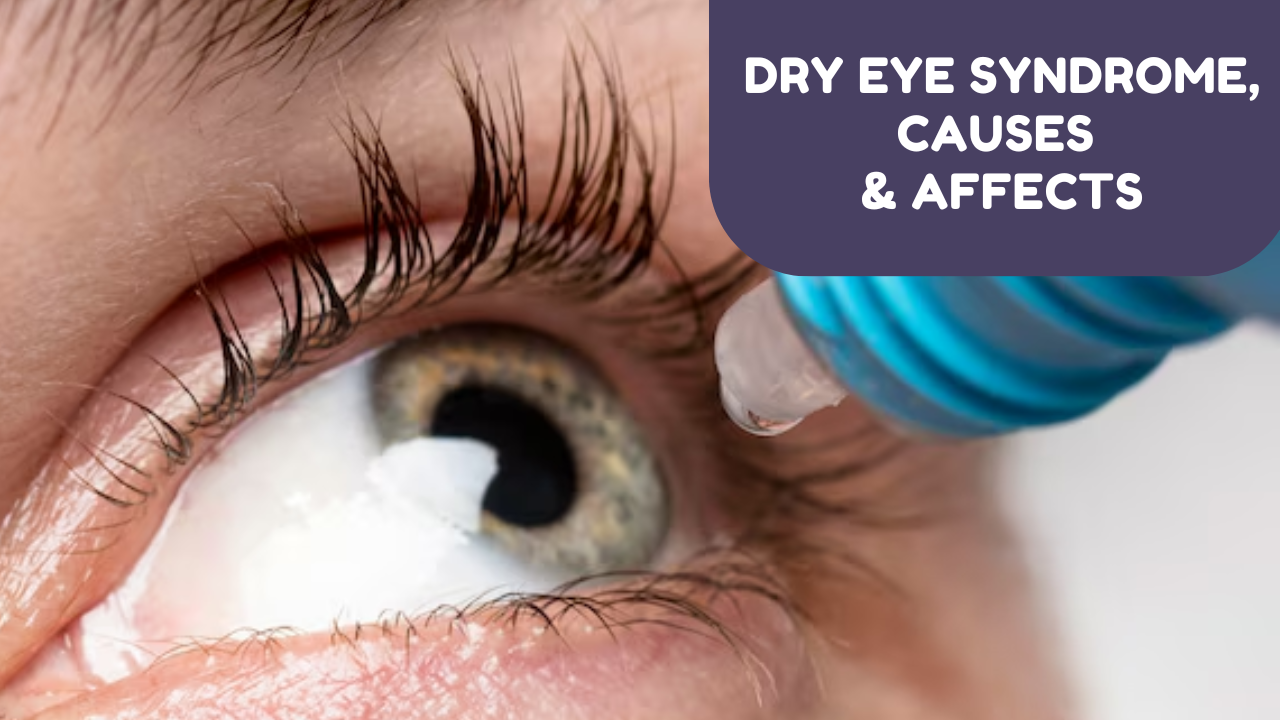
Dry eye syndrome is a common condition that many people go through. Dry eyes happen when your eyes don't make enough tears or the tears you make aren't good enough to keep your eyes wet and comfortable. This can make your eyes feel scratchy, burn, or feel like there's something in them. Dry eyes often gets worse in places like airplanes, air-conditioned rooms, or when you're outside on a windy day. Staring at a computer screen for a long time can also make your eyes dry. Here are some key causes that affect it. Tear Production IssuesInsufficient tear production is a primary culprit behind dry eye. The lacrimal glands, located above your eyes, are responsible for producing tears. Various factors can hinder their function. Aging is a natural process that often reduces tear production. Additionally, certain medical conditions such as Sjogren's syndrome, an autoimmune disease that attacks moisture-producing glands, can significantly impact tear volume. Some medications, including antihistamines, antidepressants, and blood pressure drugs, have side effects that can decrease tear production.Increased Tear EvaporationExcessive tear evaporation can cause your dry eye symptoms to get worse. The oil layer, secreted by the meibomian glands at the eyelid's edge, plays a very important role in preventing rapid tear evaporation. When these glands become clogged or stops functioning properly, it could be due to conditions like blepharitis or rosacea, the oil layer is compromised. Environmental factors such as low humidity, wind, and air conditioning can also accelerate tear evaporation. Furthermore, reduced blinking, which is common during activities like reading or computer work, can disrupt the tear film and increase evaporation.Other Factors Several other factors can contribute to dry eyes. Eyelid abnormalities, such as ectropion (outward turning of the eyelid) or entropion (inward turning of the eyelid), can disrupt the tear film and lead to dryness. Allergic conjunctivitis can cause inflammation and increased tear evaporation and can make your dry eye symptoms worse. Contact lens wearers are more susceptible to dry eyes due to the lens's absorption of tear film components. Certain eye surgeries, including LASIK, can temporarily reduce tear production or alter tear composition.