
- Health Conditions A-Z
- Health & Wellness
- Nutrition
- Fitness
- Health News
- Ayurveda
- Videos
- Medicine A-Z
- Parenting
Why Getting Your Covid Booster Shot This Fall Could Be Tricky?

Credits: Health and me
Most Americans are asking the same questions, "When Should I Get My Covid booster?", “Can I still get a Covid booster?” The answer, unfortunately, isn’t simple. For some, the shot may be easy to access, but for many, navigating eligibility, availability, and potential out-of-pocket costs is becoming increasingly complex. This fall, the landscape for Covid vaccination is shifting, leaving uncertainty for millions who once relied on pharmacies and clinics for routine boosters.
Part of the confusion comes from shifting FDA guidance and evolving recommendations around new mRNA formulations. Add to that state-level rules, age restrictions, and questions about insurance coverage, and you’re left with a situation where many people simply don’t know if they’re eligible—or if they should be lining up at all. Parents, especially, are finding it tough to get clear answers about vaccines for children.
Health and Human Services Secretary Robert F. Kennedy Jr., along with the Food and Drug Administration (FDA) and the National Institutes of Health (NIH), have altered longstanding guidance on who should receive vaccines, raising questions about both safety and necessity. The resulting uncertainty has prompted organizations such as the American Academy of Pediatrics to issue their own evidence-based recommendations, aiming to fill the information gap.
What Are The Challenges of Getting A Covid Booster In Fall?
What this really means is that access isn’t just about supply anymore—it’s about information, clarity, and timing. As new Covid variants continue to surface, staying on top of vaccine updates matters more than ever, but understanding the rollout may feel like a moving target.
Pharmacy Access and State Limitations
For years, most Americans have received Covid vaccines at local pharmacies. This fall, that model may face disruption. Pharmacists’ authority to vaccinate varies across states, and in at least 18 states plus Washington, D.C., this authority is tied to official guidance from the Centers for Disease Control and Prevention (CDC) or the Advisory Committee on Immunization Practices (ACIP). With Kennedy’s overhaul of the ACIP, the usual routine of a June vote on recommendations has been delayed, leaving many states scrambling to maintain access. Pharmacy groups are now requesting governors to issue executive orders to restore vaccine administration authority, but this process is slow and inconsistent.
Eligibility Hurdles for Under-65s
If the FDA limits approval to individuals 65 and older or those with specific high-risk conditions, younger adults will face hurdles. Proof of underlying conditions such as asthma, diabetes, cancer, mood disorders, or obesity may be required to qualify. Healthy individuals seeking vaccination may need off-label prescriptions from doctors, a process pharmacists generally avoid due to liability concerns. This added layer of complexity could dissuade many from receiving the booster, despite rising Covid cases.
Children, Pregnant Individuals, and Vulnerable Populations
The situation is similarly complicated for children and pregnant people. While healthy children can still receive the current vaccine through shared decision-making with parents and providers, the CDC has removed routine recommendations for certain groups. The American Academy of Pediatrics emphasizes that infants aged 6 to 23 months face risks comparable to adults in their 50s, advocating for booster access for high-risk children and any family choosing vaccination. Pediatricians routinely prescribe off-label vaccines for young children in specific scenarios, but the guidance remains less straightforward than in previous years.
A Summer Surge and New Variants
Adding urgency, Covid cases are rising in many parts of the country. According to CDC wastewater data, the XFG variant—a descendant of the JN.1 subvariant of Omicron—has become prevalent. Experts like infectious disease modeler Jay Weiland predict a peak in early September, coinciding with back-to-school activity. While this current wave isn't producing serious illness in most, it underscores the necessity of boosters in high-risk populations and concerns vaccine equity in the face of changing guidelines.
Funding Cuts and Policy Shifts
Adding to the challenges, recent federal budget cuts for mRNA vaccines have created another source of uncertainty. The FDA's planned mid-September approval of new vaccines, combined with an expected limitation to those over 65, is a shift from previous years when the boosters were broadly available. For younger adults and healthy young people, it may leave a large segment of the population more susceptible during the winter and fall seasons.
As a reaction to scarce federal guidelines, medical groups and health groups are making their own suggestions. These include the promotion of immunization among high-risk children, adults aged under 65 years with certain medical conditions, and those living with immunocompromised individuals. In spite of conflicting messages from federal agencies, these organizations hope to guarantee the most susceptible individuals continue to have access to life-saving protection.
For those Americans who have already had Covid vaccines without complication, the new system can be daunting. Determination of eligibility, possible expense, and fluctuating state-by-state access creates a situation in which advance planning is critical. Patients are encouraged to see healthcare providers early, to discuss individual risk factors, and to get information on accessible vaccine types. Being late to the surge effort may lead to missed or delayed opportunities for vaccination.
The autumn 2025 Covid booster rollout highlights where health policy, vaccine eligibility, and changing viral variants meet to produce a complicated picture of vaccination. As millions wait eagerly to be protected, confusion and restricted availability may expose many to danger. It is now essential that anyone thinking about a Covid booster this year remains informed, consults with healthcare professionals, and considers personal risk factors.
This Is Much Coffee Should You Drink To Lower Stress, Study Reveals

Credit: Canva
A large new study suggests that about only two to four cups of coffee per day can reduce stress levels as well as lower the risks of developing anxiety and depression.
Researchers from Fudan University in China found that moderate coffee intake is linked to lower stress levels, while both very low and very high consumption don’t offer the same benefit.
Drinking more than four cups may start to increase stress and anxiety, likely because caffeine stimulates the nervous system and raises stress hormones.
Scientists believe this works like a “J-shaped curve”: a little caffeine can improve mood, alertness, and resilience to stress, but too much can overstimulate the body and make stress worse. Supporting research also shows that high caffeine intake is linked to higher perceived stress and anxiety symptoms.
At the top end of the scale, drinking five cups or more each day was associated with a higher risk of mood disorders – so it seems it is possible to overdo the buzz.
"J-shaped associations were identified between coffee consumption and mental disorders, suggesting that a moderate intake of coffee might be beneficial for mental health," write the researchers in their published paper.
Caffeine Can Recover Memory Loss From Lack of Sleep
In this animal study, scientists at the National University of Singapore have found that sleep-deprived mice struggle to recognize other mice however, mice that were given caffeine for a week before being being sleep-deprived performed much better on tests and did not show the same memory loss.
Additionally, when caffeine was directly applied to brain tissue from sleep-deprived mice, it improved communication between brain cells in this region -- suggesting that caffeine doesn’t just mask tiredness but may also help repair disrupted brain activity.
NUS physiologist Lik-Wei Wong explained: "Sleep deprivation does not just make you tired. It selectively disrupts important memory circuits.
"We found that caffeine can reverse these disruptions at both the molecular and behavioral levels. Its ability to do so suggests that caffeine's benefits may extend beyond simply helping us stay awake."
"Our findings position the CA2 region as a critical hub linking sleep and social memory. This research enhances our understanding towards the biological mechanisms underlying sleep-related cognitive decline. This could inform future approaches to preserving cognitive performance," NSU neuroscientist Sreedharan Sajikumar added.
Based on these results, the study concluded that sleep deprivation increases signaling linked to adenosine, a chemical that promotes sleep but can also weaken memory circuits. But with moderate amounts of intake, caffeine appears to block this effect and help the brain maintain normal function
While the discovery offers a clearer understanding of how sleep, memory and caffeine are connected, the findings are based on mice and more research is needed to confirm if the same benefits apply to humans.
How Much Coffee Should You Consume?
Due to how much caffeine can actually affect one’s body, experts recommend 400 milligrams only per day. That is about four cups, it is also better to consult a doctor about this as caffeine sensitivity is different for people. Some people are more sensitive to caffeine than others.
How you react depends on your health, what medicines you take, and how fast your body processes things. Too much caffeine can cause problems, so it's important to pay attention to how you feel and not go overboard. Here is what happens to your body when you drink too much caffeine daily.
Scientists Develop New Technique To Prevent AFib-Caused Strokes
Credit: Canva
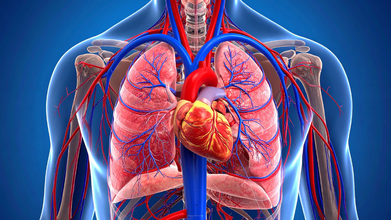
Atrial fibrillation (AFib) is an irregular and often very rapid heart rhythm, also called an arrhythmia and can create blood clots in the heart, which can increase your risk of having a stroke by five times.
When a person has AFib, the normal beating in the upper chambers of the heart (the two atria) is irregular and blood doesn't flow as well as it should from the atria to the lower chambers of the heart (the two ventricles).
Common symptoms include palpitations (the feeling that your heart is racing, pounding, fluttering or like you have missed heartbeats), chest pain, finding it harder to exercise, tiredness, shortness of breath, dizziness or feeling faint. However, a more severe symptom is a stroke.
Tucked inside the heart is a tiny pouch called the left atrial appendage. When the heart beats erratically, blood can pool and sit still in this pouch instead of flowing normally and still blood tends to clot. If one of those clots breaks free and travels to the brain, it can block blood flow and cause a stroke.
But researchers have now found new technique, in which a magnetically guided liquid is injected into the heart can harden and permanently seal the left atrial appendage from the inside. Early tests in rats and pigs suggest that this method could one day lower the risk of stroke in people with atrial fibrillation.
Based on this technique, researchers inject a magnetically responsive liquid, sometimes called a magnetofluid, directly into the left atrial appendage through a catheter.
Once inside the cavity, an external magnetic field helps guide and hold the fluid in place, so it fills the entire appendage, even against the force of circulating blood.
Within minutes, the liquid reacts with water in the blood and transforms into a soft "magnetogel" that seals off the cavity. Additionally, as the material begins as a liquid, it can adapt precisely to the highly irregular shape of each patient's left atrial appendage.
The death rate from AFib as the primary or a contributing cause of death has been rising for more than two decades.
Over 454,000 people with AFib are hospitalized in the US each year, out of which 158,000 die of the cause. It is estimated that 12.1 million people in the US will have AFib in the US will have AFib by 2050.
Who Is At Risk Of Having AFib?
Risk factors for AFib include:
- Advancing age.
- High blood pressure.
- Obesity.
- European ancestry.
- Diabetes.
- Heart failure.
- Ischemic heart disease.
- Hyperthyroidism.
- Chronic kidney disease.
- Moderate to heavy alcohol use.
- Smoking.
- Enlargement of the chambers on the left side of the heart.
Treatment for AFib includes medications to control the heart's rhythm and rate, therapy to shock the heart back to a regular rhythm and procedures to block faulty heart signals.
A person with atrial fibrillation also may have a related heart rhythm disorder called atrial flutter. The treatments for AFib and atrial flutter are similar.
How To Improve Your Heart Health
Experts recommend following the below to reduce yor risk of stroke or developing AFib and maintaining heart health:
- Don't smoke or use tobacco.
- Aim for at least 150 minutes of moderate physical activity or 75 minutes of vigorous physical activity (or an equal combination of both) each week. Eat a heart-healthy diet.
- Stay at a healthy weight.
- Get quality sleep.
- Manage stress levels
- Get regular health screening tests.
- Eat a fiber, nuts and fish-rich diet
- Limit salt intake
- Reduce saturated fat intake
This Pill Is More Effective For Weight Loss Than Ozempic, Scientists Say

Credit: Canva, Canada Insulin
Orforglipron, a new daily pill, may be more effective than existing oral treatments for weight loss and blood sugar control than semaglutide, according to a recent clinical trial.
Semaglutide belongs to a group of drugs known as GLP-1 medications, known to mimic a natural hormone that helps regulate appetite, slow digestion, and control blood sugar. The drug is commonly sold under the brand names Wegovy and Ozempic.
Despite being highly effective, semaglutide usually needs to be injected and requires refrigeration, which can make it inconvenient and harder to access for some patients. Additionally, the drug also carries a high price point.
However, in a 52-week trial involving people with Type 2 Diabetes, orforglipron was found to lower average blood sugar levels more than oral semaglutide and also led to greater weight loss.
Participants taking orforglipron lost around up to eight kilograms on average, compared to about five kilograms with semaglutide. Morever, orforglipron is a once-daily pill that does not require injections or cold storage.
But the study also found that orforglipron caused more side effects, particularly digestive issues like nausea and diarrhea. Yet scientists believe it may still be a better alternative to semaglutide as its easier and cheaper to produce than peptide-based drugs like semaglutide.
They also noticed that the drug absorbed more efficiently by the body and does not require strict timing around meals, unlike current oral versions of semaglutide.
READ MORE: Alkem Laboratories Launches Cheapest Semaglutide Injection In India
How Does Ozempic Function?
The first thing to remember here is that Ozempic is a brand-name medicine that contains semaglutide as its active ingredient. Semglutide is the synthetic version of GLP-1—a natural hormone produced in the intestines that regulates blood sugar, appetite, and digestion. Now, every time you eat, your body produces various hormones, including GLP-1. These are called Post nutrition hormones, and help you absorb the energy you just consumed.
GLP-1 travels to your pancreas, prompting it to produce insulin. It also travels to the hypothalamus in your brain, which gives you the feeling of being full or satiated. Ozempic imitates this hormone, thereby, silencing the food chatter in the brain. Interestingly, for some people this food chatter is really quiet ( people with low appetite) and for others it is an outbrurst, (people who generally binge eat.) So with Ozempic, silencing this self-talk in the brain, people tend to lose their appetite and eventually weight.
However, it is important to note that losing weight includes not just fat but muscle as well. Losing too much muscle can lead to reduced strength and a shorter life span. Notably, records show that most people who start taking them stop it at 12 weeks; therefore, it is important for some but not for others.
Does Ozempic Have Side Effects?
As reiterated by doctors and health care experts, Ozempic is a drug that is tasked to help diabetic patients manage their blood sugar levels and weight. However, recent research has shown its effectiveness in mitigating various addictions like alcohol and drugs by inhibiting hormones. But what people ignore are its side effects, which include:
- Nausea is a frequent side effect, especially when starting Ozempic or increasing the dose, and vomiting may occur along with nausea.
- Diarrhoea and abdominal discomfort also show up in people using Ozempic, but they generally resolve as your body adjusts.
- Ozempic can reduce appetite but may also lead to unintended weight loss or reduced food intake, causing discomfort for some people.
- There are certain less common, but serious side effects also, like Pancreatitis, or inflammation of the pancreas.
- This drug may also cause severe kidney issues, particularly if dehydration occurs from side effects like vomiting or diarrhoea.
- Follow Us :


© 2024 Bennett, Coleman & Company Limited