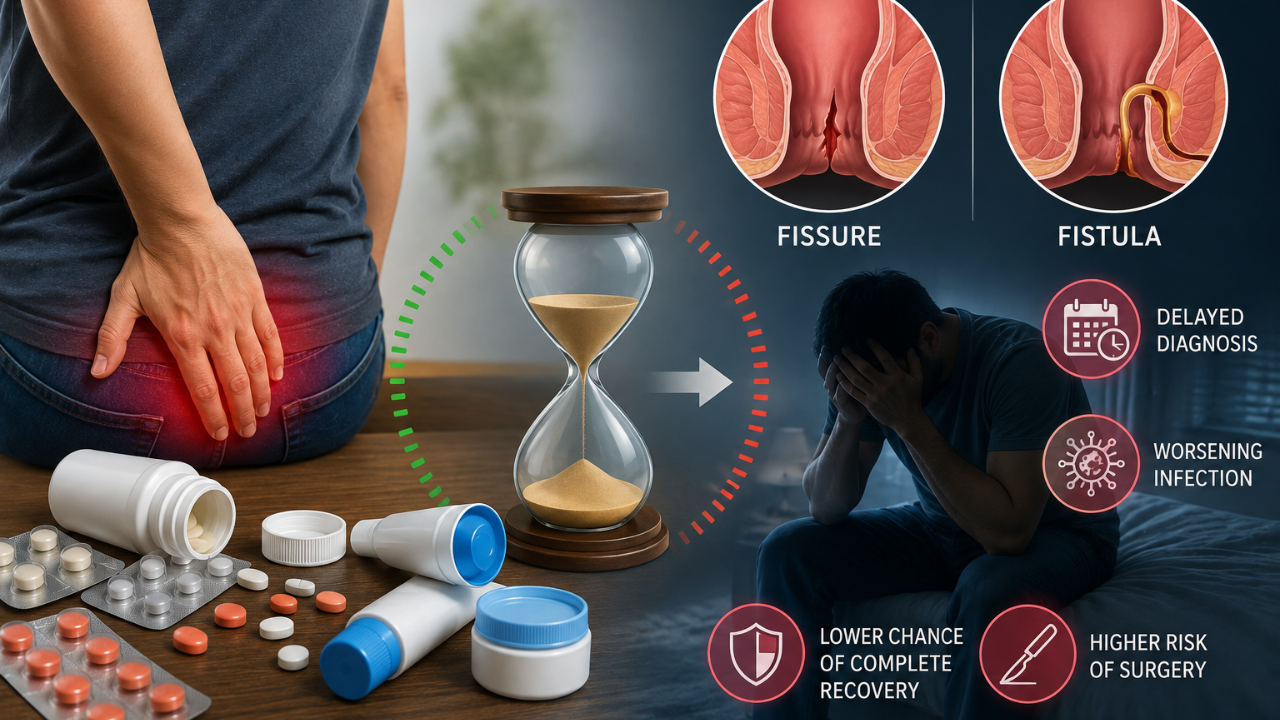
It usually starts small, a sting during a bowel movement, a smear of blood on tissue, an ache that feels like it will pass on its own. The instinct is to go for an old antiseptic ointment or a painkiller left over from something else. For a few days, it works. The pain eases, the bleeding stops showing up, and the natural conclusion follows, it's healed. Then, weeks or months later, it comes back. The same cream goes on, the same tablet gets swallowed, and the cycle repeats, each round quietly convincing the patient that this is something to manage rather than consulting a doctor. Why Repeated Self-Medication Can Delay The Right Diagnosis?That cycle is where the real cost shows up. Every round of self-medication is also a round of postponed diagnosis, pain, bleeding, or discharge gets suppressed instead of investigated, and a fissure or fistula that could have been caught and treated early is left to become chronic instead. It's a more common pattern than it should be: a 2025 study on haemorrhoidal symptoms found that only 30.8% of patients had sought medical advice at all, citing embarrassment and fear of invasive examinations as the main barriers. An anal fissure is a small tear in the lining of the anal canal. Many improve with the right conservative care, soft stools, and medication suited to that specific case. What concerns me is when a patient keeps self-treating through repeated episodes. A fissure that keeps coming back usually means something underlying hasn't been resolved, however many times the symptoms have been calmed down.Also read: Ulcerative Colitis vs Crohn’s Disease: 8 Key Differences Every Person Must KnowFistulas need more caution. An anal fistula is an abnormal tract connecting the anal canal to the skin nearby, usually following an infection or abscess. Medication can ease the pain or swelling for a while, but it generally can't close that tract. Treat the discharge again and again without ever looking at the fistula itself, and the condition just sits there, persisting, sometimes worsening, often recurring.Why Recurring Symptoms Should Not Be Self-Diagnosed? Another common mistake is assuming that recurring symptoms are caused by the same condition as before. A fissure two years ago cleared up with a certain cream, so when something similar happens now, the same tube comes back out. But recurring symptoms don't automatically mean the same condition has returned. Fissures, fistulas, and haemorrhoids can look remarkably alike from the outside, which is exactly why self-diagnosis is unreliable more often than people expect. None of this means every twinge needs a procedure, or that patients should panic at the first uncomfortable day. Plenty of cases genuinely settle with timely, conservative management. The real skill is recognising when self-care stops being enough. If pain, bleeding, swelling, pus, or discharge keeps returning or never fully clears, that's the signal to get it looked at, not medicated into silence again. A proper specialist assessment can pin down what's actually happening and whether the right next step is conservative treatment, medication, or a procedure. For anyone dealing with a fissure or a fistula, the goal isn't just to make the symptom vanish for a while. It's understanding why it showed up in the first place. Temporary relief feels like progress, but it isn't recovery.