
- Health Conditions A-Z
- Health & Wellness
- Nutrition
- Fitness
- Health News
- Ayurveda
- Videos
- Medicine A-Z
- Parenting
Why Some People Are Immune To Deadly Diseases Over Others?

Credits: Canva
For over 15 years, Dr Anthony Shum, a pulmonologist at the University of California, San Francisco has been studying a rare genetic disorder called the COPA Syndrome. It stands for coatomer subunit alpha and is a rare, inherited disorder that affects the lungs, joint, and kidney. The National Organization for Rare Disorder also notes that it is a genetic autoimmune disorder that is caused by mutations in the COPA gene. This disease affects families unpredictably—some individuals with the mutation develop severe lung damage early in life, while others remain completely healthy. Now, Shum’s team has discovered a protective genetic variant that may offer new hope for treatment.
A Breakthrough
Researchers found that some relatives of COPA Syndrome patients stayed healthy despite carrying the same COPA gene mutation that causes the disease. The key difference? These unaffected individuals had a protective version of another gene called HAQ-STING.
When scientists introduced HAQ-STING into diseased lung cells from COPA patients, the cells returned to a balanced state, suggesting that this gene could be used as a therapy.
“We really think HAQ-STING could be a gene therapy tool and a step toward a cure,” said Shum, whose findings were published in the Journal of Experimental Medicine.
Families Who Solved The Mystery
Shum’s journey into COPA Syndrome research began in 2011 when he treated a young woman, Letasha, who had severe lung bleeding. Her mother, Betty Towe, mentioned that Letasha’s sister, Kristina, had suffered from similar symptoms. Over the years, Betty had taken both daughters on a four-hour trip to UCSF for treatment. After tracing their family history, Shum discovered that their distant relatives in Texas and Oakland also had lung problems and arthritis. In 2015, Shum, along with scientists from Baylor College of Medicine and Texas Children’s Hospital identified the COPA gene mutation. They realized that it was the common factor behind the illness. However, only some of the 30 individuals with the mutation actually developed symptoms, leaving a major question unanswered.
The Domino Effect
It was established that it occurs when a mutated COPA gene causes another gene STING to go overdrive. The STING that helps fight infections in COPA patients, remain permanently active, which leads to chronic inflammation that damages the lungs, kidneys, and joints. In 2020, while studying STING’s role in the disease, researchers discovered a key variation: HAQ-STING. This version of STING, present in about one-third of the population, appeared to neutralize the harmful effects of the COPA mutation.
To confirm their theory, the scientists needed both affected and unaffected family members to participate in the testing. Letasha, Kristina and Betty immediately volunteered. The researchers then analyzed DNA samples from 26 COPA patients and their healthy relatives. They also conducted CT scans and blood tests to ensure that unaffected members did not have any hidden symptoms. When the findings were all clear, it was revealed that all the healthy individuals had HAQ-STING, while none of the COPA patients did. This was the first known case of a common gene variant completely protecting against a severe genetic disease.
Encouraged by this discovery, researchers tested HAQ-STING’s effects in a lab setting. They introduced it into diseased lung cells from COPA patients, and the cells returned to normal function.
Way Ahead
Shum believes HAQ-STING could lead to game-changing treatments, including:
- Prenatal gene therapy for babies diagnosed with COPA Syndrome before birth
- Aerosol delivery of HAQ-STING for adults, directly targeting the lungs
Before publishing their findings, Shum called Betty with the news—her own HAQ-STING gene had protected her from the disease. He also informed Letasha and Kristina, who were overwhelmed with relief and joy.
“We always believed Dr. Shum would get to the bottom of it,” said Letasha. “This discovery is going to change lives.”
Can 'Eye Strain' Lead To Brain Cancer? Experts Explain

Credit: Chantelle Broadley / SWNS
Ten-year-old Myla from the UK's North Yorkshire, with severe eye strain, was diagnosed with a severe brain tumor that led to her death.
The young girl had been suffering from headaches and dizziness, which were dismissed as mere eye strain due to playing on her iPad too much.
Thinking that she needed eyeglasses, her parents took her for an eye appointment, where she was diagnosed with an aggressive diffuse midline glioma — a type of brain tumor.
Myla was diagnosed with a 7-10cm tumor and was rushed to Sheffield Children's Hospital for an operation to remove 60 per cent of the mass. The youngster underwent a grueling 30 rounds of radiotherapy but tragically passed away on January 15, The Mirror.co.uk reported.
Can Eye Strains Lead To Brain Tumors?
Healthandme spoke to health experts to understand the role of eye strain and brain tumors.
The health experts noted that although prolonged exposure to digital screens can raise the risk of vision problems, they cannot cause brain tumors.
"Eye strain is most commonly linked to prolonged screen use, poor ergonomics, or uncorrected vision, and in the vast majority of cases, it is not a sign of brain cancer," Dr. Parul Maheshwari Sharma, Ophthalmologist and Principal Director & HOD - at Fortis Gurugram, told HealthandMe.
"The likelihood of experiencing eye strain being an indication of brain cancer is minimal," added Dr. Mahipal Singh Sachdev, Chairman & Medical Director, Centre For Sight Group of Eye Hospitals.
The doctors explained that brain tumors are rarely present as simple eye strain; they are usually associated with additional symptoms such as:
- persistent headaches,
- double vision,
- vision loss,
- vomiting,
- neurological deficits.
- convulsions,
- vision changes.
What Is Eye Strain?
Eye strain, also referred to as digital eye strain or computer vision syndrome, is caused by staring at screens for extended periods of time and decreased blinking.
It generally occurs due to benign factors such as excessive screen time, dry eye, or uncorrected vision.
While prolonged screen use can cause discomfort, dry eyes, and temporary blurred vision, it does not lead to the development of cancer.
"There is no evidence to suggest that screen-induced eye strain can cause brain tumors," Dr Sharma said.
"Although there may be visual changes due to a tumor that involves the optic nerve or hypothalamus, simple eye strain is not indicative of brain tumors and would not be considered an early warning of a brain tumor. There is an extremely low probability that eye strain will be due to a brain tumor," Dr. Sachdev told HealthandMe.
However, the experts agreed that long screen time can lead to severe eye strain.
Red Flags One Should Not Ignore For Brain Tumors
Brain tumors are generally attributed to genetics, exposure to radiation, or other unknown factors.
Numerous types of red flags could indicate the presence of a serious neurological disorder. Some examples include
- chronic or worsening headaches, especially if severe in the morning,
- recurrent unexplained vomiting,
- seizure activity,
- sudden changes in vision, such as double vision or complete loss of vision,
- trouble speaking clearly,
- weakness in the arms or legs,
- drastic personality changes.
Higher-risk patients include:
- those with a history of radiation exposure to the brain,
- specific genetic conditions,
- those with a family history of brain cancer.
Steps to Reduce Eye Strain
To help combat eye fatigue, individuals can adopt some simple habits, such as
- Following the 20-20-20 rule: every 20 minutes, look at something 20 feet away for 20 seconds.
- Place your computer monitor at or below eye level and keep a comfortable distance from the computer.
- Adjust your screen brightness and contrast to comfortable levels and use adequate room lighting.
- Remember to blink often or use artificial tears to keep your eyes moist.
- Take screen breaks, limit the duration of time you are using your computer, or limit the continuous use of your computer.
- Make sure you are using the correct prescription glasses and consider using an anti-glare screen, which can also help relieve discomfort and protect your eyes from long-term effects.
Feeling Low? Ladies, It Could Just Be Dehydration

Dehydration can lead to poor concentration in women. (Photo credit: iStock)
Ladies, does it ever happen to you that you are not on your period, not PMSing, and still feel moody and upset? Well, as it turns out, experts say that there could be a very simple reason for this. According to researchers at the University of Connecticut, even mild dehydration could be responsible for mood changes in women. Not only this, even 1.36 per cent dehydration can affect your mood, ability to think and energy levels. The Daily Mail notes that a loss of 1.5 per cent of normal water volume levels in the body can be classified as mild dehydration, and its adverse effects can linger for some time.
Read more: The Health Problems Women Normalise, But Gynaecologists Do Not
How does dehydration affect women?
In women, the adverse effects of dehydration can be serious. Experts say that the effects are more intense in women, and they came to this conclusion after analysing the results of tests, which revealed that it does not matter if a person walks for 40 minutes on a treadmill or is in a state of rest — if an individual is even slightly thirsty, the adverse effects will be the same.
Research shows that even 1.36 per cent dehydration is enough to cause the following problems:
- 8 per cent rise in hostility and anger
- 12 per cent dip in vigour
- 17 per cent increase in fatigue
- 45 per cent dip in concentration
- 19 per cent worsening of mood
- 58 per cent dip in understanding simple tasks
- Headaches worsening two fold
Is thirst the same as dehydration?
Lead researcher of the study, Lawrence Armstrong, noted that a sensation of thirst does not appear until a person is one or two per cent dehydrated. By then, it starts to set in and act up, adversely impacting how the mind and body perform. Dehydration can affect everyone, which is why it is just as important for people in desk jobs to stay hydrated as it is for marathon runners.
Read more: Three Health Checks Every Woman Should Do Each Month, According To Experts
In this research, experts put participants through a series of tests evaluating their concentration, vigilance, reaction time, reasoning, memory and learning. The results were then compared with those of people who were not dehydrated. In younger women, mild dehydration resulted in fatigue, headaches and concentration difficulties. Women also found basic tasks more difficult to execute than usual. On the other hand, young men noted some difficulty in performing mental tasks — they experienced anxiety, fatigue and tension in the process. Mood changes were more prominent in women than in men.
Oral Microbiome and Placental Growth: What Every Expecting Parent Should Know
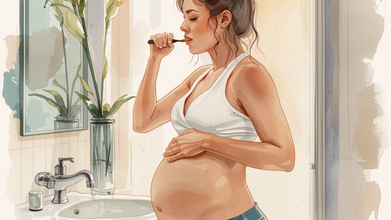
The oral microbiome is the community of bacteria, fungi, and other microorganisms that naturally live in the mouth — on the teeth, gums, tongue, and cheeks. More than
700 species are known to exist, most of which are harmless and many beneficial.
However, problems arise when harmful bacteria outnumber protective ones, leading to gum inflammation or periodontal disease. During pregnancy, hormonal changes increase blood flow to the gums and alter immune responses. As a result, many women notice bleeding, swelling, or sensitivity in the gums — a condition known as pregnancy gingivitis.
This is common and reflects physiological changes rather than poor hygiene.
The Mouth's Connection To The Placenta
Pregnancy is a systemic state in which the immune system, circulation, and inflammation are closely interconnected. Chronic gum inflammation can release inflammatory mediators into the bloodstream.
In research settings, certain oral bacteria have also been detected in placental tissues from complicated pregnancies. This suggests a biological link between oral health and
placental function, although the exact pathways are still being studied.
Importantly, this relationship reflects association rather than direct causation.
Why Does Placental Health Matter?
The placenta is an active organ that regulates oxygen and nutrient transfer, hormone production, and immune protection for the developing baby.
Healthy placental development supports:
- Efficient oxygen and nutrient delivery
- Balanced hormone production
- Protection against infections
- Steady fetal growth
What Changes In Oral Health Are Normal During Pregnancy?
Up to 60–75 percent of pregnant women experience some degree of gum inflammation. Common changes include:
- Bleeding while brushing
- Swollen or tender gums
- Increased plaque buildup
- Persistent bad breath
Can Oral Health Really Affect Pregnancy Outcomes?
Research from India and globally shows associations between periodontal disease and higher risks of preterm birth, low birth weight, and preeclampsia. Meta-analyses
suggest a modest increase in risk (around 1.5–2 times).
However, pregnancy complications are multifactorial. Oral disease alone does not directly cause these outcomes. Genetics, nutrition, metabolic health, and placental
biology all play important roles.
Treating gum disease improves oral health and reduces inflammation, though studies show mixed evidence on whether it directly lowers preterm birth risk. The goal is
prevention, awareness, and overall maternal health.
How Do You Support Healthy Oral Microbiome During Pregnancy?
Daily oral care:
- Brush twice daily with gentle pressure
- Use a soft-bristled toothbrush
- Clean between teeth once daily
- Rinse your mouth after vomiting to protect enamel
- Calcium-rich foods like curd and ragi support dental health
- Vitamin C from amla, guava, and citrus helps gum healing
- Fibre-rich foods support saliva flow and microbial balance
- Hydration and lifestyle
- Drink adequate water
- Limit frequent sugary snacks
- Avoid tobacco in all forms
Pregnancy already carries emotional and physical changes, and dental symptoms can add anxiety. Support from partners and family members helps reduce mental load.
Stress can influence immunity and inflammation. Adequate rest, gentle activity such as walking or prenatal yoga, and open communication with healthcare providers
support both oral and overall health.
Warning Signs: When Should You Contact A Doctor Or Dentist?
Seek professional advice if you notice:
- Severe tooth pain or swelling
- Pus, fever, or difficulty chewing
- Bad breath that does not improve
- Persistent gum bleeding for two weeks
Pregnancy is a time when different systems of the body work in close coordination. Oral health, immune balance, and placental function are part of the same continuum.
Gentle attention to gum health is not about perfection. It is about creating supportive conditions for a healthy pregnancy and a healthy baby.
- Follow Us :


© 2024 Bennett, Coleman & Company Limited