
- Health Conditions A-Z
- Health & Wellness
- Nutrition
- Fitness
- Health News
- Ayurveda
- Videos
- Medicine A-Z
- Parenting
Why The Nipah Virus Still Persists After 25 Years In Southeast Asia
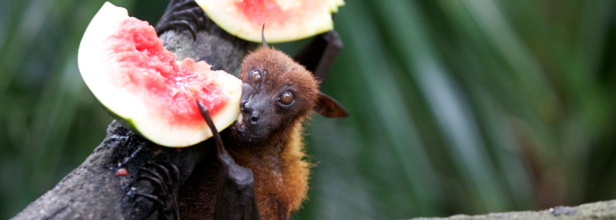
Credits: Canva
In 1998, a mysterious and deadly illness emerged among pig farmers in Malaysia, later identified as the Nipah virus (NiV), a bat-borne zoonotic pathogen from the Henipavirus genus. It caused severe respiratory illness and encephalitis, claiming over 100 lives and decimating the pig farming industry.
The virus reappeared in Singapore in 1999. Over time, it was clear that the outbreaks weren’t isolated events. NiV had entrenched itself across regions with certain ecological and socio-cultural conditions, particularly in South and Southeast Asia.
Today, NiV is considered one of the World Health Organization's priority diseases for research and development due to its high case fatality rate (up to 100% in some outbreaks), human-to-human transmissibility, and pandemic potential.
25 Years, 754 Cases, 435 Deaths
As of May 2024, there have been 754 confirmed human Nipah cases reported across five countries—Malaysia, Singapore, Bangladesh, India, and the Philippines—with 435 deaths, averaging a staggering case fatality rate (CFR) of 58%
.
The most affected countries are:
- Bangladesh: 341 cases, 241 deaths (CFR 71%)
- India: 102 cases, 74 deaths (CFR 73%)
- Malaysia: 283 cases, 109 deaths (CFR 39%)
- Philippines: 17 cases, 9 deaths (CFR 53%)
- Singapore: 11 cases, 1 death (CFR 9%)
Unlike Malaysia and the Philippines, where the virus spread through intermediate hosts like pigs or horses, cases in Bangladesh and India have been directly linked to bat-to-human transmission—primarily through the consumption of raw date palm sap contaminated by infected fruit bats.
Why Does Nipah Still Exist?
Fruit Bats Are Permanent Reservoirs
Nipah virus resides in Pteropus fruit bats, which are widely distributed across Asia, the Pacific Islands, and even parts of Africa. These bats are natural carriers and do not show symptoms of the disease, making them difficult to monitor or control. NiV RNA and antibodies have been found in bats in at least 15 countries, including India, Cambodia, Indonesia, and Ghana.
Human Habits Enable Spillover
In regions like Bangladesh, seasonal practices such as collecting fresh date palm sap—a delicacy also consumed raw—provide a direct interface between humans and bat secretions. The virus can contaminate sap through bat saliva or urine.
Moreover, in the Philippines, outbreaks were traced to the butchering and consumption of sick horses. These recurring interactions with potential intermediary hosts keep the door open for viral spillover.
Human-to-Human Transmission
Although not as contagious as influenza or COVID-19, human-to-human transmission of NiV has been confirmed in Bangladesh and India. Some outbreaks have shown vertical transmission (mother to child) and transmission among caregivers and family members.
This capability increases the risk of community spread, particularly in regions with delayed detection or inadequate isolation infrastructure.
No Vaccine, No Cure
Despite being on the global priority pathogen list, there is no licensed vaccine or specific treatment for Nipah. Management remains supportive, relying on early diagnosis and intensive care. In resource-constrained regions, especially rural South Asia, this becomes a daunting challenge.
Bangladesh and India: The Epicenters of Ongoing Risk
Since 2001, both Bangladesh and India have reported almost every year either isolated or clustered cases of Nipah virus, particularly in Kerala and West Bengal (India) and multiple districts in Bangladesh.
Notably, 2023 saw Bangladesh’s highest ever reported NiV cases and deaths. In 2024, the country reported two cases—both of which were fatal, marking a 100% CFR for the year
.
Efforts in both countries have been ramped up. Surveillance now includes:
- Testing date palm sap for contamination
- Educating communities to avoid raw consumption
- Quarantining suspected cases
- Expanding diagnostic labs and outbreak response teams
Still, challenges remain due to cultural habits, lack of rapid testing in rural areas, and public fatigue around health advisories.
The Risk of a Wider Spread
Though human NiV cases have so far been reported only in Asia, the potential for global spread exists. Several factors fuel this concern:
Genetic adaptability: The virus has shown potential for genetic reassortment, raising fears of a more transmissible strain.
Broad geographic distribution: NiV-carrying bats exist far beyond the current outbreak zones.
Environmental change: Deforestation, land-use changes, and climate shifts are bringing bats closer to human habitats.
Global travel and trade: A delayed diagnosis in one international traveler could enable the virus to spread outside endemic zones.
What Needs to Be Done?
A Global “One Health” Approach
The study by Sakirul Khan et al. emphasizes the urgent need for multisectoral collaboration—involving human health, veterinary, and environmental sciences—to monitor and prevent outbreaks
. A “One World, One Health” model is key.
Steps must include:
- Strengthening high-containment laboratories in risk zones
- Continuous monitoring of viral genetic changes
- Developing and testing vaccines and antiviral therapies
- Investing in bat ecology research and habitat protection
- Community engagement and behavioral change strategies
Maternal Vaccination During Pregnancy Can Prevent COVID-related Hospitalization In Babies: Study

Credit: iStock/Canva
Maternal vaccination with the COVID-19 vaccine during pregnancy can be effective against severe disease and hospitalization from the SARS-CoV-2 virus in babies, according to a large study.
The study, published in the journal Pediatrics, revealed that COVID vaccination during pregnancy can protect the children against hospitalization for COVID during the first six months of life.
Amid continuing COVID cases, babies under six months old continue to have one of the highest rates of hospitalization — one in five — due to the COVID virus in the US, as per a 2024 study.
As currently no vaccines against COVID are available for neonates and babies, the American College of Obstetricians and Gynecologists (ACOG) recommends maternal vaccination during pregnancy.
Maternal COVID Vaccination Prevented Other Infections
The retrospective study included 146,031 infants born in Norway between March 2021 and December 2023. Of these, 37, 013 (25 percent) were exposed to COVID-19 vaccination in utero.
The findings showed that babies exposed to the vaccine before birth were no more likely to visit the hospital for overall infections (of any kind) than those whose mothers did not get vaccinated in pregnancy.
However, infants whose mothers were vaccinated were about half as likely to visit the hospital specifically for COVID in their first two months of life compared to babies not exposed to the vaccine in utero.
Among 3 to 5-month-old babies, the risk of a hospital visit for COVID was 24 percent lower in those exposed to the vaccine, but the vaccine's protection against COVID wore off by the time infants were older than 6 months.
Importantly, the mothers' vaccine also prevented the risk of other infections in children.
"There is often an increased risk for a subsequent infection after a viral infection, such as an increased risk of pneumonia after influenza infection, so we wanted to study whether protection against COVID-19 could influence the risk of other infections as well," said lead author Dr. Helena Niemi Eide, from the University of Oslo in Norway, the NPR reported.
"But we found that COVID vaccination in pregnancy protected the infant against COVID and had no apparent effect on other infections," Eide added.
Maternal Vaccine Recommendation in the US
Last week, the American College of Obstetricians and Gynecologists reiterated its recommendation for COVID vaccination during pregnancy.
Despite changes in federal vaccine recommendations due to the US Health Secretary Robert F. Kennedy Jr.’s anti-vaccine stance, the ACOG urged COVID vaccination for
- people who are pregnant,
- recently pregnant,
- considering pregnancy,
- lactating.
Also read: US Judge Blocks RFK Jr.’s Vaccine Schedule, Says Government Ignored Science
"Accumulated safety data from millions of administered doses show no increased risk of adverse maternal, fetal, or neonatal outcomes associated with COVID-19 vaccination in pregnancy,” the ACOG said.
Nipah Virus: An 'Underestimated' Threat, Can Turn 'More Severe', Say Scientists
Credit: iStock
Nipah virus, first identified in 1999, is a serious threat that is 'underestimated' and with its repeated emergence in South and Southeast Asia, it has the potential to turn 'more severe', according to a global team of scientists.
Nipah virus is a zoonotic virus, usually transmitted from animals to humans, but can also be transmitted through contaminated food or directly between people.
In a correspondence published in The Lancet, the scientific team led by the Campus Bio-Medico University of Rome in Italy stated: “the danger of the Nipah virus is in its persistence, that is, it is periodic, lethal, and preventable".
The researchers argued that although the Nipah virus is well understood, there is little action on it, with delays in surveillance, sporadic funding, and episodic preparedness.
“How South and Southeast Asia respond now will determine whether the Nipah virus remains a regional epidemic or if it escalates into something far more severe,” said the experts.
Also read: Why The Nipah Virus Still Persists After 25 Years In Southeast Asia
Recent Nipah Outbreaks In India
According to the Ministry of Health & Family Welfare, two cases of the deadly Nipah virus Disease (NiVD) -- a male nurse from Purba Medinipur district and a female nurse from Mongolkot in Purba Bardhaman district who worked at a private hospital in Barasat in North 24 Parganas district -- were confirmed in West Bengal since last December.
Of these, the 25-year-old female nurse died of cardiac arrest after recovering from Nipah virus infection.
"She died of cardiac arrest this afternoon. Though she had recovered from Nipah infection, she was suffering from multiple complications," a state health department official told PTI in February. The male nurse had recovered and returned home.
Nipah has been endemic to both West Bengal and Keralam (formerly known as Kerala).
The first recorded Nipah outbreak in India occurred in 2001 in West Bengal’s Siliguri, where about 66 cases were reported with high fatality, with significant hospital-based transmission among healthcare workers. Again in 2007, the eastern state’s Nadia district reported an outbreak.
Keralam reported its first Nipah virus outbreak in 2018. The state’s northern districts, Kozhikode and Malappuram, have been on high alert with sporadic and periodic cases occurring in the state in 2019, 2021, 2023, 2024, and 2025.
These cases “are not anomalies and are a reminder of a virus causing recurrent outbreaks for more than two decades, with high mortality, frequent infections of health-care workers, and no approved vaccines or treatments,” said the scientists in the Lancet Correspondence.
Also read: These 24 Pathogens Could Trigger The Next Pandemic, Says UKHSA
What Is The Nipah Virus? How To Prevent?
Nipah is essentially a zoonotic infection -- from animals to humans -- and then from human to human.
The Nipah virus spreads through
- saliva,
- urine,
- other body fluids of an infected person.
The Nipah virus, although rare, is unpredictable. It is not limited to just one part of the body. In severe cases, it can affect multiple organs.
The Lancet paper also highlighted the "lack of diagnostics, protective equipment, and trained personnel" in many facilities in rural and peri-urban areas.
- The researchers suggested
- prioritizing sustained investment
- boosting surveillance,
- improving infection prevention and control,
- decentralizing laboratory capacity,
- One Health implementation,
- regional data sharing,
- accelerated development of vaccines and therapeutics.
“Viruses do not depend on political visibility or public concern to spread; transmission occurs when ecological disruption, delayed detection, and health-system susceptibilities converge,” the experts said.
Unique Symptoms Of 'Cicada' The Highly Mutated New COVID Variant Of 2026
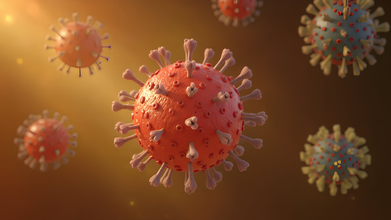
Credits: Canva
A new, highly mutated COVID variant called 'Cicada' is spreading in the US. This is the BA.3.2 mutation of the COVID-19 variant. While nationally the cases of COVID have remained low, the BA.3.2 strain is gaining traction across the globe.
What Is The Cicada COVID Variant?
Cicada or the BA.3.2 strain emerged over a year ago, and simmered until last fall. However, this was when it started ramping up in countries including the US. As of February, BA.3.2 has been detected in at least 25 states, noted the US Centers for Disease Control and Prevention (CDC).
The variant's slew of genetic changes in its spike protein is what has made people concerned. This is what makes it unique and distinct from other variants in circulation.
According to Andrew Pekosz, Ph.D., a virologist at the Johns Hopkins Bloomberg School of Public Health, as reported by TODAY.com, "It [the variant] has a lot of mutations that may cause it to look different to your immune system."
The SARS-CoV-2 virus that causes COVID-19 mutates constantly and spreads over time. It thus leads to emergence of new variants.
A new study published in the CDC’s Morbidity and Mortality Weekly Report suggests that emerging variants could weaken protection gained from prior COVID-19 infection or vaccination.
One such “hyper-mutated” strain, BA.3.2, is now being closely tracked by public health officials. In December 2025, the World Health Organization classified it as a “variant under monitoring.”
Read: COVID Variant BA.3.2 Spreads To 23 Countries: Is The Variant Under Monitoring A Cause Of Worry?
When Was Cicada COVID Variant First Detected?
BA.3.2 was first detected in South Africa in November 2024. It is a descendant of BA.3, an Omicron subvariant that appeared in 2022 and briefly circulated alongside BA.1 and BA.2, according to the CDC.
Although BA.3 never became dominant, it did not completely disappear. “It fizzled out, but persisted at low levels,” said Pekosz. After two years and dozens of mutations, BA.3.2 eventually emerged.
For much of 2024, the variant spread quietly, overshadowed by dominant strains like Nimbus and XFG, which stem from BA.2. However, by September, BA.3.2 began gaining ground. “It was under the radar, replicating, until it started spreading more efficiently between people,” Pekosz noted.
What sets BA.3.2 apart is its spike protein, which carries an unusually high number of mutations — around 70 to 75. This makes it significantly different from strains such as JN.1 and LP.8.1, which current COVID-19 vaccines are designed to target.
The CDC describes BA.3.2 as a “genetically distinct” lineage compared to recent variants. Early laboratory studies suggest it may be capable of evading existing immunity, as its spike protein changes help it escape neutralising antibodies.
What Makes Cicada So Unique?
The BA.3.2 variant is nicknamed by T Ryan Gregory, Ph.D., a professor of evolutionary biology at the University of Guelph. He wrote on X, formerly Twitter: "Well, it's that time again. Meet "Cicada", BA.3.2* (including descendant RE.*). This one has been underground for years (its ancestor BA.3 hasn't been circulating since early 2022, and didn't do much then either) but is now emerging as a contender for the next major lineage."
While most of the symptoms of this new variant remains same as from the other variants, one thing that stands out here is the gastrointestinal symptoms that cicada could cause. However, experts note that this variant will not make anyone more sicker. Other symptoms include:
- Cough
- Fever or chills
- Sore throat
- Congestion
- Shortness of breath
- Loss of smell or taste
- Fatigue
- Headache
- Follow Us :


© 2024 Bennett, Coleman & Company Limited