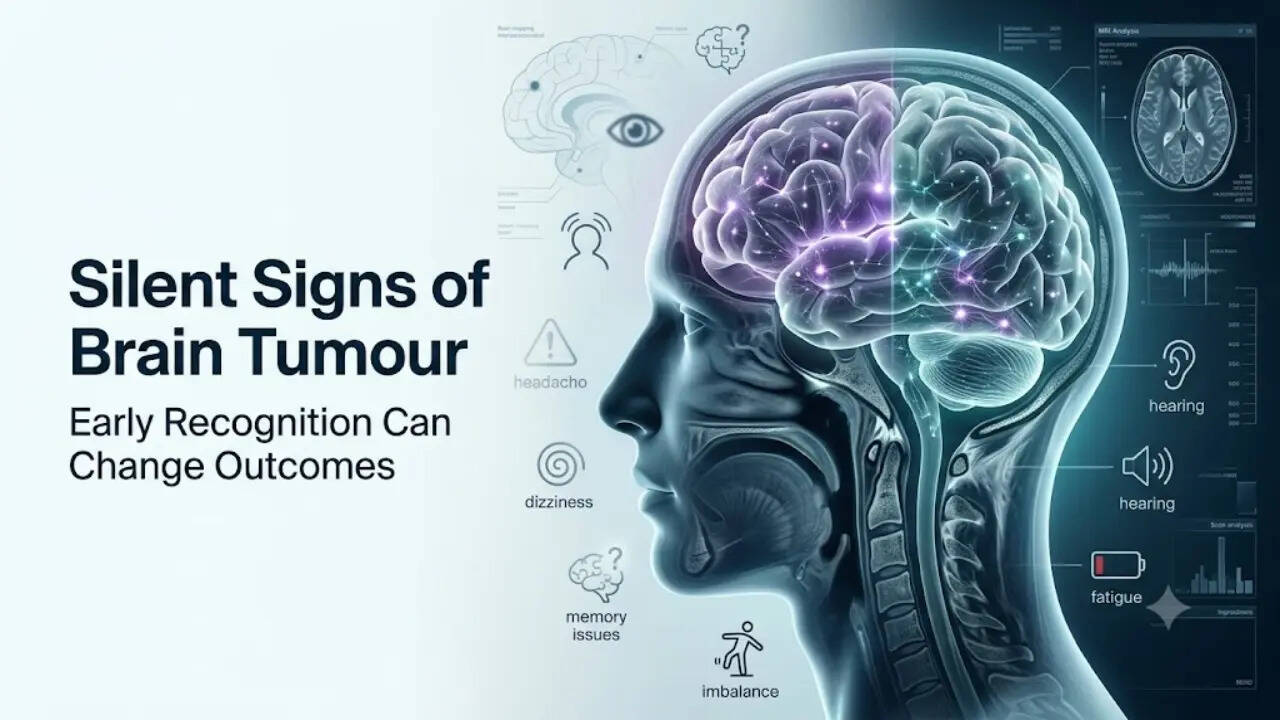
Brain tumours are often perceived as rare conditions that present dramatic symptoms. Many patients experience subtle and seemingly unrelated signs that can easily be mistaken for stress, fatigue, migraines, vision problems, or age-related changes. As a result, diagnosis is frequently delayed, allowing the tumour to progress and potentially affecting treatment outcomes.Dr Abhiram Chandra Gabbita, neuro-oncological & skull base surgeon and senior consultant at AIG Hospital, Hyderabad, in an interview with Health and Me, listed the symptoms of a brain tumour that most patients miss.One of the biggest challenges in brain tumour care is that symptoms vary depending on the tumour’s size, location, growth rate, and the part of the brain affected. Unlike many other diseases, there is no single symptom that definitively points to a brain tumour.The Symptoms People Often MissIn the early stages, symptoms can be mild and intermittent. Symptoms that warrant immediate consultation are:Persistent or worsening headache, especially a morning headache or a headache accompanied by vomitingFirst-time seizure in an adultBlurred or double visionHearing changesLoss of smellSubtle weakness, numbness, imbalance, or clumsiness on one sideDifficulty speaking, word-finding problems, confusion, or memory declinePersonality changes, irritability, withdrawal, poor judgement, or reduced work efficiencyUnexplained nausea, vomiting, drowsiness, or increasing fatigueThese symptoms are often ignored or attributed to busy lifestyles, lack of sleep, or work-related stress.As the tumour grows, symptoms may become more noticeable. Patients can develop worsening headaches, recurrent vomiting, blurred or double vision, hearing difficulties, weakness in the arms or legs, balance issues, speech difficulties, or changes in personality and behaviour.In more advanced stages, symptoms can include seizures, significant neurological deficits, loss of coordination, confusion, severe cognitive impairment, or reduced consciousness. At this stage, the tumour may have already caused considerable pressure within the skull or affected critical brain functions. Why Early Diagnosis MattersTimely diagnosis can significantly influence treatment outcomes. When detected early, brain tumours are often smaller, more localised, and potentially easier to manage through surgery. Early diagnosis enables safer and more complete surgery and allows earlier access to modern targeted therapies, radiation therapy, or a combination of treatment approaches.Early intervention can help preserve neurological function, reduce complications, improve quality of life, and increase the likelihood of favourable long-term outcomes.Conversely, delayed diagnosis can allow a tumour to grow larger and affect critical areas of the brain, making treatment more complex and increasing the risk of permanent neurological impairment and cognitive dysfunction.Advances in Treatment and the Importance of Timely InterventionBrain tumour treatment has advanced significantly in recent years, enabling clinicians to diagnose and treat tumours with greater precision while preserving healthy brain tissue. Treatment options typically depend on the tumour's type, size, location, grade, and the patient's overall condition. Surgery remains the cornerstone of treatment for many brain tumours and is often complemented by radiation therapy, chemotherapy, targeted therapies, or a combination of these approaches.Technological innovations are further enhancing surgical outcomes. Today, there are systems that allow neurosurgeons to access deep-seated brain tumours and perform precise, non-thermal tumour removal while using specialised fluorescence imaging to better visualise cancerous tissue, particularly in high-grade gliomas. Similarly, ultrasonic aspirator technology enables the safe and accurate removal of tumour tissue while preserving delicate surrounding brain structures. Neuro-endoscopic systems help facilitate safer tumour removal in a minimally invasive manner.Awareness remains one of the most powerful tools in improving brain tumour outcomes. Recognising the early warning signs and seeking timely medical advice can make a meaningful difference in a patient's treatment journey.Doctors encourage individuals to listen to their bodies and pay attention to symptoms that persist or worsen over time. Early recognition, accurate diagnosis, and prompt intervention can not only improve treatment success but also help patients maintain their independence, neurological function, and quality of life.The key message is pattern and progression. Symptoms that persist, worsen, or occur in combination should not be ignored. Early diagnosis can change outcomes by allowing safer surgery, better preservation of speech, movement, vision, and cognition, earlier oncological treatment, and improved quality of life. Awareness should create action, not fear. So, spot the signs early to stop brain tumour progression early.