
- Health Conditions A-Z
- Health & Wellness
- Nutrition
- Fitness
- Health News
- Ayurveda
- Videos
- Medicine A-Z
- Parenting
Actress Saba Azad Hospitalized After Parasite Infection: Advises Washing Salad Leaves Properly

Credit: Saba Azad/Instagram
Actress Saba Azad has been hospitalized after being infected with the parasite Cyclospora cayetanensis. The infection has led to significant weight loss of around 4 kg, leaving her extremely weak and barely able to walk.
Calling the bug “nasty piece,” Azad, in a post on social media platform Instagram, rued that she got the infection even though she always ate home-cooked food and carried her own water bottle for drinking water.
The actress also shared a photo of herself lying in a large hospital bed, looking visibly frail. She described the ordeal as the “worst 14 days” of her life.
“Worst 14 days of my life. Cyclospora cayetanensis...you nasty piece of work!! For someone who only ever eats home food, carries her water bottle everywhere, this stomach bug came outa nowhere, that too at the busiest time of the year for me,” she wrote on Instagram.
She also shared how the illness drastically affected her physical strength and her weight.
“I have lost 4 kgs that I didn’t have spare in two weeks, and I can barely walk,” Azad said.
“One day I'm training twice a day, doing pull-ups, lifting heavy, and the next I'm half my size, without strength to lift a goddamn toothpick, let alone weights,” she added.
The actress and musician advised people to wash their salad leaves and vegetables properly.
"For the love of your gut, wash your salad leaves and veg like your life depends on it - cause sometimes it really does!!”
The 41-year-old noted that “Baking soda + veggie wash” is her new way to wash them.
She also mentioned that her boyfriend, Hrithik Roshan, has been a constant source of support during this time.
What is Cyclospora cayetanensis
Cyclospora cayetanensis is a parasite that leads to the illness Cyclosporiasis -- a form of food poisoning.
One can get a Cyclospora infection from contaminated food or water. It causes watery diarrhea and other intestinal symptoms.
A Cyclospora infection can be mild or very serious, and may last weeks or months. It is typically treated with antibiotics.
People with weakened immune systems, such as those with HIV/AIDS or cancer, are more at risk of severe disease.
Symptoms Of Cyclospora Infection
Symptoms of cyclosporiasis usually start within a week of exposure (eating or drinking contaminated food or water) and include:
- Watery or explosive diarrhea
- Loss of appetite
- Bloating and gas
- Fatigue (extreme tiredness)
- Low-grade fever
- Nausea
- Stomach cramps
- Vomiting
How To Prevent Cyclospora Infection
While it is not yet fully understood how Cyclospora gets into food and water, individuals can prevent cyclosporiasis by not consuming food or water that may be contaminated with feces.
The US CDC advises people to take measures to prevent the foodborne illness such as:
- Wash your hands with soap and water before and after handling or preparing raw fruits and vegetables.
- Wash all fruits and vegetables thoroughly under running water before eating, cutting, or cooking.
- Fruits and vegetables that are labeled "prewashed" do not need to be washed again at home.
- Scrub firm fruits and vegetables, such as melons and cucumbers, with a clean produce brush.
- Cut away any damaged or bruised areas on fruits and vegetables before preparing and eating.
- Refrigerate cut, peeled, or cooked fruits and vegetables as soon as possible (within two hours).
What Is The Viral ‘Boy Kibble’ Trend?

Credit: Erik Svend Svendsen/Instagram
The social media platform TikTok has once again sparked a viral trend—this time for the right reasons. The latest craze, known as the “Boy Kibble” trend, is gaining popularity among Gen Z men and promotes a simple approach to healthy eating.
The recipe: ground beef, rice, and sometimes vegetables or fat.
What Is ‘Boy Kibble’?
Boy Kibble represents a human version of pet food. More than taste or presentation, it focuses on efficiency while also achieving nutritional balance with protein, fiber, and calories.
The food trend is also a spin on the viral “girl dinner” trend, which went viral in 2023, and includes bread or cheese in some way.
The new Boy Kibble is the masculine version, with young men looking for a simple way that is high in protein and will also help them lose weight.
Notably, people are also customizing the ingredients according to their preferences. Instead of ground beef, some are opting for ground turkey, served with rice and avocado.
Others reported using potatoes instead of rice in their “boy kibble”, while some are adding kale and other greens to their beef.
Also read: What Is the Viral Water Stacking Trend?
What Prompted The New ‘Boy Kibble’ Trend?
According to experts, the trend has been fueled by
- fitness influencers,
- longevity podcasts
- interest in maximizing performance.
The 2025-2030 US Dietary Guidelines, which prioritize red meat, whole milk, and other animal sources of protein, have also reportedly inspired the trend.
Who Created The ‘Boy Kibble’ Trend?
The trend was coined by a TikTok user in January, for dinner, filled with essential nutrients -- a simple bowl of beef and rice, the Independent.co.uk reported.
“Y’all may have girl dinner, but I got boy kibble,” said the user by the name @thequadfather, showing off the ground beef that’s rich in protein. “We are not the same.”
Is The ‘Boy Kibble’ Trend Healthy?
Emily Contois, a University of Tulsa media studies professor, noted the term may help normalize once niche eating habits associated with athletes and bodybuilders, KTLA news reported.
Adrienne Bitar, a Cornell University professor, told the Times that the trend reflects a long-standing desire to find an “optimal” way to eat. It prioritizes measurable results over enjoyment.
While "girl dinner" was more "fun, whimsical, and creative,” Bitar said, boy kibble is focuses on joy than flavor.
It also is based on efficiency and results.
She further added that the trend mirrors broader cultural shifts in which nutrition is increasingly discussed in terms of optimization and productivity, rather than pleasure or tradition, the report said.
Hydration, Energy, Calm: The Science Behind Sattvic Diet In Summer
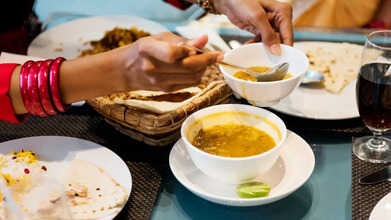
In sattvic diets, seasonal fruits and vegetables, grains, nuts, and seeds, take precedence. (Photo credit: iStock)
New Delhi: The sattvic diet traces back to its roots in ancient Ayurvedic knowledge and is based on the philosophy of Sattva, which stands for harmony, balance, and purity. It places a focus on whole, fresh, and minimally processed meals that support both physical and mental vigour. This "yoga of eating" becomes a biological requirement for preserving homeostasis in the intense summer heat.
Dr. Narendra K. Shetty, Chief Wellness Officer, Kshemavana Naturopathy and Yoga Center, Bengaluru, in an interview with Health and Me, spoke about the science behind following a sattvic diet in summer.
Core principles of sattvic foods
In sattvic diets, foods that are rich in prana (life-force energy), such as seasonal fruits and vegetables, grains, nuts, and seeds, take precedence. "Tamasic" (heavy) foods such as meat and processed sugars should be avoided, as they can weigh the body down and dull the mind. "Rajasic" (stimulating) foods such as caffeine and chili are also avoided.
Read more: Smartphone Overuse Linked To Rising Risk Of Eating Disorders Among Youth, Study Finds
Scientific basis of nutrition and digestion in summer
According to science, the body's internal thermostat works harder in the summer. Agni (digestive fire) naturally decreases in high ambient temperatures. In order to promote cooling through perspiration, blood flow is frequently redirected from the digestive tract towards the skin's surface. The body struggles to break down dense nutrients with decreased enzymatic efficiency when complex, heavy proteins are consumed during this period, leading to metabolic stress.
Summer physiology: Why light eating matters
A shift towards thermoregulation is required during summer. Heavy meals cause diet-induced thermogenesis, in which heat is produced internally during digestion. By consuming "light" foods, we lower this internal heat load. Because sattvic meals are high in fibre and water, they require less energy to digest, allowing the body to focus on staying cool rather than working on digestion.
Read more: Shocking! Eating One Whole Pack Of Chips Daily Raises Stroke Risk By 67 Per Cent
Sattvic diet benefits in hot weather
- Hydration: Electrolyte balance is maintained due to naturally high water content.
- Energy: Provides a steady release of glucose without the "crash" caused by heavy fats.
- Mental calm: Reduces agitation and fatigue brought on by heat.
Key sattvic foods for summer
To remain "bright," one should focus on the following:
- Cooling fruits like grapes, watermelon, and muskmelon
- Hydrating vegetables like cucumber, zucchini, and bottle gourd
- Herbs and dairy: fresh buttermilk (chaas), coriander, and mint
Eating light is not just a lifestyle choice but a scientific response to our biological needs. By adopting a sattvic perspective, we ensure that we not only survive but also thrive in the heat by aligning our internal environment with the external season.
The Science Behind A Sweet Tooth: Here's Why You Crave Dessert After Every Meal

Sweet cravings could over time lead to weight gain and even diabetes. (Photo credit: iStock)
New Delhi: Many people have an irresistible urge to eat something sweet right after a meal. Although this habit is often written off as a preference or some sort of cultural habit, new scientific data suggest that post-meal sugar cravings hint at something serious: a metabolic imbalance. In an interaction with Health and Me, Dr. Aravind Badiger, technical director, BDR Pharmaceuticals, decoded the intricate science behind a sweet tooth, and as per the expert, it is because of a nutrient deficiency.
The Blood Sugar–Insulin Connection
Upon eating a meal high in carbohydrates, blood glucose levels rise. This triggers the release of insulin from the pancreas. If the meal is low in protein and fibre, insulin spikes more quickly, making the blood sugar drop sooner. This drop then triggers a signal to the brain that the body needs quick fuel, often interpreted as a desire for something sweet. This cycle, a rapid rise and fall in blood glucose levels, is known as reactive hypoglycaemia, one of the common reasons people feel the need to have dessert after meals.
Read more: Metformin Controls Blood Sugar With Help From Brain Neurons, Finds Study
The Missing Nutrient: Protein
Protein helps to regulate blood sugar levels after a meal. In addition, adequate protein:
- Slows digestion and glucose absorption
- Reduces insulin spikes
- Improves satiety by elevating GLP-1 and peptide
- Modulates hunger signals via the hypothalamus
When a meal is low in protein, the body does not get those satisfying signals it is used to receiving. This drives the brain to find sources of energy that work quickly—sugars. In fact, clinical nutrition studies indicate that balanced meals containing at least 20–30 grams of protein reduce post-meal sugar cravings significantly.

The Gut–Brain Axis Influence
Your gut microbiome also plays an important role. Meals high in simple carbohydrates encourage the growth of gut bacteria that thrive on sugar. Evidence shows that low-protein diets shift the balance of gut microbes, which further increases sweet cravings. Thus, the less protein you consume, the more your microbiome may “push” you towards sugary foods.
Emotional and Behavioural Factors
For some people, dessert cravings are psychologically conditioned. The body learns over time to attach a reward to the end of a meal by releasing small amounts of dopamine. But even in such cases, stabilisation of blood sugar through adequate protein intake reduces the emotional component of cravings.
How to Reduce Sugar Cravings After Meals
- Include 20–30 g of protein in each meal, including eggs, dal, legumes, tofu, fish, lean meats, and dairy products.
- Choose complex carbohydrates over refined sugars.
- Add vegetables high in fibre to delay the absorption of glucose.
- Drink plenty of water – mild dehydration produces symptoms similar to sugar cravings.
- Sleep 7–8 hours; sleep deprivation increases the hunger hormone ghrelin.
- Do not conclude every meal with sugar. It is a conditioned response and needs to be broken gradually.
- Follow Us :


© 2024 Bennett, Coleman & Company Limited