
- Health Conditions A-Z
- Health & Wellness
- Nutrition
- Fitness
- Health News
- Ayurveda
- Videos
- Medicine A-Z
- Parenting
Beef, Pork, and Lamb Might Do More Than Fill You Up; Study Finds They Could Be Flaring Up Your Gut
Credits: Canva
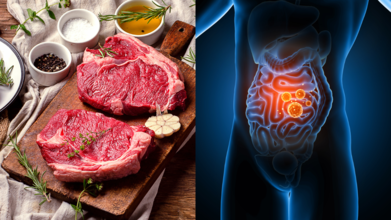
Gaining weight by eating too many lamb chops or beef burgers is not the only risk. A new study published in Molecular Nutrition & Food Research suggests that red meat might be less of a comforting indulgence and more of a gut irritant. According to researchers at Capital Medical University in China, diets overloaded with pork, beef, or mutton could stoke inflammation inside the digestive system, potentially worsening gut-related disorders.
The Experiment
Scientists turned to an animal model. Mice were fed a diet high in red meat before being given a chemical that induces colitis, a condition that resembles inflammatory bowel disease (IBD) in humans. Results showed that the red-meat-fed mice experienced significant weight loss, shorter colons, and visible tissue damage. Their immune systems also went into overdrive, flooding the gut with inflammatory cells. Essentially, the study found that when the gut is already irritated, red meat makes the fire burn hotter.
All Red Meat Counts
Before you point fingers at beef or lamb individually, the researchers clarify that the issue is not with one specific type of red meat. The effect was observed across the board, whether it was pork, beef, or mutton. The common thread was the way red meat in general seemed to intensify inflammatory signals in the gut.
Gut Bugs in Trouble
One of the most striking findings was how red meat tampered with the gut microbiome—the trillions of tiny organisms that work quietly to regulate digestion and immunity. In the study, mice on red meat lost beneficial bacteria, particularly those that protect the gut lining and keep inflammation low. In their place, harmful microbes took over, making the digestive tract more vulnerable.
Why This Matters for Humans
While the experiment was done in mice, the implications for humans are worth paying attention to. People with conditions like Crohn’s disease or ulcerative colitis often report flare-ups after eating red meat. The study offers a possible explanation for this: the combination of heightened inflammation and a disrupted microbiome makes the gut more sensitive. For those already battling IBD, red meat might be less of a protein-packed friend and more of a troublemaker.
The Moderation Mantra
Does this mean you should swear off meat forever? Not necessarily. The researchers were clear that the study does not prove red meat directly causes IBD or that it should be completely eliminated from your plate. Instead, moderation seems to be the golden rule. If you do enjoy red meat, balance it out with plenty of fibre, fruits, vegetables, and lean proteins such as fish or chicken. A varied diet gives your gut a better chance of staying healthy and less inflamed.
Handle with Care
Red meat has long been under scrutiny for its links to heart disease and cancer risk, and now gut health joins the list of concerns. While more human studies are needed, the findings serve as a gentle nudge to reconsider how often you pile your plate with steak or kebabs. Your gut microbiome is like a delicate ecosystem. Treat it kindly, and it will return the favour.
Nutrition Experts Reveal What a Spoonful of Peanut Butter Does to Your Body

(Credit : Pinterest)
Peanut butter may look like a simple pantry staple, but nutritionally it is surprisingly complex. Just one spoonful contains a mix of plant protein, unsaturated fats, fiber, vitamins, and minerals that play important roles in the body.
Research suggests these nutrients can influence processes such as energy metabolism, heart health, and appetite regulation. Nutrition specialists say that when consumed in moderation, peanut butter can be a nutrient-dense addition to a balanced diet with measurable health benefits.
Here’s what’s really going on in your body when eat a tablespoon of peanut butter:
A Steady Source of Energy
Peanut butter is a nutritional powerhouse that delivers steady energy. A two-tablespoon serving has about 190 calories, 7–8 grams of protein, and about 16 grams of fat - the majority of which is heart-healthy unsaturated fat.
These fats slow the rate of digestion, so glucose enters the bloodstream more gradually instead of spiking it immediately. Thus, they help prevent the blood sugar spikes and crashes that can lead to snacking, which is why peanut butter is so commonly suggested as a satiating snack.
In fact, a randomized crossover clinical trial published in the British Journal of Nutrition (2013) found that adding peanuts or peanut butter to a breakfast meal improved blood-glucose control and appetite responses later in the day among women at high risk of Type 2 diabetes.
In addition, the combination of protein, fiber, and fat helps promote feelings of fullness, which can prevent unneeded snacking throughout the day.
Supports Heart Health
Peanuts are a good source of monounsaturated and polyunsaturated fats, the same heart-healthy fats found in olive oil. These fats may reduce LDL cholesterol while increasing or maintaining HDL cholesterol levels, providing overall cardiovascular protection.In a large study published in the Journal of the American College of Cardiology (2017) , researchers analyzed data from more than 200,000 people in three major long-term cohort studies. They found that adults who ate nuts (including peanuts) two or more times a week had around 16 percent lower risk of cardiovascular disease compared with those who never ate nuts.
Another JAMA Internal Medicine (2015) review revealed that people who regularly ate peanuts and other nuts had lower overall mortality and lower rates of death from heart disease. The results indicate that peanuts or peanut butter can be part of a healthy diet that promotes heart health in the long term.
May Help Control Weight Gain
While peanut butter is high in calories, it may still help people maintain a healthy weight. Due to its high protein, healthy fat, and fiber content, peanut butter slows gastric emptying and promotes satiety.Nutrition experts have found that nuts are often linked to better appetite control and lower overall energy intake, even though the food is high in calories. In short, peanut butter can be a powerful appetite suppressant to help stop overeating.
Delivers Important Nutrients
Peanut butter also offers a wealth of micronutrients to support good health. Peanuts contain Vitamin E, Magnesium, Folate, Niacin and Arginine, which have roles in immune system function, circulation and cell health. Magnesium is needed for healthy nerve and muscle function, while Vitamin E is a powerful antioxidant that helps protect cells from damage.Additionally, peanuts contain plant compounds, like polyphenols and resveratrol, which most nutrition scientists have explored for their possible anti-inflammatory and cardioprotective benefits.
Moderation Still Matters
Nonetheless, peanut butter should be used in moderation. Large servings can provide too many calories since this food is energy dense. Some commercially available brands also contain added sugar, salt, or hydrogenated oils which reduce the value. Nutrition professionals typically advise selecting natural peanut butter with fewest ingredients, and using no more than one to two tablespoons per serving.One spoonful of peanut butter can sound trivial, but it packs a powerful nutrient punch for energy, heart health, and fullness. Supported by large population and nutrition studies, and consumed in moderation and in the context of an overall healthy diet, peanut butter can be a healthy part of the diet. In some cases excellent nutrition really can be just a spoonful.
Lead Found In Everyday Vegetables - Reveals A Bengaluru Study
Credits: Canva
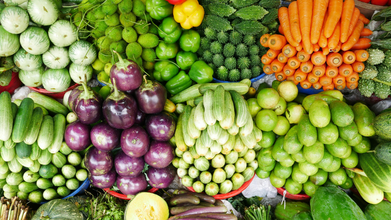
With focus on better diets, one turns to everyday vegetables, however, as per a recent Bengaluru study, lead was found in vegetables. 72 samples of vegetables were collected from the local markets in and around Bengaluru. 19 of them were found to contain lead, which is a toxic heavy metal that could harm human health.
This investigation revealed that even regular vegetables could pose harm to one's health.
What Did The Investigation Reveal?
A report was submitted to the National Green Tribunal (NGT) on February 12, 2026 by a committee of the Central Pollution Control Board (CPCB). The vegetable samples were sent to laboratory for testing, under the verification by the Food Safety and Standards Authority of India (FSSAI).
The test checked for 11 heavy metals, three mineral and 230 types of pesticides.
The vegetables that showed lead above the safety limits were:
- Bottle gourd
- Beans
- Beetroot
- Cabbage
- Capsicum
- Chillies
- Cucumber
- Jute leaves (saluyot leaves)
- Knol-khol
- Squash
Brinjal or eggplant showed the most concentration of lead. The report noted that it contained 1.953 mg/kg of lead. However, the safe limit is only 0.1 mg/kg. The report noted that eggplant contained 20 times higher than the permissible limit.
Of the 70 samples, 10 were found to contain pesticide levels above permissible limits.
Why Is There Lead In Vegetables?
Experts explain that if lead enters soil or water, plants can absorb it through their roots. When the lead gets inside the plant, it becomes part of the vegetable tissue. This is why even if you wash the vegetables, you will not be able to get rid of it.
What Does Lead Do To Humans?
As per the World Health Organization (WHO), exposure to lead can affect multiple body systems and is particularly harmful to young children and women of child-bearing age. Once in body, lead is distributed to brain, liver, kidney, and bones. It is also stored in the teeth and bones, where it can accumulate over time.
The WHO also notes that lead exposure was attributed to more than 1.5 million deaths globally in 2021, primarily due to cardiovascular effects. During pregnancy, lead could become a source of exposure to the developing fetus.
People are exposed to lead through both environmental and workplace sources. This can happen when they inhale tiny lead particles released during activities such as smelting, recycling batteries, stripping old lead-based paint, or burning materials like plastic cables that contain lead. Exposure can also occur when people swallow contaminated dust, soil, water, or food.
Why Children Are More Vulnerable
Young children face a much higher risk of lead poisoning than adults. Their bodies can absorb four to five times more lead from the same amount that is ingested. Their natural curiosity also increases exposure. Children often put their hands, toys, or other objects in their mouths, which makes it easier for them to ingest lead-contaminated dust, soil, or paint.
Some children may also develop pica, a condition where they repeatedly eat non-food items such as soil or paint chips. This behavior greatly increases the risk of lead exposure. In several countries, environmental contamination from activities like battery recycling and mining has led to large outbreaks of lead poisoning, sometimes resulting in deaths among young children.
What Happens When Lead Enters the Body
Once lead enters the body, it travels through the bloodstream and spreads to several organs, including the brain, kidneys, liver, and bones. Over time, much of the lead gets stored in the bones and teeth, where it can accumulate for years.
During pregnancy, stored lead in the bones can be released back into the bloodstream, which may expose the developing fetus. Children who are malnourished are even more vulnerable because deficiencies in nutrients like calcium and iron make the body absorb more lead.
Health Effects of Lead Exposure in Children
Lead exposure can have serious and lasting effects on a child’s health. Extremely high levels can severely damage the brain and central nervous system, leading to seizures, coma, or even death. Children who survive severe poisoning may suffer from permanent intellectual disabilities and behavioral problems.
Even lower levels of exposure, which may not cause obvious symptoms at first, can still harm multiple body systems. Lead can interfere with brain development, resulting in reduced IQ, shorter attention span, learning difficulties, and behavioral changes such as increased antisocial behaviour.
In addition, lead exposure has been linked to anaemia, high blood pressure, kidney damage, weakened immune function, and reproductive health problems. Because the effects can be long-lasting and sometimes irreversible, preventing exposure remains the most effective way to protect children’s health.
Just 2 Days Of This Meal Can Cut Your Bad Cholesterol By 10%
(Credit - Canva)
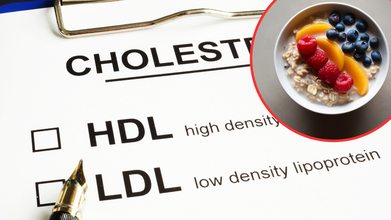
It turns out that a "boring" bowl of oatmeal might be a secret weapon for heart health. A recent study from the University of Bonn, published in Nature Communications, suggests that eating a diet focused almost entirely on oatmeal for just 48 hours can significantly lower cholesterol.
The study looked at people with metabolic syndrome, a group of health issues like high blood pressure, high blood sugar, and extra body weight that increase the risk of heart disease and diabetes.
Using oats as medicine isn't actually a new idea. Back in the early 1900s, a German doctor named Carl von Noorden used "oat cures" to help people with diabetes. While modern medications eventually took center stage, researchers wanted to see if this old-school method still held value for preventing disease today.
Can Oats Help Control Bad Cholesterol?
To test the theory, 32 men and women followed a strict plan for two days. Here is how it worked:
- They ate 300 grams of boiled oatmeal per day, split into three meals.
- They could only add very small amounts of fruits or vegetables.
- They cut their usual daily calories roughly in half.
A second "control group" also cut their calories by half but didn't eat oats. While both groups saw some health improvements from eating less, the oatmeal group saw much better results. Not only did their LDL drop by 10%, but they also lost about 2 kilos on average. The study notes that that they also showed a slight improvement.
Even more surprising? The lower cholesterol levels were still visible six weeks later, suggesting that a short "oat reboot" every month or so could have lasting benefits.
Why Is It Important To Lower Cholesterol Levels?
Proteins carry cholesterol through your blood as "lipoproteins." HDL is "good" because it clears extra cholesterol by sending it to your liver for removal. Non-HDL (mostly LDL) is "bad" because it delivers cholesterol to your body; too much causes fatty buildup in your arteries, which blocks blood flow and significantly increases your risk of heart attacks or strokes.
Lowering high cholesterol is vital because it directly protects your heart and brain. When "bad" cholesterol levels are too high, sticky deposits called plaques narrow your arteries
How Do Oats Lower Bad Cholesterol Levels?
The researchers believe the answer lies in our gut microbiome (the bacteria living in our digestive system).
When we eat oats, certain "good" bacteria thrive. These microbes break down the oats into substances like ferulic acid, which travels into the bloodstream and helps the body process cholesterol more effectively.
These bacteria also help prevent the body from creating compounds that lead to insulin resistance, a major cause of diabetes.
The study also found that "a little bit" of oatmeal might not be enough for a major impact. In a separate part of the study, people ate 80 grams of oatmeal a day for six weeks without changing the rest of their diet. This approach only led to small changes.
It seems the combination of high oat intake and temporary calorie restriction is the "magic formula" that triggers the most significant health improvements.
- Follow Us :


© 2024 Bennett, Coleman & Company Limited