
- Health Conditions A-Z
- Health & Wellness
- Nutrition
- Fitness
- Health News
- Ayurveda
- Videos
- Medicine A-Z
- Parenting
'Eat Ice-cream' Says Dr Ezekiel Emanuel, Along With Other Simple Tricks To Live A Long And Healthy Life

Credits: Canva and Wikimedia Commons
Ezekiel Jonathan Emanuel, an American oncologist and bioethicist says that this New Year, "Ice cream will make you happy, and that's very important." In an interview with CBS News, Dr Emanuel's unusual advice for 2026, to live longer is by eating ice cream.
How Can Eating Ice Cream Make A Difference, According To Dr Emanuel?
"Ice cream is a good dairy product; it's got protein, its saturated fats are in a globule, so it doesn't affect you as much as saturated fats in meats and other things," he said. "Plus, you typically do it socially with someone else. And you know, being happy is a very important part of living a long time."
Dr Emanuel says that "we are here for only 75, 85, 90 years". So, he suggests that we must make our lives enjoyable and make it fulfilling. He also wrote a book titled Eat Your Ice Cream: Six Simple Rules For a Long and Healthy Life. "I want people to stop obsessing. make it part of your life. You should like exercising, you should like eating well. Otherwise, you're not going to do it for years and years and decades, which is what's necessary for a long, healthy life," he says.
Read: A Longevity Expert Who Studies 'Super Agers' Eats All THIS In A Day
The book is almost like a handbook of what to do, what to eat, and how to exercise. Most importantly, it talks about the importance of sleep. He emphasizes on stopping the things that are not good for one's health. "'Don't be a schmuck' is my father's reference to us when we were being stupid. And so, there are lots of things that we do as human beings that can be schmucky: smoking, vaping, doing drugs, not taking your vaccines. I don't agree with the current administration, and they're dead wrong on this," he says.
The Safest Level Of Alcohol Consumption Is Zero
Dr Emanuel says that everybody always want to know the safest level or the right amount of alcohol. In his so-called schmuck list, alcohol makes its way. He says, "There has been a lot of research on alcohol, so here's the way I distill it: The safest level is probably zero. There are some studies, and we should be clear, where it's half a cup a day, three cups a week."
However, no one drinks half a glass of wine, to this the doctor says, "So, you drink every other day".
"You're not going from 65% to zero. So, you have to give people reasonable advice. And the reasonable advice is, first of all, no binge drinking, that's really bad for you. Don't drink alone. That's really bad for you. If you're using alcohol as a lubricant for social interaction, which many people do, that's probably good; you're getting some benefit from the social interaction," he explains.
Social Interactions And Relationships Matter
Dr Emanuel's consistent theme is "social interactions", this is something he learned growing up with brother Ari, a super-agent in Hollywood and his other brother Rahm, the former mayor of Chicago and ambassador, who may be running for president of the United States.
"The other thing I think they did, which was super-important for us, is we all slept in the same bedroom. We were a unit. Yes, we fought endlessly. And you know, I like to joke with people, we didn't go to bed until there was blood, you know, because of all the fights. But we were also each other's best friends," he says.
Do You Need To Take Fish Oil Supplements?

Credit: Canva
Fish oil supplements are capsules or liquids made from the fat (oil) of fatty fish and have recently gained popularity as a reliable source of omega-3 fatty acids, which are essential fats your body cannot make on its own.
However, Dr Sandeep Reddy Koppula, HOD - Internal Medicine, Arete Hospitals, warns that only certain people should opt to regularly consume these capsules.
He told Times Of India: "If there's one supplement almost everyone has considered at some point, it's fish oil. Patients often walk into clinic holding a bottle and ask, 'Doctor, should I be taking this daily?' The honest answer is — it depends far more on the person than on the popularity of the supplement.
"If you already eat fish two or three times a week, maintain balanced nutrition, and have no cardiovascular risk factors, adding a capsule may not provide meaningful additional benefit."
He also noted that supplements work best when correcting a deficiency or addressing a defined medical problem and do not serve as daily insurance for people already meeting their nutritional needs.
According to the expert, these people should take the supplements:
1. Those with high triglycerides
Dr Koppula explained: "People with high triglyceride levels - a specific type of blood fat - are among the clearest candidates. In such cases, medically supervised omega-3 supplementation can help lower triglycerides alongside diet and lifestyle changes."
2. Some patients with established heart disease
The expert noted: "Some patients with established heart disease may also be advised fish oil in carefully prescribed doses, though this decision is usually individualised rather than routine."
3. Those who rarely eat fish
Lastly, Dr Koppula added: "Those who rarely consume fatty fish - such as salmon, sardines, or mackerel — might also benefit, especially if their overall diet lacks healthy fats."
What Are Fish Oil Omega-3s?
Omega-3 fatty acids are polyunsaturated fats known for their crucial role in brain function and overall mental health. Fish oil is particularly rich in EPA and DHA, which are vital components of cell membranes and have strong anti-inflammatory effects in the body.
These omega-3s play a critical role in human development, and they are primarily found in fatty fish and fish oil. Since many people do not consume enough fish, supplementation is often recommended to ensure adequate intake of these essential fatty acids.
Although the body can convert another type of omega-3, alpha-linolenic acid (ALA), into EPA and DHA, this process is not highly efficient. As a result, fish oil supplements may provide a convenient way to ensure optimal levels of omega-3s.
Some popular sources of Omega-3 include:
- Salmon
- Cod Liver Oil
- Algae Oil
- Oysters
- Nuts and seeds, such as flaxseeds, chia seeds, and walnuts
- Plant oils, such as flaxseed oil, soybean oil, and canola oil
- Fortified foods, such as eggs, yogurt, juices, milk, etc.
Study Shows It Can Reduce Anger
Eating omega-3-rich foods can reduce your aggression levels by 28 percent, an Aggression and Violent Behavior study suggests.After analyzing 29 randomized controlled trials involving 3,918 participants in total, researchers from the University of Pennsylvania concluded that the fish oil supplement can reduce both reactive anger (in response to provocation) and proactive anger (behavior planned in advance) in people regardless of age, gender, medical diagnosis and length and dosage of treatment.
Neurocriminologist Dr Adrian Raine said of the results: "I think the time has come to implement omega-3 supplementation to reduce aggression, irrespective of whether the setting is the community, the clinic, or the criminal justice system.
"At the very least, parents seeking treatment for an aggressive child should know that in addition to any other treatment that their child receives, an extra portion or two of fish each week could also help."
The scientists theorized that omega-3 can reduce brain inflammation and regulate vital brain functioning which helps maintain aggression levels. However, they also noted that further research was needed to understand the link.
"Omega-3 is not a magic bullet that is going to completely solve the problem of violence in society. But can it help? Based on these findings, we firmly believe it can, and we should start to act on the new knowledge we have." Dr Raine said.
Harvard Scientists Reveal The Real Diet Secret To Heart Health

Credit: Canva
A massive study that tracked nearly 200,000 people has found that the quality of food, rather than the quantity of carbs and fats, affects heart health.
Public health researchers from Harvard University spent over 30 years examining the participants and discovered that if a diet contains too many processed foods and animal proteins or fats, or if it otherwise lacks in adequate vegetables, fruits, whole grains, healthy fats, or essential macronutrients, it may not benefit cardiovascular health as much in the long run, even if it is low carb or low fat by definition.
The scientists noted that those who ate healthy, varied diets with adequate macronutrients showed higher levels of 'good' cholesterol in their blood as well as lower levels of fats and inflammatory markers as compared to their counterparts.
The same group of people also had a significantly lower risk of developing coronary heart disease, the most common cause of heart attacks.
Based on their conclusion, Harvard epidemiologist Zhiyuan Wu, who led the research, advised: "Focusing only on nutrient compositions but not food quality may not lead to health benefits.
"These results suggest that healthy low-carbohydrate and low-fat diets may share common biological pathways that improve cardiovascular health. Focusing on overall diet quality may offer flexibility for individuals to choose eating patterns that align with their preferences while still supporting heart health."
The Rising Heart Attack Crisis
Heart attacks occur when blood flow to the heart is severely reduced or blocked due to a buildup of plaque which is made of fat, cholesterol and other substances in the heart's arteries.
During a heart attack, a lack of blood flow causes the cells and tissue in the heart muscle to die, leading to irreversible damage that can result in serious complications like arrhythmias, heart failure, cardiogenic shock, or cardiac arrest.
It is one of the leading causes of death in the country. Four Indians experience a heart attack every minute, with one in four dying of the cause. Experts have also noticed a rising trend of nearly 50 percent of heart attack patients being under the age of 40, with half of all heart attacks in Indian men occurring under 50.
Coronary Artery Disease: The Silent Killer
Coronary artery disease (CAD) is one of the most common illnesses that can cause a heart attack in people. It develops over years and has no clear signs and symptoms apart from a heart attack.
The illness begins due to a buildup of fats, cholesterol and other substances known as plaque in and on the artery walls.
Over time, this can cause narrowing or blockage of the coronary arteries and block the supply of oxygen-rich blood to the heart which can lead to chest pain (angina), shortness of breath and ultimately, heart attacks.
Typically, those above the age of 45, having a biological family member with heart disease, lack of sleep, smoking, consuming saturated fats along with other autoimmune diseases such as lupus and rheumatoid arthritis, can increase the risk of developing CAD.
Nearly one in 10 Indian adults suffer from CAD and about two million people die from the disease annually. Apart from this, about 18 to 20 million American adults aged 20 and older are also affected about the disease.
How Much You Should Exercise To Prevent CAD?
The American Heart Association recommends performing at least 150 minutes per week of moderate-intensity aerobic activity, such as brisk walking, dancing and gardening or 75 minutes per week of vigorous aerobic activity, such as hiking, running, cycling or and playing tennis or a combination of both, preferably spread throughout the week to maintain heart health.
Moreover, regular exercise can also reduce the risk of Type 2 diabetes, high blood pressure, dementia and Alzheimer’s as well as several types of cancer. It can also help improve sleep, cognition, including memory, attention and processing speed.
Dr Hayes recommends opting for a cardiac evaluation such as an electrocardiogram, or EKG; a stress test; a cardiac MRI or CT scan to generate images of your heart if you notice changes in your ability to exercise or cannot perform consistent levels of exercise.
Is Vitamin D And Calcium The Same Thing?
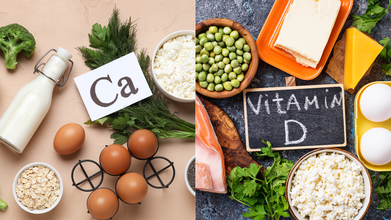
Credits: Canva
Vitamin D and calcium, both are nutrients you body needs to function well. While both are different nutrients, often many people get confused because vitamin D and calcium both are important for strong bones. Lack of both could lead to an increased risk of osteoporosis or bone fracture.
However, these two nutrients are different, react differently to your body and works differently too. The sources too could be different. Let us understand how.
What Are Some Of The Foods Rich In Vitamin D
As per WebMD, here are the following vitamin D rich food items:
- Wild-caught salmon (600-1,000 IU per 3.5 ounces)
- Farm-raised salmon (100-250 IU per 3.5 ounces)
- Canned sardines (300 IU per 3.5 ounces)
- Canned tuna (236 IU per 3.5 ounces)
- Fresh shiitake mushrooms (100 IU per 3.5 ounces)
- Egg yolk (20 IU per yolk)
However, there is one source, often recommended as the best and natural source, that is the exposure to sun. In this case too, one must keep in mind the sun burn, as it could cause skin problems, including skin cancer.
Beverages like milk, orange juice, yogurt, cereals too often have vitamin D added into them.
Vegan sources include
- Soy, almond, or oat milk (100-144 IU per cup)
- Cereal (80 IU per serving)
- Margarine (60 IU per tablespoon)
- Orange juice (100-105 IU per cup)
What Are Some Of The Sources Of Calcium?
- Cooked kale (179 mg per cup)
- Cooked collard greens (266 mg per cup)
- Dried figs (65 mg per 2 figs)
- Cooked broccoli (60 mg per cup)
- Oranges (55 mg per orange)
- Canned sardines with bones (325 mg per 3 ounces)
- Canned salmon with bones (180 mg per 3 ounces)
- Ricotta (335 mg per 4 ounces)
Vegan sources include:
- Canned baked beans (160 mg per 4 ounces)
- Cooked broccoli rabe (100 mg per cup)
- Cooked bok choy (160 mg per cup)
- Fortified almond, soy, or rice milk (300 mg per 8 ounces)
- Fortified fruit juices (300 mg per 8 ounces)
- Tofu prepared with calcium (205 mg per 4 ounces)
- Fortified cereal (100-1,000 mg per cup)
What Are The Roles Of Vitamin D And Calcium In Your Body?
As per the Bone Health and Osteoporosis Foundation, calcium is a mineral that builds and maintains dense, strong bones, while Vitamin D is a hormone that enables the body to absorb that calcium from food. Calcium also assists with nerve, muscle, and vascular functions, whereas Vitamin D is primarily responsible for calcium regulation.
Role: Calcium is a building block for bones and teeth; Vitamin D is the "key" that unlocks calcium absorption.
Definition: Calcium is a mineral (found in dairy, leafy greens); Vitamin D is a fat-soluble nutrient/hormone.
Source: Calcium comes from diet, while Vitamin D is produced by the skin via sun exposure in addition to food sources.
Deficiency Symptoms: Low calcium can lead to weak bones (osteoporosis). Low Vitamin D can cause soft bones (rickets in children) and prevents calcium absorption.
- Follow Us :


© 2024 Bennett, Coleman & Company Limited