
- Health Conditions A-Z
- Health & Wellness
- Nutrition
- Fitness
- Health News
- Ayurveda
- Videos
- Medicine A-Z
- Parenting
Eating Red Meat Can Increase Your Risk Of Diabetes, Study Shows

Red meat, especially processed varieties such as sausages and deli meats, can significantly increase your odds of developing diabetes, a British Journal of Nutritionstudy shows.
Researchers found that those who ate high quantities of red meat had a 49 percent more risk of developing the chronic disease than their counterparts. Additionally, the risk was similar for processed red meat (47 percent higher) and somewhat lower, but still significant, for unprocessed red meat (24 percent higher).
Each extra daily serving of total red meat was linked to a 16 percent higher risk of diabetes. Each serving of processed or unprocessed red meat was linked to about a 10 percent higher risk. The study did not clarify whether eating red meat paved the way for Type 1 or 2 diabetes.
Replacing red meat with plant-based protein sources, poultry, dairy products, and whole grains was associated with a lower odds of diabetes, but not with a proven risk reduction.
Plant-based proteins showed the strongest statistical association in substitution models. These results illustrate that diet is a potentially modifiable factor associated with diabetes prevalence, although the cross-sectional design precludes conclusions regarding prevention or causation.
What Is Diabetes?Diabetes is a condition characterized by high blood sugar (glucose) levels. It develops when the pancreas either doesn't produce enough insulin, doesn't produce any insulin at all, or when the body doesn't respond properly to insulin, a condition known as insulin resistance.
Type 2 diabetes is the most common form of diabetes and occurs when your body doesn't use insulin properly. The risk of developing Type 2 diabetes increases if you are overweight or obese, or if you have a family history of the condition.
India today carries one of the heaviest diabetes burden in the world. This is a crisis that is not just driven by genetics, but also by rapid urbanization, sedentary routines, shifting diets, stress, and late diagnosis.
With over 101 million Indians currently living with diabetes in India, and 136 million in the pre-diabetic stage, as stated by the latest ICMR estimates, the country is facing an epidemic. This threatens to overwhelm the healthcare system in the coming years.
According to Dr. Hetashvi Gondaliya, the surge is largely due to “unhealthy dietary habits, physical inactivity, stress, and obesity,” adding that India is witnessing a rise in both Type 2 diabetes and prediabetes among younger people.
She emphasizes that early screening, lifestyle modification, and weight management are no longer optional, they are essential.
The biggest challenge in India’s diabetes landscape is late diagnosis. Many people discover their condition only after developing complications.
Dr. Ankur Gehlot, Additional Director of Diabetes & Endocrinology at CK Birla Hospitals, stresses that early recognition, especially in high-risk groups, can prevent long-term complications.
However, experts say that there is still hope. With early screening, community support, technological advances, and sustained lifestyle changes, the trajectory can be reversed.
What Other Risks Can Red Meat Increase?
Gaining weight by eating too many lamb chops or beef burgers is not the only risk. A study published in Molecular Nutrition & Food Research suggests that red meat might be less of a comforting indulgence and more of a gut irritant.According to researchers at Capital Medical University in China, diets overloaded with pork, beef, or mutton could stoke inflammation inside the digestive system, potentially worsening gut-related disorders.
One of the most striking findings was how red meat tampered with the gut microbiome—the trillions of tiny organisms that work quietly to regulate digestion and immunity. In the study, mice on red meat lost beneficial bacteria, particularly those that protect the gut lining and keep inflammation low. In their place, harmful microbes took over, making the digestive tract more vulnerable.
People with conditions like Crohn’s disease or ulcerative colitis often report flare-ups after eating red meat. The study offers a possible explanation for this: the combination of heightened inflammation and a disrupted microbiome makes the gut more sensitive. For those already battling IBD, red meat might be less of a protein-packed friend and more of a troublemaker.
Expert Reveals If GLP-1 Drug Users Need To Take Supplements

Credit: Canva
Experts suggest you should not take supplements with GLP-1 drugs unless you suffer from a confirmed deficiency or cannot meet your nutritional needs through diet alone.
Ozempic mimics the action of a naturally occurring hormone called GLP-1. Here’s how it supports weight loss:
- It boosts insulin release when blood sugar levels increase.
- It slows down the emptying of food from the stomach, helping people feel full for longer after meals.
- At higher doses, it can also curb appetite, which may aid weight management efforts.
However, Jordan Beaumont, Senior Lecturer in Food and Nutrition, Sheffield Hallam University, advises against doing so as taking supplements without a clear need is unlikely to provide any benefit and may simply be a waste of money.
He wrote in a Science Alert article: "Nutritional deficiencies occur when the body does not receive enough of a nutrient to function properly. Estimates of how common these deficiencies are in those using GLP-1 medications vary widely.
"Supplement companies are launching 'GLP-1 support' products that claim to offset side effects such as muscle loss and vitamin deficiencies by providing the 'right' nutrients for people using these medications.
"Much of the research linking GLP-1 medications to nutrient deficiencies is observational. These studies look for patterns and associations in data but cannot prove cause and effect.
"In other words, they can show that two things occur together but cannot confirm that one causes the other. This means we cannot yet say for certain that GLP-1 medications directly cause nutrient deficiencies.
"Eating a range of nutrient-dense whole foods, including fruit and vegetables, whole grains, nuts and seeds, dairy or fortified alternatives, and lean or plant-based proteins, can help maintain adequate nutrient intake.
If supplements are needed, standard vitamin and mineral products available on the high street are often sufficient. There is rarely any need to pay premium prices for products marketed specifically for GLP-1 users. The evidence used in marketing for these products is often weak."
Can Ozempic Reduce Your Risk Of Death?
Taking semaglutide can lower your risk of heart attacks and other major adverse cardiovascular events, regardless of how much weight you lose or if you have diabetes, according to a study published in The Lancet.Researchers from University College London (UCL) have found that taking semaglutide drugs such as Ozempic, Wegovy, Rybelsus can reduce the risk of MACE (Major Adverse Cardiovascular Events, defined as cardiovascular death, non-fatal myocardial infarction, or non-fatal stroke) by four percent for every 5kg less body weight or 5cm smaller waist.
The Novo Nordisk-funded study analyzed 17,604 people from 41 countries aged 45 years and over, who were overweight and had cardiovascular disease (CVD) but did not have diabetes.
The involved scientists said this finding “suggests there are multiple ways the drug benefits the heart, rather than its protective effect on cardiovascular health being due solely to weight loss”, which may include “supporting the health of the lining of blood vessels, reduced inflammation, improved blood pressure control and lower lipid levels“.
Lead author John Deanfield, professor of cardiology at the UCL Institute of Cardiovascular Science, said: “Abdominal fat is more dangerous for our cardiovascular health than overall weight, and therefore it is not surprising to see a link between reduction in waist size and cardiovascular benefit. However, this still leaves two-thirds of the heart benefits of semaglutide unexplained.
“These findings reframe what we think this medication is doing. It is labelled as a weight-loss jab but its benefits for the heart are not directly related to the amount of weight lost. In fact, it is a drug that directly affects heart disease and other diseases of aging.”
Ozempic Launches In India
Danish drugmaker Novo Nordisk has officially introduced its widely known diabetes medication Ozempic in India, pricing the starter dose of 0.25 mg at ₹2,200 per week. According to a Reuters report, the injectable medicine will be available in three strengths in the country: 0.25 mg, 0.5 mg and 1 mg.Ozempic is a once-weekly injectable prescribed for people living with type 2 diabetes.
The weekly injection received approval from the US Food and Drug Administration in 2017 for treating type 2 diabetes. Since then, it has grown into a global blockbuster and is also commonly prescribed off-label for weight loss because of its appetite-suppressing effects.
The lowest strength will cost ₹2,200 per week. Prices for the higher doses have also been announced, as per the Reuters report.
Here are the details:
- 1 mg dose: ₹11,175/month
- 0.5 mg dose: ₹10,170/month
- 0.25 mg dose: ₹8,800/month
What Is Zambezi Fig? The Underrated Fruit With Great Health Benefits

Credits: Canva
Superfoods often come from familiar shelves such as berries, nuts or leafy greens. Yet across parts of southern Africa, a humble wild fruit has quietly been part of traditional diets for generations. The Zambezi fig, found along the banks of the Zambezi River, is now gaining attention for its impressive nutritional profile and potential wellness benefits.
Though still relatively unknown outside its native region, nutrition experts believe this fruit deserves a closer look for people interested in natural, plant based health support.
Nutritional Powerhouse In A Small Fruit
The Zambezi fig contains an impressive range of essential nutrients including vitamins A and C, calcium and iron. These nutrients play key roles in daily body functions.
Vitamin C supports immune defenses and helps the body absorb iron. Calcium contributes to strong bones and teeth. Vitamin A supports vision and skin health. Iron helps prevent fatigue by aiding oxygen transport in the blood.
The fruit also contains natural antioxidants, compounds that protect cells from damage caused by environmental stress and metabolic processes. Including nutrient dense fruits like this in your diet may help meet daily requirements while adding variety to meals.
Natural Anti Inflammatory Potential
Chronic inflammation is linked to joint discomfort, metabolic disorders and long term health issues. The Zambezi fig contains polyphenols, plant compounds studied for their anti inflammatory activity.
Polyphenols work by slowing certain biochemical reactions involved in inflammation. Regular consumption of foods rich in these compounds may support joint comfort and overall wellness.
While it should not replace medical treatment, adding naturally anti inflammatory foods to meals can complement a balanced lifestyle.
Read: You Know What: Eating Fig Can Make You A Non-vegetarian
Antioxidants For Healthy Aging
Free radicals are unstable molecules produced during stress, pollution exposure and normal metabolism. Over time they can damage cells and accelerate ageing.
The Zambezi fig’s antioxidant content helps neutralize these molecules. Diets rich in antioxidants are associated with healthier skin, improved cell protection and better long term vitality.
Including a variety of antioxidant foods is widely recommended for maintaining overall health, and this fruit provides a lesser known yet valuable option.
Supports Digestive Health
One of the standout benefits of the Zambezi fig is its fiber content. Dietary fiber supports smooth digestion and promotes regular bowel movements by adding bulk to stool.
Fiber also feeds beneficial gut bacteria. A balanced gut microbiome plays an important role in immunity, metabolism and even mood regulation.
People who struggle with irregular digestion may benefit from gradually adding fiber rich fruits like figs into their meals along with adequate water intake.
Easy Ways To Add It To Your Diet
Despite being unfamiliar to many, the Zambezi fig is versatile in the kitchen.
Fresh or dried figs can be added to salads, smoothies or breakfast bowls. They work well as a natural sweetener in yogurt, puddings and baked goods. The fruit can also be turned into jams or paired with grains and roasted vegetables for savory dishes.
Exploring lesser known fruits not only adds flavor variety but also broadens nutrient intake. The Zambezi fig proves that sometimes powerful nutrition grows quietly in the wild, waiting to be rediscovered.
We Fact Checked The Ayurveda Claim Of Papaya Lowering Your Cholesterol, Details Inside
Credits: Canva
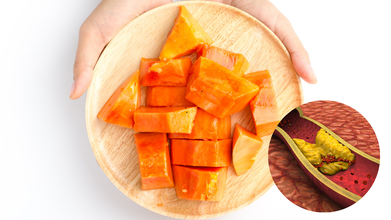
A simple fruit has suddenly become a health headline. After Ayurveda expert Acharya Balkrishna suggested that eating papaya daily may help control cholesterol, many people began seeing it as an easy natural fix for rising lipid levels.
It sounds comforting. No medicines, no complicated diets, just a bowl of fruit. But does science actually support the claim? Let’s break it down.
Read: Fact Check: Does TikTok's 'Chlorophyll & Collagen' Supplement Really Work?
We Asked The Expert
Health and Me spoke exclusively to registered dietitian Ginni Kalra, Head Dietetics at Aakash Healthcare, who clarifies the viral claim early on:
“Papaya is a fiber-rich fruit, and the soluble fiber and antioxidants present in it may help reduce bad cholesterol (LDL). However, it would not be correct to say that eating papaya alone can completely control cholesterol levels.”
She stresses that cholesterol management always depends on the overall diet and lifestyle. Apples, guava, pears, oats, green leafy vegetables, carrots, bottle gourd, beans, nuts, and seeds also play an important role along with exercise and weight control.
“Individuals with very high cholesterol levels or a higher risk of heart disease should not rely only on fruits. In such cases, medications may also be required under a doctor’s supervision,” she adds.
So the claim already moves from cure to support. Now let’s understand why papaya still gets attention.
Read: Fact Check: Doctors Bust Common Myths Around Epilepsy and Explain Why Early Treatment Matters
Why Papaya Is Getting Attention
Papaya has long been associated with digestion in Indian households. It is commonly recommended for constipation, acidity, and gut health. Now the focus has shifted toward heart health.
Cholesterol problems are rising rapidly, especially in urban lifestyles filled with sedentary work, processed foods, and stress. Naturally, people are drawn toward simple dietary solutions.
Papaya contains fiber, vitamin C, and antioxidants. These nutrients are known to support cardiovascular health. But the key question is: does that mean it can control cholesterol on its own?
The Fiber Connection
Fiber plays an important role in cholesterol management.
Soluble fiber binds with cholesterol particles in the digestive tract and helps remove them from the body before they enter circulation. Papaya contains dietary fiber, which supports digestion and may reduce LDL, commonly called “bad cholesterol”.
Read: Fact Check: Does Ja Morant Have Lung Cancer?
In simple terms, fiber acts like a natural cleaning system. It reduces absorption of unhealthy fats and improves gut function. This is one reason many nutrition experts encourage including fruits regularly in meals.
However, the effect is gradual and supportive, not curative.
Antioxidants And Heart Protection
Papaya is rich in vitamin C and antioxidants. These compounds help reduce inflammation and oxidative stress, both of which contribute to plaque formation in arteries.
Healthier blood vessels make it harder for cholesterol to deposit along artery walls. This lowers long-term risk of heart disease.
But antioxidants work as protectors, not erasers. They help prevent damage rather than reverse high cholesterol dramatically.
Key Takeaway
Papaya is beneficial, but it is not a magic cure. Cholesterol issues develop due to long-term lifestyle patterns including diet quality, physical inactivity, smoking, poor sleep, and stress.
Adding a small bowl of papaya daily can support heart health. But it works best as part of a broader routine: more fiber-rich foods, less fried food, regular exercise, and medical treatment when needed.
People with latex allergy, certain medical conditions, or pregnancy concerns should consult a doctor before consuming large amounts, especially unripe papaya.
Note: Please consult your nutritionist or a registered dietitian before making any changes to your doubts. Health and Me does not endorse this as a substitute to medically prescribed medicines for cholesterol or any other condition.
- Follow Us :


© 2024 Bennett, Coleman & Company Limited