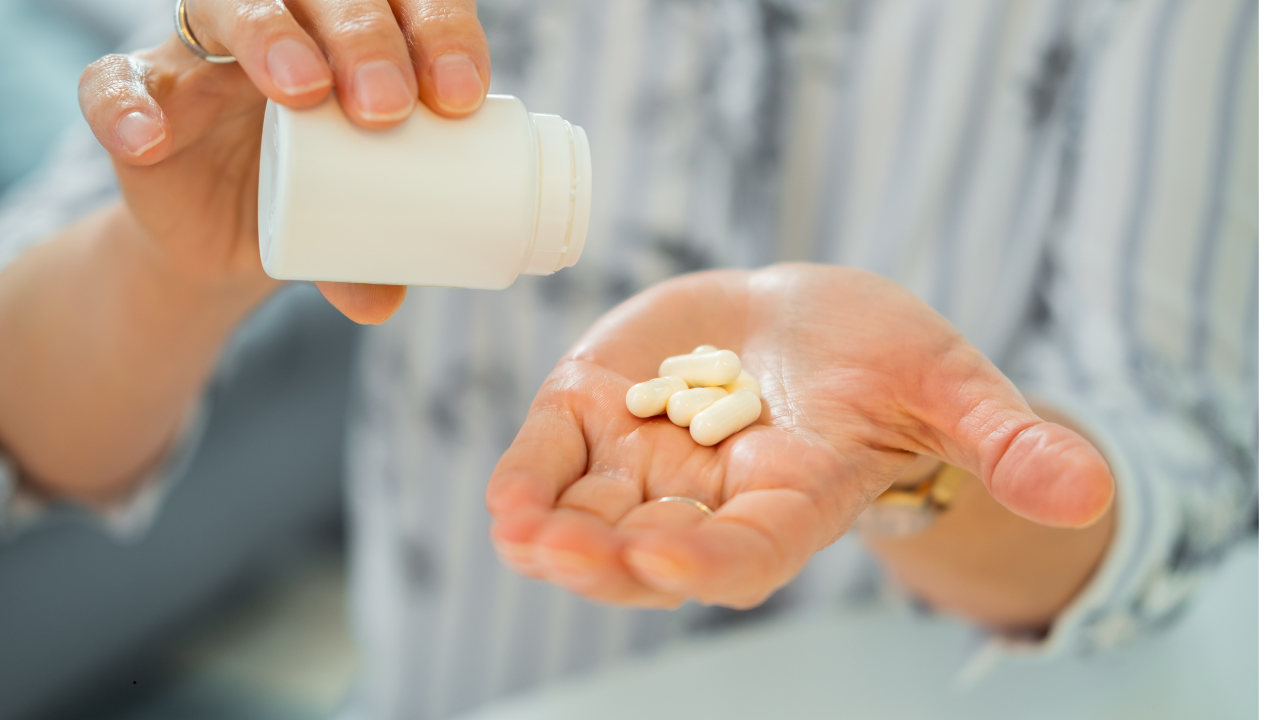
Experts suggest you should not take supplements with GLP-1 drugs unless you suffer from a confirmed deficiency or cannot meet your nutritional needs through diet alone. Ozempic mimics the action of a naturally occurring hormone called GLP-1. Here’s how it supports weight loss: It boosts insulin release when blood sugar levels increase.It slows down the emptying of food from the stomach, helping people feel full for longer after meals.At higher doses, it can also curb appetite, which may aid weight management efforts.It also decreases food absorption which can affect the body's vitamin and mineral levels. At times, GLP-1 users take multivitamins and other supplements to compensate for the loss of macro and micronutrients. However, Jordan Beaumont, Senior Lecturer in Food and Nutrition, Sheffield Hallam University, advises against doing so as taking supplements without a clear need is unlikely to provide any benefit and may simply be a waste of money.He wrote in a Science Alert article: "Nutritional deficiencies occur when the body does not receive enough of a nutrient to function properly. Estimates of how common these deficiencies are in those using GLP-1 medications vary widely."Supplement companies are launching 'GLP-1 support' products that claim to offset side effects such as muscle loss and vitamin deficiencies by providing the 'right' nutrients for people using these medications. "Much of the research linking GLP-1 medications to nutrient deficiencies is observational. These studies look for patterns and associations in data but cannot prove cause and effect."In other words, they can show that two things occur together but cannot confirm that one causes the other. This means we cannot yet say for certain that GLP-1 medications directly cause nutrient deficiencies."Eating a range of nutrient-dense whole foods, including fruit and vegetables, whole grains, nuts and seeds, dairy or fortified alternatives, and lean or plant-based proteins, can help maintain adequate nutrient intake.If supplements are needed, standard vitamin and mineral products available on the high street are often sufficient. There is rarely any need to pay premium prices for products marketed specifically for GLP-1 users. The evidence used in marketing for these products is often weak."Can Ozempic Reduce Your Risk Of Death?Taking semaglutide can lower your risk of heart attacks and other major adverse cardiovascular events, regardless of how much weight you lose or if you have diabetes, according to a study published in The Lancet.Researchers from University College London (UCL) have found that taking semaglutide drugs such as Ozempic, Wegovy, Rybelsus can reduce the risk of MACE (Major Adverse Cardiovascular Events, defined as cardiovascular death, non-fatal myocardial infarction, or non-fatal stroke) by four percent for every 5kg less body weight or 5cm smaller waist.The Novo Nordisk-funded study analyzed 17,604 people from 41 countries aged 45 years and over, who were overweight and had cardiovascular disease (CVD) but did not have diabetes.The involved scientists said this finding “suggests there are multiple ways the drug benefits the heart, rather than its protective effect on cardiovascular health being due solely to weight loss”, which may include “supporting the health of the lining of blood vessels, reduced inflammation, improved blood pressure control and lower lipid levels“.Lead author John Deanfield, professor of cardiology at the UCL Institute of Cardiovascular Science, said: “Abdominal fat is more dangerous for our cardiovascular health than overall weight, and therefore it is not surprising to see a link between reduction in waist size and cardiovascular benefit. However, this still leaves two-thirds of the heart benefits of semaglutide unexplained.“These findings reframe what we think this medication is doing. It is labelled as a weight-loss jab but its benefits for the heart are not directly related to the amount of weight lost. In fact, it is a drug that directly affects heart disease and other diseases of aging.”Ozempic Launches In IndiaDanish drugmaker Novo Nordisk has officially introduced its widely known diabetes medication Ozempic in India, pricing the starter dose of 0.25 mg at ₹2,200 per week. According to a Reuters report, the injectable medicine will be available in three strengths in the country: 0.25 mg, 0.5 mg and 1 mg.Ozempic is a once-weekly injectable prescribed for people living with type 2 diabetes.The weekly injection received approval from the US Food and Drug Administration in 2017 for treating type 2 diabetes. Since then, it has grown into a global blockbuster and is also commonly prescribed off-label for weight loss because of its appetite-suppressing effects.The lowest strength will cost ₹2,200 per week. Prices for the higher doses have also been announced, as per the Reuters report.Here are the details:1 mg dose: ₹11,175/month0.5 mg dose: ₹10,170/month0.25 mg dose: ₹8,800/month