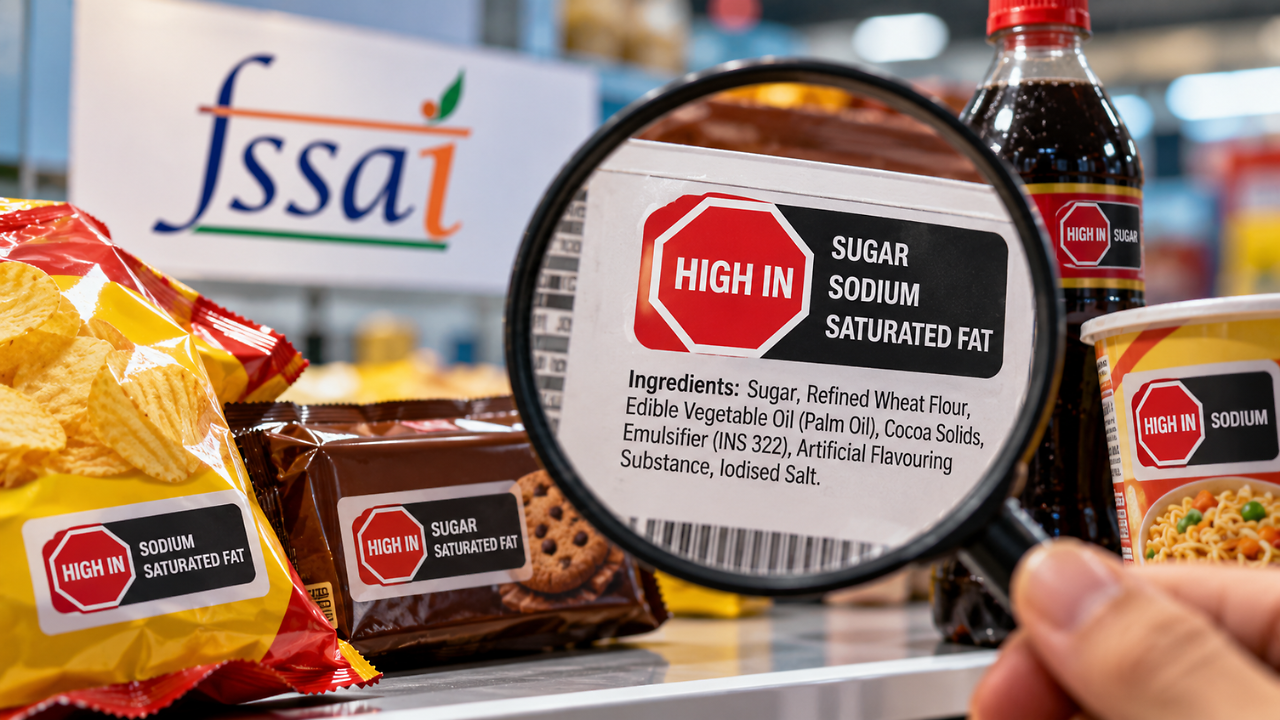
India is actively taking steps towards stricter front-of-pack warnings for packaged foods. The Food Safety and Standards Authority of India (FSSAI) is now proposing that a product could be labelled with a red warning even if one nutrient, like salt, sugar or fat, crosses the prescribed limit. The change marks a shift from FSSAI’s earlier proposal, under which a warning would have been needed only when at least two nutrients crossed their respective thresholds. The latest proposal was submitted to the Supreme Court on Wednesday, September 23. The rules are not final yet. FSSAI has proposed about four months to finalise the draft regulations, followed by a 365-day voluntary compliance period for food businesses. How Will The New Warning Appear On Packaging? Under the proposed system, packaged foods exceeding the specified limits would carry a red hexagonal warning on the front of the pack. The warning would identify the nutrient concerned, such as: HIGH SALTHIGH SUGARHIGH FATIf a product crosses the limits for two or three nutrients, the same warning symbol would identify all the applicable nutrients. The label is proposed to appear prominently on the upper left of the front of the package, with the text larger than the nutrition information printed on the back.Also read: High Sugar, Salt Or Fat? India May Mandate Red Hexagon Labels On Food PacksSeparate FOPL For Products Containing Non-Caloric Sweetener FSSAI has also proposed a separate front-of-pack statement for certain products containing non-calorific sweeteners. It stresses that packaged foods and beverages containing non-caloric sweeteners should carry the declaration “CONTAIN NON CALORIC SWEETENER” on the front of the pack. A LocalCircles survey found that 92% of respondents wanted artificial sweeteners to be prominently disclosed on the front of packaged foods. 41% urban Indian consumers confirm consuming foods with artificial sweeteners every month.Also read: Synthetic Paneer Whitened With Chuna Busted In Delhi: How Dangerous Is It For Your Health?Single-Nutrient Warning Consider a packaged food that is extremely high in sugar but relatively low in salt and fat. Under the earlier two-nutrient approach, that product could have escaped the warning as only one nutrient crossed the threshold. The revised proposal would change that. The idea is that no product should escape a warning simply because it is high in only one nutrient of concern. This is a key development as excessive intake of added sugars, sodium and saturated fats is associated with major diet-related health risks. High sodium intake, for example, can contribute to raised blood pressure, while diets high in added sugars can contribute to excess calorie intake and weight gain.Also read: Cipla's Drug License Cancelled Over Reactin Plus, Then Restored: Why Did Bombay HC Pull Up Maharashtra FDA?FSSAI’s Key Initiative A front-of-pack warning is meant to flag specific nutrients that are present above the permitted threshold, rather than declare that the entire food is unhealthy. A food item could be high in one nutrient while still providing other nutrients like protein, fibre, vitamins or minerals. Conversely, a product without a warning should not automatically be considered as healthy. FSSAI has proposed using the Dietary Guidelines for Indians, 2024, developed by the ICMR-National Institute of Nutrition, as the basis for the nutrient thresholds. What About “Healthy” Claims On Packets? FSSAI’s proposal could also make it easier for consumers to look beyond marketing claims. Words like “multigrain”, “baked” or claims about added vitamins do not necessarily tell consumers how much salt, sugar or fat a product contains. A prominent warning on the front could bring that information into view before a consumer reaches the detailed nutrition panel on the back.