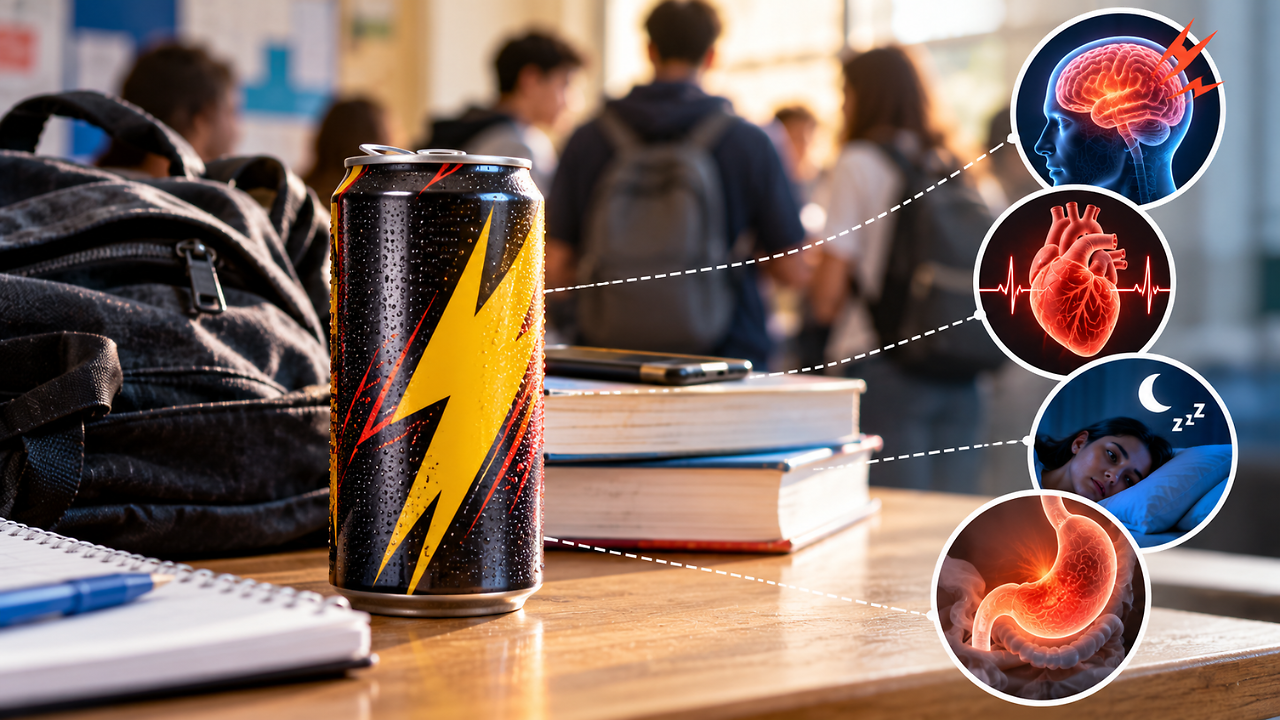
The consumption of energy drinks among teenagers has increased in the US. This has sparked concerns among doctors about caffeine toxicity, sleep, heart health, and the effects on their developing brains. According to the latest federally funded Monitoring the Future survey, 23% of 12th graders said they consumed energy drinks daily. The figure was 20% among 10th graders and 18% among eighth graders. The findings come as a group of doctors have raised concerns about the growing consumption of energy drinks among young people, particularly after Monster Energy signed a sponsorship deal with the Big 12 Conference, a major US college sports organisation. The deal puts Monster branding on football and basketball jerseys, fields, courts and digital and social media platforms. Doctors have urged the conference to pause the partnership and called for greater scrutiny of energy drink marketing to young people. Doctors Are Concerned About Growing Energy Drinks' Consumption Among Teens Also read: Exclusive: From IPL To Olympics — How Sport Became A Marketing Tool For Junk Food And Sugary Drinks Dr. Robin Ireland told HealthandMe how marketing unhealthy foods and drinks through sports affects children. He said, " Sport presents glamour and excitement, and children look up to big performers and superstars who often promote products they probably don't consume themselves because they're not good for sporting performance. Yet their names and images are used to create that excitement and, as you described, a health halo. Brands want to be associated with that healthy image. Athletes think that if they want to perform like a Sachin Tendulkar or another superstar, they need a sports drink or energy drink. And of course, they don't. But that's what the brands are trying to do." Doctors involved in the campaign say their concern extends beyond Monster and applies to energy drinks as a category. Dr Matthew Nelson, an Idaho cardiologist told US News, “Kids are going to see energy drinks now promoted by the universities and the athletes that they admire and want to emulate. The kids will think of them as sports drinks, which they’re not.” Energy drinks can contain large amounts of caffeine. Depending on the product, a single serving can contain 80 to 300 milligrams of caffeine. An eight-ounce coffee typically contains around 80 to 100 mg, while some soft drinks contain 50 mg or less. The American Academy of Pediatrics recommends that children and teenagers avoid energy drinks and advises those aged 12 to 18 to limit caffeine to no more than 100 mg a day. Too much caffeine can increase heart rate and blood pressure and may cause sleep problems, agitation, and dehydration. In more severe cases, excessive stimulant intake can contribute to abnormal heart rhythms and seizures. Dr Tamara Hannon, an Indiana paediatrician and chair of the American Academy of Pediatrics' nutrition committee, described the effect of excessive stimulants on the body. She said, “The same thing can happen when you deliver stimulants to people. The heart can wear out, the nervous system can go haywire and you can have really serious consequences.” Monster Energy, meanwhile, has defended its products, saying caffeine and other ingredients in its drinks are also found in many other foods and beverages. The company said, “Mainstream energy drinks have been marketed worldwide for more than 30 years and more than 100 billion energy drinks have been sold and safely consumed globally.” The company also said its products carry warnings and that its members do not sell or market energy drinks in K-12 schools.Also read: Red Bull Vs FSSAI: Beverage Giant Can Retain The 'Energy Drink' Label; What Are Its Health Risks Teen's Death After Drinking An Energy Drink In 2017, 16-year-old Davis Cripe of South Carolina died after developing an abnormal heart rhythm following consumption of an energy drink. According to his father, Sean Cripe, Davis had consumed a Mountain Dew and a latte from McDonald's earlier that day before drinking the energy drink. He did not have a known heart condition and was not a regular energy-drink consumer. “He chugged an energy drink — like, just trying to be cool,” Sean Cripe said. His father later said, “We had talked to him and let him know that they weren’t healthy. We didn’t understand they could be deadly.” Doctors stress that deaths associated with energy drinks are rare, and Davis' case does not mean every teenager who consumes an energy drink will experience a life-threatening complication. But it illustrates why excessive caffeine consumption can be concerning in young people. Message For Parents Teenagers may consume caffeine from several sources in the same day, including energy drinks, coffee, soda and other caffeinated beverages. That can make it difficult to recognise how much caffeine they are actually consuming. Doctors recommend that parents talk to teenagers about the difference between energy drinks and sports drinks and pay attention to all sources of caffeine in their diets. The US Centers for Disease Control and Prevention also recommends educating children about the harms of excessive caffeine consumption.