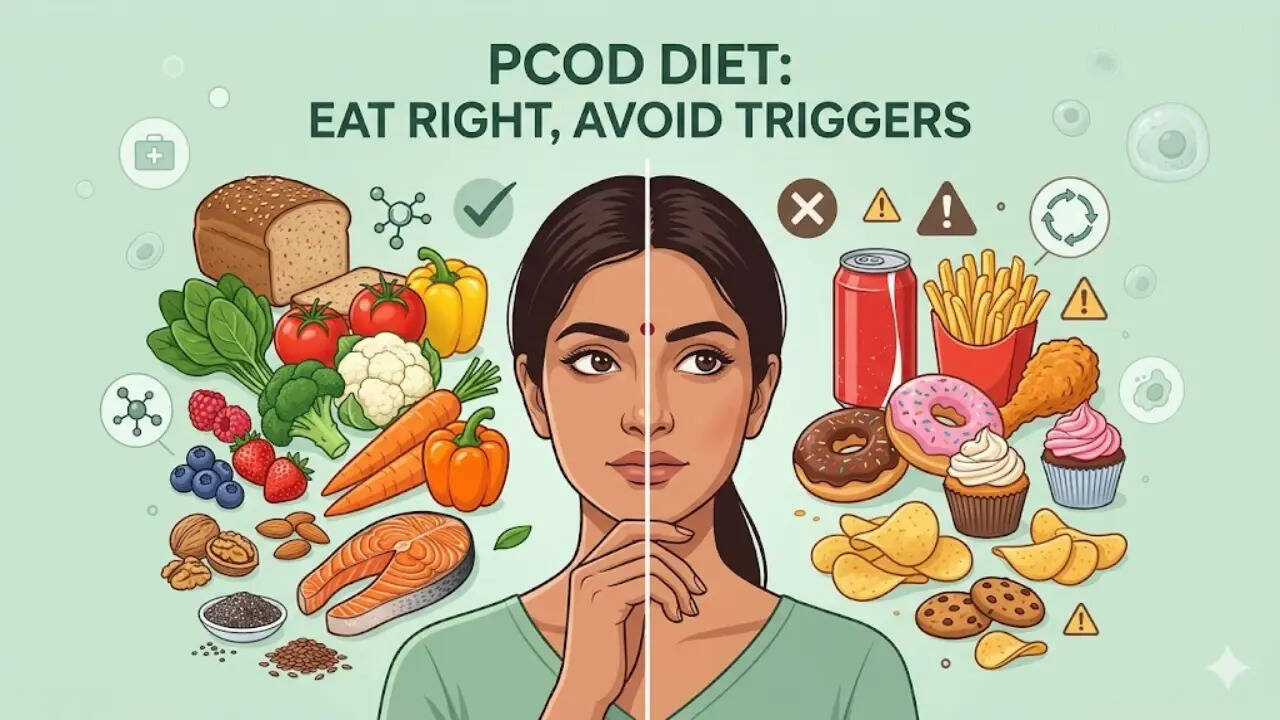
PCOD is a hormonal disorder common among women of reproductive age. It can cause irregular periods, excess androgen levels (leading to symptoms like acne and hirsutism), and polycystic ovaries. Diet plays a crucial role in managing PCOD symptoms, particularly by addressing insulin resistance, which is common in women with the condition, and reducing inflammation.Dr S. K. Wangnoo, Senior Consultant, Endocrinology, Indraprastha Apollo Hospital, Delhi, in an interaction with Health and Me, listed the best and worst foods for women dealing with PCOD. 10 Best Foods for PCODA PCOD-friendly diet emphasises whole, unprocessed foods that help regulate blood sugar and hormone levels.Whole Grains: Brown rice, quinoa, oats, whole wheat bread, and millets are low glycaemic index carbohydrates that provide sustained energy and fibre.Lean Proteins: Chicken; fish (especially fatty fish like salmon, tuna, and sardines); eggs; and plant-based proteins such as legumes (lentils, chickpeas, and beans) are vital for muscle maintenance and satiety.Healthy Fats: Sources like avocados, olive oil, nuts (almonds, walnuts), and seeds (chia, flax, pumpkin) provide essential fatty acids that reduce inflammation and support hormonal balance.High-Fibre Vegetables: Non-starchy vegetables such as spinach, broccoli, kale, bell peppers, and cucumbers are rich in fibre, vitamins, and antioxidants.Berries: Blueberries, strawberries, raspberries, and other berries are low in sugar and packed with antioxidants.Legumes and Beans: Lentils, chickpeas, and various beans are excellent sources of fibre and plant-based protein, which help manage blood sugar.Nuts: Almonds, walnuts, and other nuts offer healthy fats, fibre, and protein, contributing to a feeling of fullness.Seeds: Chia seeds, flaxseeds, and pumpkin seeds are rich in omega-3 fatty acids and fibre, supporting digestive and hormonal health.Anti-inflammatory Foods: Many of the foods listed above, particularly leafy greens and fatty fish, naturally possess anti-inflammatory properties that can alleviate PCOD symptoms.Unrefined and Natural Foods: Prioritising foods in their whole and natural state, avoiding artificial ingredients and excessive processing, is key for managing PCOD.10 Worst Foods for PCODDr Wangnoo said that certain foods can worsen PCOD symptoms by contributing to insulin resistance, inflammation, and weight gain.Refined Carbohydrates: White bread, white pasta, pastries, cakes, and sugary cereals cause rapid spikes in blood sugar and insulin levels.Sugary Drinks: Sodas, sweetened fruit juices, and energy drinks are major sources of added sugars, which can exacerbate insulin resistance.Processed Foods: Packaged snacks, fast food, and highly processed meals often contain a detrimental combination of unhealthy fats, sugars, and refined carbohydrates.Fried Foods: Deep-fried items are typically high in unhealthy fats and can contribute to inflammation and weight gain.Unhealthy Fats: Trans fats and excessive saturated fats, found in many processed snacks, red meats, and some dairy products, can increase inflammation.Rich Red Meats: High consumption of fatty red meats may contribute to inflammation and should be limited.High-Fat Dairy Products: While some individuals with PCOD tolerate low-fat dairy, high-fat dairy like certain cheeses and full-fat milk are often advised to be limited due to potential inflammatory effects.Sweetened Desserts: Cakes, cookies, and other sugary desserts are high in refined sugars and unhealthy fats, which are detrimental to PCOD management.Refined Oils: While not explicitly listed as a "food," highly refined vegetable oils (e.g., corn, soybean) can contribute to inflammation and are best limited, favouring olive oil or avocado oil instead.White Rice and Pasta: These refined grains have a higher glycaemic index compared to whole grains and can cause quicker blood sugar spikes.