
- Health Conditions A-Z
- Health & Wellness
- Nutrition
- Fitness
- Health News
- Ayurveda
- Videos
- Medicine A-Z
- Parenting
Beyond Strong Bones And Teeth: Why Do We Need Calcium In Our Diets?

Calcium (Credit: Canva)
Calcium is the most abundant mineral in the body, with 99% per cent of it found only in our bones and teeth. The essential mineral helps in forming and maintaining strong bones and teeth, facilitating muscle movement and transmitting nerve signals. In addition, it aids in normal blood clotting and supports the proper release of hormones that regulate various bodily functions.
How Much Calcium Is Required By Our Bodies?
Certain groups, including children, older adults, and postmenopausal women, may require calcium supplements, especially if their diets are low in this crucial nutrient or consume high amounts of caffeine, alcohol, or soda.Additionally, it’s important to recognize that vitamin D plays a complementary role in calcium absorption. Sources of vitamin D include fish oil and fortified dairy products, making it essential for optimizing calcium's benefits. Understanding the importance of calcium and how to ensure adequate intake is key to promoting long-term health.
Dietary sources of calcium include dairy products, green leafy vegetables, nuts, seeds, and fortified foods. Interestingly, the majority of calcium in the body is stored in the bones and teeth, underscoring its importance for skeletal health.
Here Is Why You Need Calcium?
Calcium is an essential mineral that plays numerous critical roles in the human body, particularly in maintaining bone health, facilitating muscle function, and supporting cardiovascular health.Bone Health
Approximately 99% of the body's calcium is stored in the bones and teeth, making it vital for their development, growth, and maintenance. During childhood, calcium is crucial for the formation of strong bones. Even after growth has ceased, it continues to play a significant role in preserving bone density and mitigating age-related bone loss. Women who have gone through menopause face an increased risk of bone density loss and osteoporosis, leading healthcare providers to often recommend calcium supplements.
Muscle Contraction
Calcium is essential for muscle contraction. When a nerve activates a muscle, calcium is released, enabling muscle proteins to facilitate contraction. Conversely, when calcium is pumped out of the muscle, relaxation occurs. This regulation is key for overall muscle function.
Cardiovascular Health
Calcium also plays a significant role in the cardiovascular system, particularly in blood clotting—a complex process that requires calcium at multiple stages. Additionally, calcium is crucial for the heart's function and helps relax the smooth muscles surrounding blood vessels. Research suggests a possible connection between higher calcium intake and lower blood pressure.
Importance of Vitamin D
Vitamin D is indispensable for bone health, as it enhances the body's ability to absorb calcium. Together, these nutrients work synergistically to support overall health.
Additional Benefits
Beyond its primary functions, calcium acts as a co-factor for numerous enzymes, aiding in their efficiency. Studies indicate that adequate calcium intake may lead to various health benefits, including a reduced risk of hypertension during pregnancy, lower blood pressure in adolescents, improved cholesterol levels, and a decreased likelihood of developing colorectal adenomas, which are benign tumors.
This Unique Diet Slows Brain Aging By Over 2 Years, Study Says
Credit: Canva
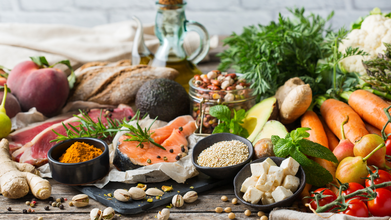
Following the MIND diet may help slow brain aging by more than two years, according to new research.
The MIND diet is a combination of the Mediterranean diet and the DASH diet, both known for their health benefits, but it is specially designed to protect brain function. In a long-term study of over 1,600 adults, researchers found that people whose eating habits closely followed the MIND diet showed less brain shrinkage over time, especially in gray matter, which is crucial for memory, thinking, and decision-making. They also had fewer signs of brain deterioration, such as enlarged ventricles.
On average, those who stuck most closely to the diet had brain changes equivalent to being about 2.5 years younger compared to others.
Brain aging is the natural, progressive process of structural and chemical changes in the brain over time, resulting in typical age-related cognitive decline, such as slower processing speeds, reduced brain volume (atrophy) and memory lapses.
"MIND-recommended foods rich in antioxidants, such as berries, and high-quality protein sources like poultry may reduce oxidative stress and mitigate neuronal damage," write the researchers in their published paper.
This combination diet focuses on foods rich in antioxidants and nutrients that protect brain cells and may help reduce oxidative stress and inflammation, both of which contribute to brain aging. At the same time, it limits unhealthy foods like fried items, red meat and processed foods, which can damage blood vessels and brain tissue.
However, the study does not explain how the MIND diet directly affects the brain and factors like lifestyle, sleep, or genetics may also play a role, according to the scientists.
READ MORE: High Brain Age May Increase Dementia Risk, Study Shows
What is Mediterranean Diet?
The Mediterranean diet is a plant-focused way of eating, inspired by the traditional diets of Mediterranean countries. It emphasizes fresh fruits and vegetables, whole grains, legumes, nuts, seeds, and olive oil as the main source of fat. The diet includes moderate amounts of fish and dairy while limiting red meat and sweets.
Beyond what’s on the plate, it also encourages lifestyle habits such as regular physical activity and sharing meals with others, which supports social connections and helps reduce stress.
How To Follow a Mediterranean Diet?
Incorporating the Mediterranean diet into your daily routine doesn’t have to be complicated. Start by adding more fresh fruits and vegetables to every meal, swapping refined grains for whole grains, and including nuts, seeds, and legumes as snacks or salad toppings. Use olive oil as your main cooking fat instead of butter or processed oils, and aim to include fish or seafood a few times a week.
Red meat and sweets can be enjoyed occasionally, rather than daily. Beyond food, try to stay active through walking, yoga, or other forms of exercise, and make mealtimes a social experience whenever possible, sharing meals with family or friends to combine nutrition with connection and reduced stress.
Mediterranean Diet Can Also Lower Alzheimer’s Risk by 35%
A long-term study conducted by the Nurses’ Health Study (NHS), which followed female nurses from 1989 to 2023, found that people who closely followed the Mediterranean diet over the years had a significantly lower risk of dementia and better cognitive function.
This protective effect was particularly evident in individuals with varying genetic risk for Alzheimer’s, including carriers of the APOE-e4 gene. Similar findings were also observed in the male Health Professionals Study.
While the Mediterranean diet as a whole was linked to reduced dementia risk, researchers highlighted a few key components that seem to have the most impact: fresh fruits, nuts, and sources of monounsaturated fats, such as olive oil and avocados.
The study indicates that sticking to the Mediterranean diet over the long term may substantially lower the risk of Alzheimer’s, even for those with a genetic predisposition. This diet is packed with fiber, antioxidants, healthy fats, and lean proteins, found in foods like fruits, vegetables, nuts, seeds, legumes, whole grains, seafood, and olive oil. Incorporating more of these foods into your daily meals can be a simple way to support brain health.
Caffeine Can Recover Memory Loss From Lack of Sleep, Study Says

Credit: Canva
While many studies suggest that caffeine may be dangerous for your physical health, a new Neuropsychopharmacology study suggests that it may protect against, and even reverse, memory problems caused by lack of sleep.
In this animal study, scientists at the National University of Singapore have found that sleep-deprived mice struggle to recognize other mice however, mice that were given caffeine for a week before being being sleep-deprived performed much better on tests and did not show the same memory loss.
Additionally, when caffeine was directly applied to brain tissue from sleep-deprived mice, it improved communication between brain cells in this region -- suggesting that caffeine doesn’t just mask tiredness but may also help repair disrupted brain activity.
NUS physiologist Lik-Wei Wong explained: "Sleep deprivation does not just make you tired. It selectively disrupts important memory circuits.
"We found that caffeine can reverse these disruptions at both the molecular and behavioral levels. Its ability to do so suggests that caffeine's benefits may extend beyond simply helping us stay awake."
"Our findings position the CA2 region as a critical hub linking sleep and social memory. This research enhances our understanding towards the biological mechanisms underlying sleep-related cognitive decline. This could inform future approaches to preserving cognitive performance," NSU neuroscientist Sreedharan Sajikumar added.
Based on these results, the study concluded that sleep deprivation increases signaling linked to adenosine, a chemical that promotes sleep but can also weaken memory circuits. But with moderate amounts of intake, caffeine appears to block this effect and help the brain maintain normal function
While the discovery offers a clearer understanding of how sleep, memory and caffeine are connected, the findings are based on mice and more research is needed to confirm if the same benefits apply to humans.
How Much Coffee Should You Consume?
Due to how much caffeine can actually affect one’s body, experts recommend 400 milligrams only per day. That is about four cups, it is also better to consult a doctor about this as caffeine sensitivity is different for people. Some people are more sensitive to caffeine than others.
How you react depends on your health, what medicines you take, and how fast your body processes things. Too much caffeine can cause problems, so it's important to pay attention to how you feel and not go overboard. Here is what happens to your body when you drink too much caffeine daily.
Premature Skin Aging
Caffeine can slow down how your skin makes collagen, which keeps it tight and smooth. Less collagen means more wrinkles, making you look older faster. Cutting back on coffee might help your skin stay younger-looking.
Elevated Blood Pressure
Too much caffeine can make your blood pressure go up. This can be bad for your heart and increase your risk of problems like heart attacks and strokes. It's not clear exactly why, but it's a risk.
Increased Anxiety and Stress
Caffeine can make you feel jittery and anxious. It can also trigger your body's "fight or flight" response, which is like a panic reaction. If you already feel anxious, caffeine can make it much worse.
Actress Saba Azad Hospitalized After Parasite Infection: Advises Washing Salad Leaves Properly

Credit: Saba Azad/Instagram
Actress Saba Azad has been hospitalized after being infected with the parasite Cyclospora cayetanensis. The infection has led to significant weight loss of around 4 kg, leaving her extremely weak and barely able to walk.
Calling the bug “nasty piece,” Azad, in a post on social media platform Instagram, rued that she got the infection even though she always ate home-cooked food and carried her own water bottle for drinking water.
The actress also shared a photo of herself lying in a large hospital bed, looking visibly frail. She described the ordeal as the “worst 14 days” of her life.
“Worst 14 days of my life. Cyclospora cayetanensis...you nasty piece of work!! For someone who only ever eats home food, carries her water bottle everywhere, this stomach bug came outa nowhere, that too at the busiest time of the year for me,” she wrote on Instagram.
She also shared how the illness drastically affected her physical strength and her weight.
“I have lost 4 kgs that I didn’t have spare in two weeks, and I can barely walk,” Azad said.
“One day I'm training twice a day, doing pull-ups, lifting heavy, and the next I'm half my size, without strength to lift a goddamn toothpick, let alone weights,” she added.
The actress and musician advised people to wash their salad leaves and vegetables properly.
"For the love of your gut, wash your salad leaves and veg like your life depends on it - cause sometimes it really does!!”
The 41-year-old noted that “Baking soda + veggie wash” is her new way to wash them.
She also mentioned that her boyfriend, Hrithik Roshan, has been a constant source of support during this time.
What is Cyclospora cayetanensis
Cyclospora cayetanensis is a parasite that leads to the illness Cyclosporiasis -- a form of food poisoning.
One can get a Cyclospora infection from contaminated food or water. It causes watery diarrhea and other intestinal symptoms.
A Cyclospora infection can be mild or very serious, and may last weeks or months. It is typically treated with antibiotics.
People with weakened immune systems, such as those with HIV/AIDS or cancer, are more at risk of severe disease.
Symptoms Of Cyclospora Infection
Symptoms of cyclosporiasis usually start within a week of exposure (eating or drinking contaminated food or water) and include:
- Watery or explosive diarrhea
- Loss of appetite
- Bloating and gas
- Fatigue (extreme tiredness)
- Low-grade fever
- Nausea
- Stomach cramps
- Vomiting
How To Prevent Cyclospora Infection
While it is not yet fully understood how Cyclospora gets into food and water, individuals can prevent cyclosporiasis by not consuming food or water that may be contaminated with feces.
The US CDC advises people to take measures to prevent the foodborne illness such as:
- Wash your hands with soap and water before and after handling or preparing raw fruits and vegetables.
- Wash all fruits and vegetables thoroughly under running water before eating, cutting, or cooking.
- Fruits and vegetables that are labeled "prewashed" do not need to be washed again at home.
- Scrub firm fruits and vegetables, such as melons and cucumbers, with a clean produce brush.
- Cut away any damaged or bruised areas on fruits and vegetables before preparing and eating.
- Refrigerate cut, peeled, or cooked fruits and vegetables as soon as possible (within two hours).
- Follow Us :


© 2024 Bennett, Coleman & Company Limited