
- Health Conditions A-Z
- Health & Wellness
- Nutrition
- Fitness
- Health News
- Ayurveda
- Videos
- Medicine A-Z
- Parenting
Debby Ryan And Josh Dun Announce Pregnancy, Why Are Women Now Planning Pregnancy After 30?

Credits: Instagram
Debby Ryan Pregnant: Former Disney star and actress Debby Ryan announced her first child with drummer of 21 Pilots, Josh Dun. The announcement was posted on Sunday, where she and her husband shared that they are expecting their first child, with a collection of photos captioned "dun&dun +one".
Ryan 32, got married to Dun, 37 in 2019.
Having Kids Later In Life
The National Institutes of Health (NIH), US states that after age 30, a woman's fertility decreases every year. The number and quality of her eggs goes down until she reaches menopause. So, now the question arise, why are women planning their pregnancy later in life?
A 2019 Guardian report states that the number of pregnancies among women aged 30 and above in England and Wales has surpassed the number among women in their 20s for the first time since records began. The Guardian quoted Natika H Halil, the then chief executive of the sexual health charity FPA, who said that women waiting longer to have children could be due to many reasons, but not limited to, including: "higher costs of living, fewer young people able to afford mortgages, or perhaps feeling less pressure or desire to start a family”.
Another 2024 report by TIME showed that the bird rate among US women in their early 30s was higher than the rate among in their late 20s. The reasons could be financial and child care concerns, waiting longer to get married or find a partner, and prioritizing education, career or leisure time during young adulthood. TIME quoted Aurélie Athan, a clinical psychologist who researches the psychology of motherhood and reproductive identity at Columbia University's Teachers College, who described this phenomenon as "pregnancy pause". "They’re really taking time to say, ‘Do I want to do this?'" Athan said.
Read: Here's What New Mothers In Their 30s Should Pay Attention To
A more recent 2025 report by NBC stated that the most recent data show that most births now occur to women ages 30 to 34, while a decade ago it was 25 to 29. The Centers for Disease Control and Prevention (CDC), which tallies all known births in the US reported from 1990 to 2023, the fertility rate for women ages 35 to 39 increased by 71%. Experts point out the reasons include: volving social expectations and values; changes in technology and dating behavior; the economic burden of child rearing; and increasing college enrollment among women.
How Can You Plan Your Pregnancy After 30?
Quit Habits: If you are a smoker, or consume alcohol, this is a good time to leave it.
Reduce Stress: While pregnancy for some can bring stress, try to find activities that help you release it.
Healthy Weight: Ensure that your weight is right, reduce your waist to bring it to a healthy range for a healthy pregnancy.
Food Habits: Stop eating junk and start eating more whole grains.
Exercise: A sedentary lifestyle can impact negatively on the child. You do not have to do HIIT, however, regular easy workouts can make both the pregnancy and delivery easy.
Read More: Women Are Now Waiting More Before Becoming A Mother, Age Trend Shows Motherhood From 2016 to 2023
Dr Michelle Y Owens, professor of obstetrics and gynecology and a practicing maternal-fetal medicine specialist at the University of Mississippi Medical Center in Jackson, writes for the American College of Obstetricians and Gynecologists (ACOG) that "the longer your eggs have been around, the more likely they are to produce a pregnancy with a chromosome problem that can lead to a condition like Down syndrome. The risk goes up significantly after 35."
However, she says, there is a good news. Now, we have tools to detect and respond to pregnancy complications early.
Why Miscarriage Needs Emotional Care At Par with Medical Treatment: Doctors Explain
Credit: Canva
Maternal Vaccination During Pregnancy Can Prevent COVID-related Hospitalization In Babies: Study
Credit: iStock/Canva
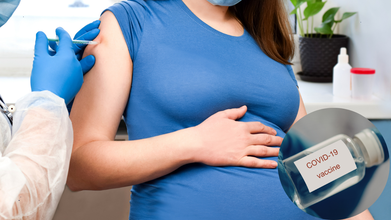
Maternal vaccination with the COVID-19 vaccine during pregnancy can be effective against severe disease and hospitalization from the SARS-CoV-2 virus in babies, according to a large study.
The study, published in the journal Pediatrics, revealed that COVID vaccination during pregnancy can protect the children against hospitalization for COVID during the first six months of life.
Also Read: COVID-19 Cicada Variant: Will It Become The Dominant Strain In The US? Know All About The Virus
Amid continuing COVID cases, babies under six months old continue to have one of the highest rates of hospitalization — one in five — due to the COVID virus in the US, as per a 2024 study.
As currently no vaccines against COVID are available for neonates and babies, the American College of Obstetricians and Gynecologists (ACOG) recommends maternal vaccination during pregnancy.
Maternal COVID Vaccination Prevented Other Infections
The retrospective study included 146,031 infants born in Norway between March 2021 and December 2023. Of these, 37, 013 (25 percent) were exposed to COVID-19 vaccination in utero.
The findings showed that babies exposed to the vaccine before birth were no more likely to visit the hospital for overall infections (of any kind) than those whose mothers did not get vaccinated in pregnancy.
However, infants whose mothers were vaccinated were about half as likely to visit the hospital specifically for COVID in their first two months of life compared to babies not exposed to the vaccine in utero.
Also Read: Olivia Munn Opens Up About Detecting No-Symptom Breast Cancer With Lifetime Risk Assessment Test
Among 3 to 5-month-old babies, the risk of a hospital visit for COVID was 24 percent lower in those exposed to the vaccine, but the vaccine's protection against COVID wore off by the time infants were older than 6 months.
Importantly, the mothers' vaccine also prevented the risk of other infections in children.
"There is often an increased risk for a subsequent infection after a viral infection, such as an increased risk of pneumonia after influenza infection, so we wanted to study whether protection against COVID-19 could influence the risk of other infections as well," said lead author Dr. Helena Niemi Eide, from the University of Oslo in Norway, the NPR reported.
"But we found that COVID vaccination in pregnancy protected the infant against COVID and had no apparent effect on other infections," Eide added.
Maternal Vaccine Recommendation in the US
Last week, the American College of Obstetricians and Gynecologists reiterated its recommendation for COVID vaccination during pregnancy.
Despite changes in federal vaccine recommendations due to the US Health Secretary Robert F. Kennedy Jr.’s anti-vaccine stance, the ACOG urged COVID vaccination for
- people who are pregnant,
- recently pregnant,
- considering pregnancy,
- lactating.
Also read: Bipolar Disorder: How Early Detection Can Help Prevent Serious Complications
"Accumulated safety data from millions of administered doses show no increased risk of adverse maternal, fetal, or neonatal outcomes associated with COVID-19 vaccination in pregnancy,” the ACOG said.
- Follow Us :


© 2024 Bennett, Coleman & Company Limited