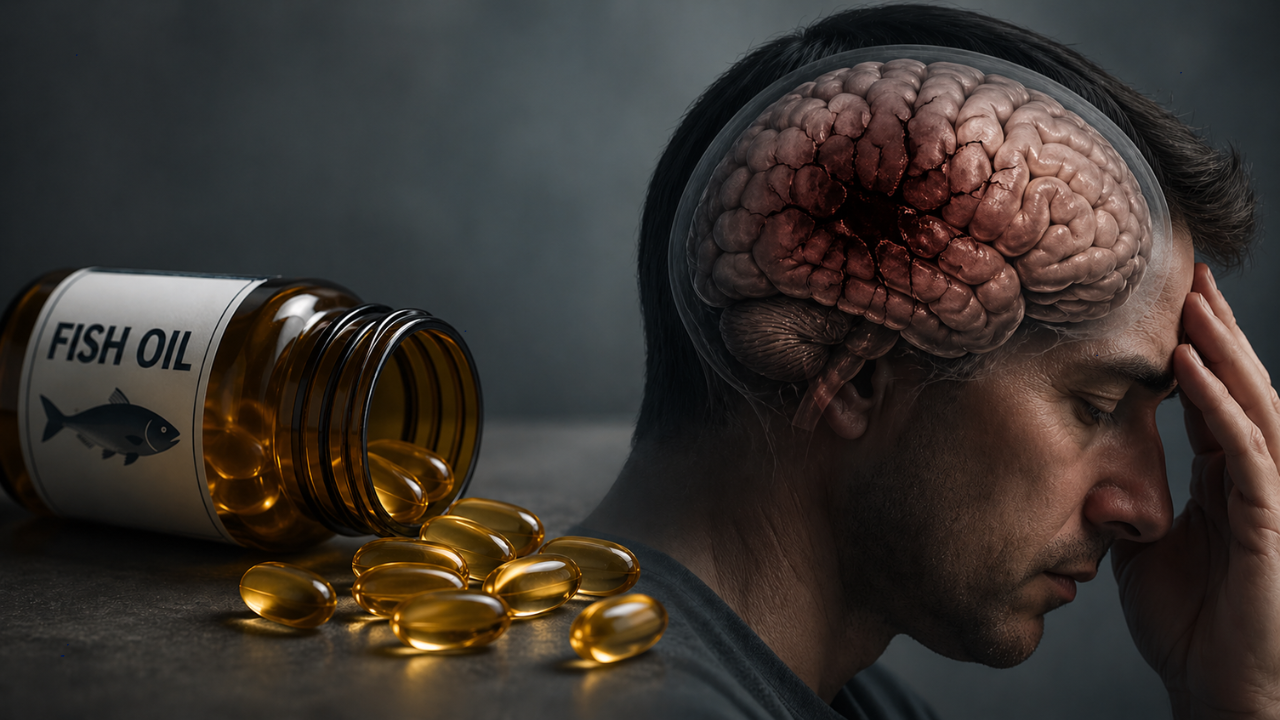
Amid growing demand for the omega-3 fatty acids in fish oil, new research suggests that its long-term use can cause harm to the brain. Fish oil is widely used for its benefits, including heart health and reducing inflammation. Fish oil is even showing up in some drinks, dairy alternatives, and snacks.The first-of-its-kind study led by the Medical University of South Carolina showed that the fish supplements, often seen as neuroprotective, may actually impair the healing process after brain injury. Published in an article in the journal Cell Reports, the research showed that a specific part of fish oil called eicosapentaenoic acid, or EPA — an omega-3 fatty acid — can interfere with how the brain heals itself after an injury. Neuroscientist Onder Albayram, an associate professor at MUSC and lead investigator, said there is strong evidence supporting the benefits of docosahexaenoic acid, or DHA, the omega-3 fatty acid in fish oil that is a major structural component of neuronal membranes. However, “in contrast, EPA follows a different biological path in the brain, with more limited membrane incorporation and effects that can vary with exposure duration and physiological context”. The researchers uncovered a context-dependent metabolic vulnerability, meaning a shift in how cells handle energy that may leave tissue less able to recover, linked to the buildup in the brain of EPA. “Fish oil supplements are everywhere, and people take them for a range of reasons, often without a clear understanding of their long-term effects,” Albayram said. “But in terms of neuroscience, we still don't know whether the brain has resilience or resistance to this supplement. That's why ours is the first such study in the field,” he added. What Did The Study Find?The team developed mouse models to examine how long-term fish oil supplementation shaped the brain’s response after repeated mild head impacts. Albayram said that mice with long-term fish oil supplementation performed worse on neurological and spatial tasks. The mice also developed signs of tau buildup in the brain’s blood vessels, suggesting that impaired recovery is linked to problems with blood vessels and tau-related brain damage. The team then tested the findings in humans. They analyzed brain tissue from the superior frontal cortex of people who had been diagnosed with chronic traumatic encephalopathy (CTE) and had a history of repeated head injuries.Albayram said that in human brain microvascular endothelial cells, EPA did not act as a universal toxin. “Instead, when cells were placed in conditions that encouraged fatty acid engagement, EPA was associated with weaker angiogenic network formation and reduced endothelial barrier integrity, matching key features of the neurovascular repair deficit seen in vivo,” the researcher noted. Notably, the researchers also found signs of disrupted fatty acid balance and changes in genes that affect blood vessel and metabolic functions in the brain tissue of people with confirmed CTE and a history of repeated brain injuries. The findings will have potential impacts on personalized nutrition, treatment strategies, designing diets to help with brain injury and neurodegeneration.Should You Stop Taking Fish Oil? Albayram emphasized that the study is not a call for the public to abandon fish oil supplements. “I am not saying fish oil is good or bad in some universal way,” he said. “What our data highlight is that biology is context-dependent. We need to understand how these supplements behave in the body over time, rather than assuming the same effect applies to everyone.” The research calls for deeper studies to examine the limits of omega-3 supplementation.