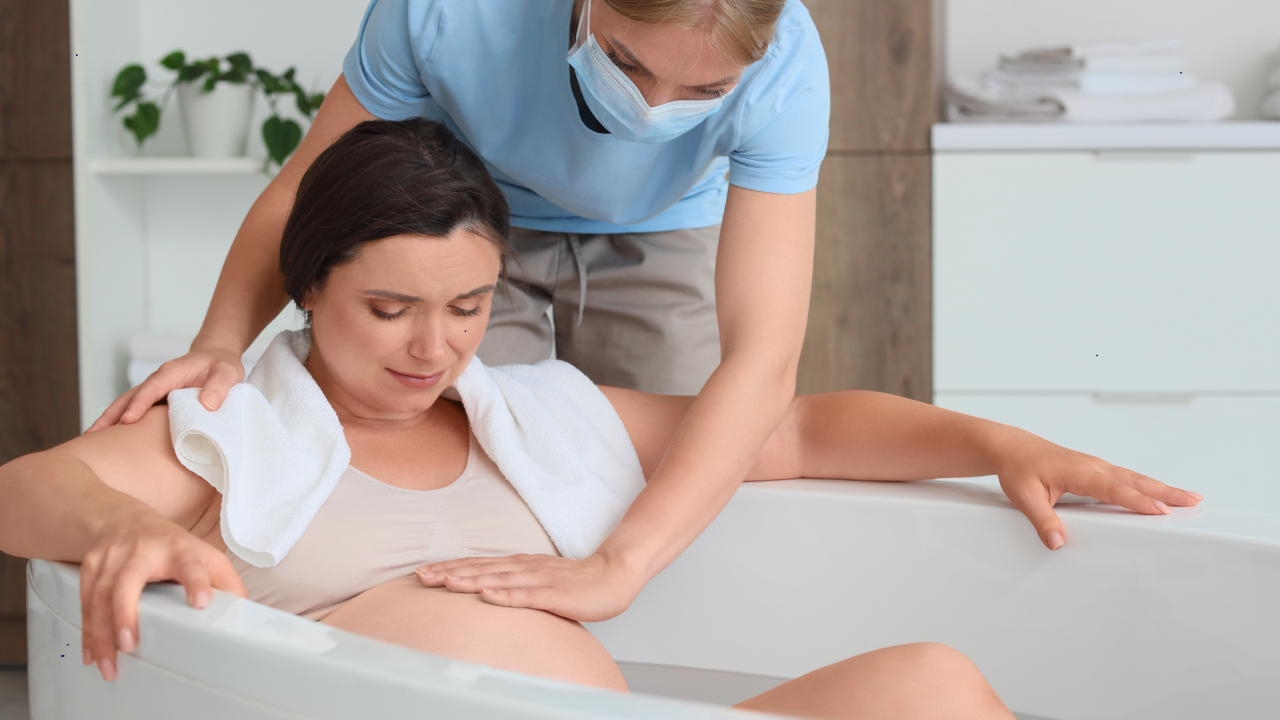
The concept of giving birth in water has evolved from a marginal practice to gain more traction across India.Fundamentally, water birth is defined as having the mother immersed in warm water for at least a part of labor and sometimes during the actual birthing process using a special tub. In terms of a clinical approach, the basic objective of this technique is to make sure that the entire process of labor becomes less stressful through the application of the inherent principles of hydrotherapy.What Are The Benefits Of Water BirthThe most obvious benefits offered by the process of water birthing include the ability to relieve oneself from the pain, thanks to the floating capacity of the water. When entering a hot tub, a woman experiences reduced gravity due to the buoyancy of the water. The process of reducing weight decreases the strain on a laboring woman's muscles and makes moving around easier. Due to that effect, the body of a woman in labor produces fewer levels of adrenaline and more endorphins, which are responsible for alleviating the pain experienced by a person. As a result, it becomes unnecessary for a woman to apply epidural anesthesia and artificial oxytocin. In addition, the hot water helps to soften the perineum, making tears less likely.Besides the benefits the woman's body enjoys during the process, it is believed that the process is smoother for the baby as well. The baby experiences a gradual change in his surroundings from the uterus to the pool with water of the same temperature. For the mother, the privacy offered by the use of a tub and the creation of a physical barrier gives a feeling of a protected place where she can fully concentrate on her delivery.Water Birth: What Are The Risks?On the other hand, water delivery is a specialized process that thrives on high standards of clinical care. Through adherence to safety practices, the risks of infections, aspirations, or other possible complications during delivery are effectively addressed. This points to the significance of selecting a medically supervised environment where water is at an optimal level while hygienic. While it is essential to prepare for any possible complications regardless of the setting, it is more convenient to deliver at a medical facility since the medical team is better positioned to move the mother out of the tub when necessary.The decision to undergo water birth should always be made together with a medical doctor. This is because water birth is normally suggested by doctors only when there is evidence that the pregnancy poses minimal risk to the mother; that is, complications are absent such as hypertension, premature labor, or multiples. The successful process depends on proper screening, continuous monitoring of the fetal heartbeat, and the ability to get out of the water if need arises.