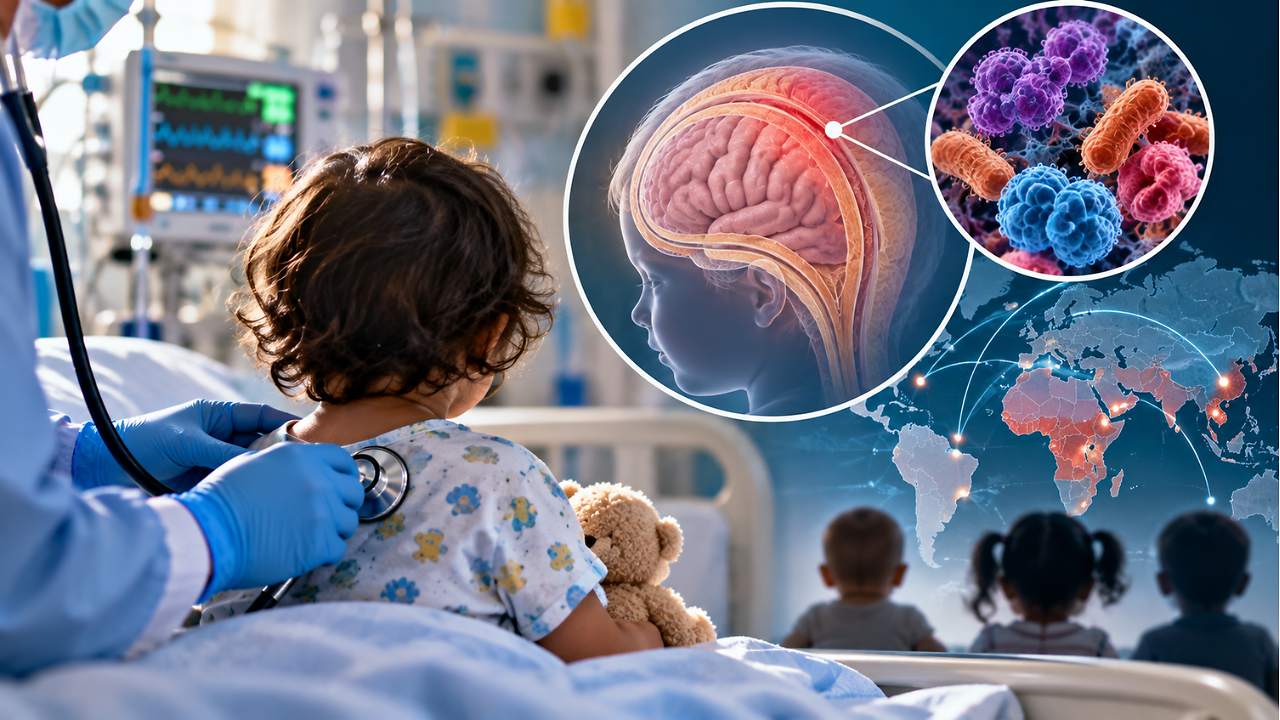
The World Health Organization (WHO) says meningitis still remains a major public health challenge, especially when it comes to children younger than five as they face the highest mortality. Meningitis is inflammation of the membranes surrounding the brain and spinal cord. It can be caused by bacteria, viruses, fungi, and other pathogens. Bacterial meningitis is among the most severe forms which can lead serious complications and even death. Meningitis is notorious for progressing at an alarming rate. Capable of deteriorating within hours, meningitis may not look the same in infants as it does in adults. Doctors explain why young children are vulnerable, the warning signs parents should not miss, and how vaccination can prevent some of the deadliest forms of the disease. More than one-third of people who die from meningitis globally are children under five, according to recent estimates from the Global Burden of Disease Study 2023. In 2023, meningitis caused an estimated 259,000 deaths worldwide, with around 86,600 deaths occurring among children younger than five. On World Meningitis Day, Healthandme looked at those figures to analyse what drives the likelihood of complications among children with the help of two experts - Dr. Praveen Gupta, Chairman - Marengo Asia International Institute for Neuro and Spine, Marengo Asia Hospitals, Gurugram and Dr. Prabhudev Hiremath, Consultant – Paediatric Neurology, Ramaiah Institute of Neurosciences, Ramaiah Memorial Hospital. Children Under Five More Are Vulnerable To Meningitis Also read: Russia Plague Scare: Could It Trigger A New Pandemic? Experts ExplainHealth experts stress that meningitis is not only preventable but also a medical emergency in which delays can have devastating consequences. According to Dr. Praveen Gupta, the developing immune system of young children is one of the key reasons why they are vulnerable to the infection. He explained, "Children below five years of age and infants especially have a developing immune system that makes them susceptible to infections. There are different organisms that tend to be responsible depending on age groups. New-borns are prone to group B streptococcus, meningococcus, pneumococcus, and H.influenzae is a common cause among children." Dr Prabhudev Hiremath explained that the vaccination gaps among infants make them more susceptible to complications. He also said that children may not present classic symptoms of meningitis as seen in adults. He added that the this difficulty in recognising meningitis in babies is particularly concerning because the disease can progress rapidly. He said, "Their protective antibody levels are also lower, especially before the completion of the primary vaccination schedule. Certain bacteria can therefore enter the bloodstream and reach the coverings of the brain and spinal cord more easily. Meningitis in babies may not present with classical symptoms as we see in adults, which can delay recognition and treatment." Meningitis Risk & Vaccination Also read: Can Obeldesivir Prevent Ebola Symptoms After Exposure? Drug Trial Moves Forward As Death Toll Crosses 4,000A significant proportion of bacterial meningitis is preventable by vaccination. WHO's global plan aims to reduce vaccine-preventable bacterial meningitis by 50% and deaths by 70% by 2030. Vaccines targeting major bacterial causes, including pneumococcus, meningococcus and Haemophilus influenzae, have helped reduce meningitis in populations with high vaccination coverage. Dr Gupta said, "A major portion of bacterial meningitis is vaccine-preventable, particularly for meningitis from H.influenzae type B (Hib), pneumococcus, and meningococcus. Though vaccination does not prevent all cases of meningitis, which is caused by viruses or other organisms, this method remains one of the best tools we have in order to prevent it." He added, "Parents need to ensure that age-specific vaccinations are administered and discuss additional vaccines with their pediatrician depending on their child's risk. Pentavalent vaccine with Hib component and pneumococcal vaccination are included in the national immunization schedule of India." Dr Hiremath also cautioned against assuming that vaccination eliminates all meningitis risk. He said, "Routine childhood immunization has dramatically reduced meningitis in countries with high vaccine coverage. However, vaccination cannot prevent every form of meningitis, so parents should not dismiss concerning symptoms simply because a child is fully vaccinated." Meningitis Symptoms In Babies Also read: Russia Plague Outbreak: Lab Worker Dies Of 'Unknown Infection' After Suspected Exposure; CDC Monitors The SituationOne of the biggest challenges for parents is that an infant cannot say that they have a severe headache or a stiff neck. This means parents need to watch for changes in feeding, behaviour, alertness and crying, rather than waiting for the classic symptoms seen in adults. Dr Gupta said, "Do not wait for the symptoms of headache with neck stiffness in babies. Look out for high fever, unusual drowsiness or lethargy, irritability, continuous or unusual crying, poor feeding, repeated vomiting, convulsions, unusual behavior, or bulging fontanelle. Older children may present with fever, severe headaches, vomiting, neck stiffness, photophobia, confusion, and increased lethargy." Meningitis Can Become Life-Threatening Within Hours Bacterial meningitis is a medical emergency. WHO notes that clinical deterioration can be rapid, with death potentially occurring within 24 hours without prompt treatment. Dr Gupta stressed how quickly a child's condition can change. He said that bacterial meningitis and meningococcal infection deteriorate very fast, progressing from flu-like symptoms to severe illness within hours. He explained, "When a child presents with fever with altered behavior, extreme lethargy, convulsions, breathing difficulties, persistent vomiting, severe headaches, neck stiffness, cold hands and feet, or a rapidly developing dark or purplish rash, parents should never opt for a wait-and-watch approach. If you suspect meningitis, every minute counts. It's an emergency." Dr Hiremath explains how a peculiar meningitis-related rash can appear, which is considered to be a major warning sign. He said, "A non-blanching, purple or reddish rash is another major warning sign, particularly with meningococcal infection. Parents should not wait for every classical symptom to appear. Treatment Does Not Signify A Child Has Fully Recovered The doctors caution against assuming that after an infection is treated, the child recovers completely. WHO estimates that about one in five people affected by bacterial meningitis develop long-term complications, which can include neurological and sensory disabilities. For children, these complications may become more apparent only as they grow and developmental or academic demands increase. Dr Gupta said, "About one-fifth of people who have experienced the disease end up having some kind of complication. The complications may range from hearing loss, seizures, weakness and neurological issues, and intellectual disabilities. Children will have to be observed for possible speech and language problems, cognitive and learning disabilities, memory, attention, behavioral and developmental delays." Dr Hiremath stressed that some problems may not be immediately obvious after discharge. He said, "Not all these complications are obvious when a child leaves the hospital. Some may become apparent months later, particularly as developmental and academic demands increase. That is why regular follow-up is important after meningitis." Dr. Gupta lists necessary tests and evaluations that must children exposed to meningitis should undergo to get timely treatment and necessary care. "Hearing tests, neurological assessment, developmental or cognitive evaluation need to be done based on the disease and recovery. Early intervention and proper education may prove to be very important. WHO particularly emphasizes care, support and aftercare of those who have been through meningitis as a part of its 2030 strategy," explains Dr. Gupta. The 2023 analysis estimated 259,000 meningitis deaths worldwide. Children under five accounted for more than one-third of them. Doctors urge that vaccination remains one of the strongest tools for preventing serious bacterial meningitis, but recognising symptoms early remains crucial.