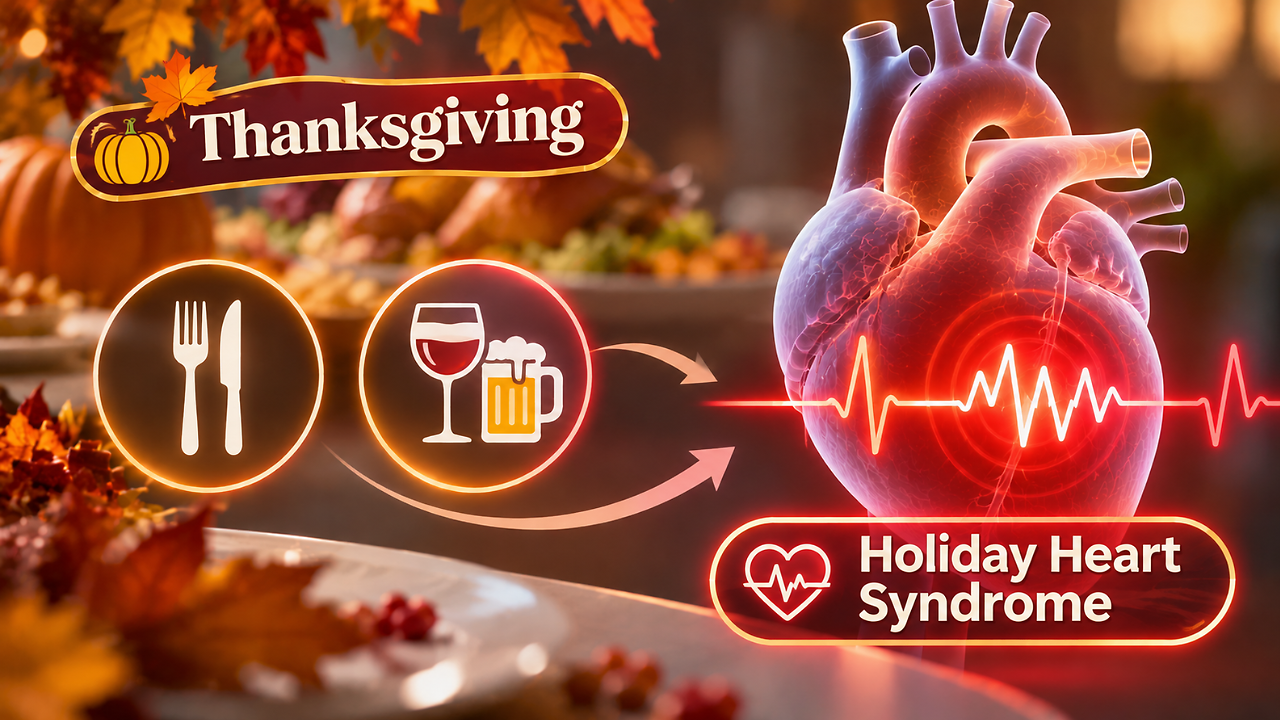
Thanksgiving is often a day of second helpings, late-night celebrations and some extra drinks. But overdoing it may affect more than your digestion. A night of heavy drinking can trigger an irregular heartbeat in some people, a condition doctors call 'Holiday Heart Syndrome'.It can happen even in people who have no previous heart disease and don’t regularly drink alcohol. While the condition often occurs during holiday celebrations, it can happen after binge drinking at any time of the year.What Is Holiday Heart Syndrome?Holiday Heart Syndrome refers to abnormal heart rhythm, most commonly atrial fibrillation (AFib), after heavy alcohol consumption.In AFib, the heart’s upper chambers, called the atria, beat irregularly instead of contracting normally. This can make the heartbeat irregular and sometimes unusually fast, affecting how efficiently blood moves through the heart.Alcohol is the most common trigger for Holiday Heart Syndrome. But overeating, salty foods, dehydration, stress and poor sleep around celebrations can add to the strain on the body and contribute to heart rhythm problems.The condition isn’t limited to Thanksgiving, Christmas or New Year’s Eve. It can happen after a weekend party, wedding or any occasion involving excessive drinking.Also read: How Weight Loss and Appetite Changes Can Signal Deeper Health ProblemsBinge Drinking May Trigger An Irregular HeartbeatAlcohol can interfere with the heart’s electrical signals, affecting how its cells generate and conduct impulses. Heavy drinking may also alter the balance of the nervous system, increase stress hormones and affect electrolytes, which help regulate the heartbeat.Dehydration and electrolyte disturbances, especially after heavy drinking or vomiting, may disrupt the heart’s electrical activity further.The risk appears to increase with the amount of alcohol consumed. Research has found that even people who don’t usually drink heavily can experience atrial fibrillation after a binge-drinking episode.A heavy holiday meal can also contribute to discomfort, changes in blood pressure and additional cardiovascular workload. Eating large amounts of salty or fatty food, drinking heavily, staying up late and skipping sleep can stress out the body. But excessive alcohol consumption remains the primary trigger of Holiday Heart Syndrome.Also read: New Supplement Can Help Increase Fibre Intake & Improve Gut Health Without Worsening IBSSymptoms Of Holiday Heart SyndromeHoliday Heart Syndrome may not always cause noticeable symptoms. When symptoms occur, they can include:A racing, pounding or fluttering heartbeatFeeling that the heart is skipping beatsDizziness or lightheadednessUnusual fatigue or weaknessShortness of breathChest discomfortSome people may experience an episode of AFib without realising it, which is one reason the condition shouldn’t be dismissed simply because symptoms are mild.Is Holiday Heart Syndrome Dangerous? An episode of atrial fibrillation may resolve on its own, sometimes within 24 hours, but that doesn’t mean it is harmless.AFib can cause blood to pool in the heart, increasing the risk of blood clots and stroke. It can also make the heart less efficient at pumping blood, especially when the heart rate becomes very fast.People with high blood pressure, diabetes, obesity, sleep apnoea or existing heart disease may be at greater risk of complications. But even people without a previous heart condition can develop this condition.If you experience repeated palpitations, chest pain, breathlessness or fainting, seek urgent medical attention. Chest pain or breathing difficulty should not be blamed on overeating or drinking.Also, you don’t have to turn Thanksgiving into a day of counting every bite, but a few habits can help reduce the strain on your heart. You may follow these precautions: Avoid binge drinking. Heavy alcohol consumption is a key trigger for Holiday Heart Syndrome.Eat slowly and avoid eating excessively large meals in one sitting.Go easy on very salty foods, especially if you have high blood pressure.Drink water throughout the day.Avoid staying up all night.Don’t ignore a racing or irregular heartbeat, even if it begins after a celebration.