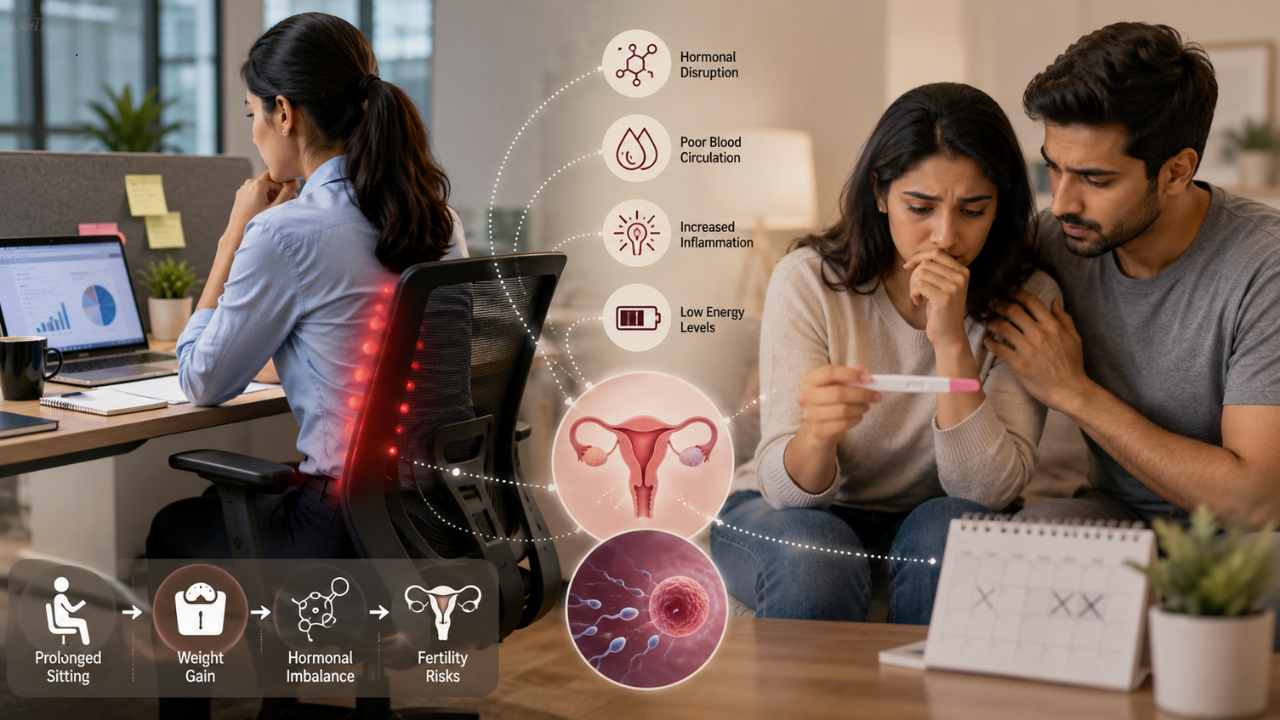
While long periods of sitting have become normal in today's workplace culture, their effects may go beyond back pain and weight gain. According to health experts, prolonged sitting may also be quietly affecting reproductive and hormonal health in both men and women.Previously, sedentary habits were only associated with non-communicable diseases such as obesity, diabetes, and cardiovascular disease, but doctors are now observing a growing connection between inactivity and reproductive dysfunction.A recent study led by researchers from Fudan University showed that extended daily sitting time is linked to a heightened risk of infertility in women of reproductive age.Studies also suggest men with high daily sedentary time (over 6–8 hours) may experience higher testicular temperatures and decreased blood flow to the pelvic region.In addition, desk jobs raise the risk of obesity and insulin resistance, two conditions that are intimately linked to issues connected to reproduction.How Sedentary Habits Impact Reproductive HealthDr. Lepakshi Dasari, Consultant Gynaecologist & Laparoscopic Surgeon, Yashoda Hospitals, Hyderabad, told HealthandMe that sitting for extended periods of time can lower blood flow, impede metabolism, cause weight gain, and upset hormonal balance.“Women may experience irregular periods, increasing PCOS symptoms, issues with ovulation, and decreased reproductive potential as a result. Long-term inactivity has been associated with worse reproductive function, lower sperm quality, and worse metabolic health in men,” she added.Also read: PCOS Is Now PMOS: What The Name Change Means For Millions Of WomenReproductive hormones in both males and females can be further disrupted by long-term stress, insufficient sleep, and inactivity.“Although sitting by itself does not immediately cause infertility, a prolonged sedentary lifestyle can eventually lead to circumstances that are detrimental to reproductive health,” Dr. Lepakshi said.“Looking at it from a gynecology standpoint, sitting for long hours is one of the things researchers nowadays associate with hormone imbalance, even besides the problem of weight gain. Infertility: A Global Burden As per the World Health Organization, about one in six people (17.5 per cent of adults) worldwide experience infertility, marking a significant health challenge. Between 1990 and 2021, infertility prevalence increased annually by 0.49 per cent for men and 0.68 per cent for women, driven by delayed parenthood, environmental toxins, and lifestyle factors. By 2050, over 75 per cent of countries may face population declines due to these trends. Read More: World Thalassemia Day 2026: Why Screening Before Marriage Or Pregnancy Is ImportantDr Tripti Dadhich, Additional Director - Obstetrics and Gynecology, CK Birla Hospitals, Jaipur, explained that when an individual is inactive, the chances of experiencing insulin resistance increase, leading to irregular menstrual cycles and fertility issues. “If the body is less active, not only is the blood flow to the pelvis less efficient, but this can lead to discomfort and irregularities in menstrual cycles over a period of time. The majority of women are not aware that long sitting hours combined with poor sleeping and stress can cause hormonal imbalance,” she told HealthandMe.How To Improve Reproductive Health? Experts shared that simple routines can have a big impact on reproductive and hormonal health, including:Walking or standing every hourExercising frequentlyMaintaining a healthy weightDrinking plenty of waterManaging stressMaintaining a proper sleep cycle.Small daily adjustments can help safeguard long-term fertility and hormonal well-being for both men and women, as reproductive health is closely linked to overall lifestyle.