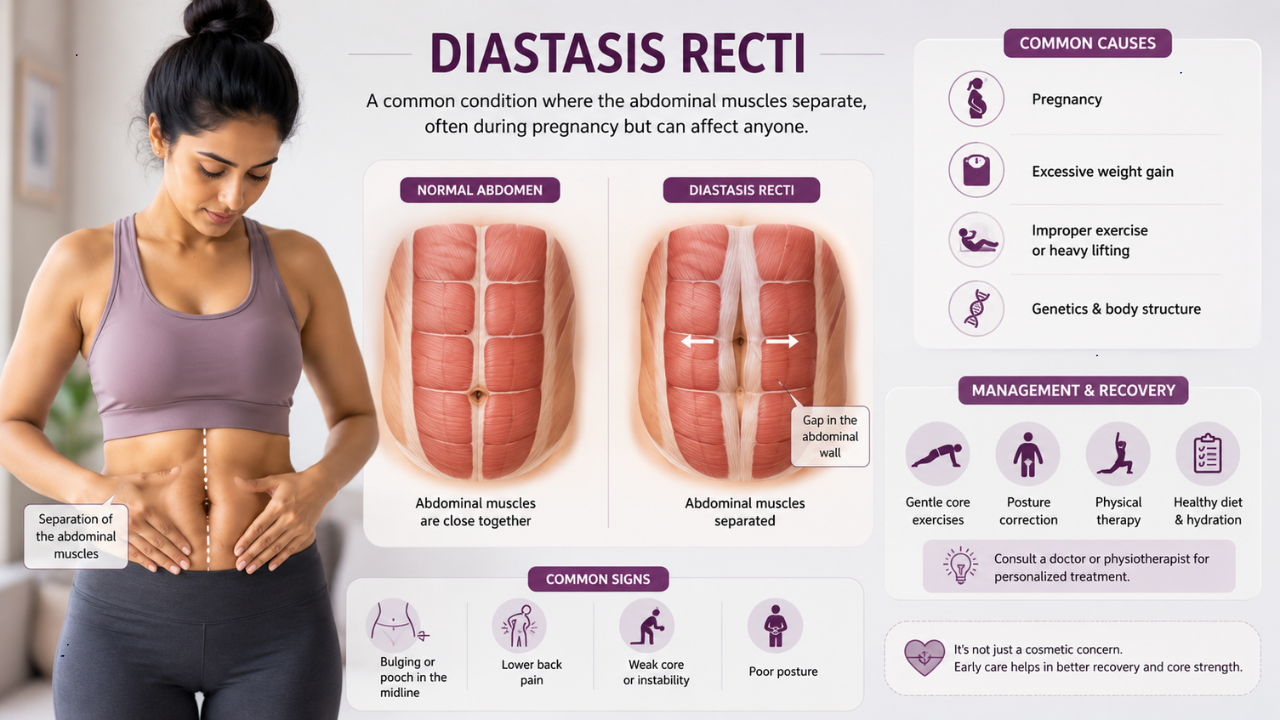
Many women notice that even months after delivery, their stomach continues to protrude despite weight loss efforts, exercise, or dieting. Often dismissed as normal postpartum body changes or “stubborn belly fat,” this condition may actually be Diastasis Recti, a separation of the abdominal muscles commonly seen during and after pregnancy. What Exactly Is Diastasis Recti? During pregnancy, the growing uterus stretches the abdominal muscles and connective tissues to make space for the baby. In some women, the two large abdominal muscles separate more than normal, creating a visible gap in the midline of the abdomen. This condition is known as Diastasis Recti. While it is common after childbirth, it often goes undiagnosed because many women are unaware that persistent abdominal bulging may not simply be weight gain. Symptoms Women Commonly IgnoreThe condition can cause more than cosmetic concerns. Women may experience lower back pain, poor posture, abdominal weakness, pelvic floor issues, bloating, constipation, or difficulty lifting objects. Some also notice a “doming” or bulge in the centre of the abdomen while sitting up or exercising. The risk may be higher in women with multiple pregnancies, twin pregnancies, excessive abdominal strain, or inadequate postnatal recovery. Why Can Incorrect Exercise Make It Worse? Many women immediately begin intense abdominal workouts or crunches after delivery to “reduce tummy fat.” However, certain exercises performed incorrectly can worsen the muscle separation and increase strain on the abdominal wall. This is why proper postnatal rehabilitation becomes important. Strengthening the deep core muscles gradually and safely under professional guidance can help improve recovery. Early Recognition Matters Diastasis Recti is treatable in many cases with physiotherapy, guided exercises, posture correction, and core rehabilitation. In severe cases, surgical intervention may sometimes be considered. Most importantly, women should understand that persistent postpartum abdominal changes are not always due to laziness, poor fitness, or inability to lose weight. Sometimes, the body is recovering from a real physical condition that requires attention, patience, and proper care.