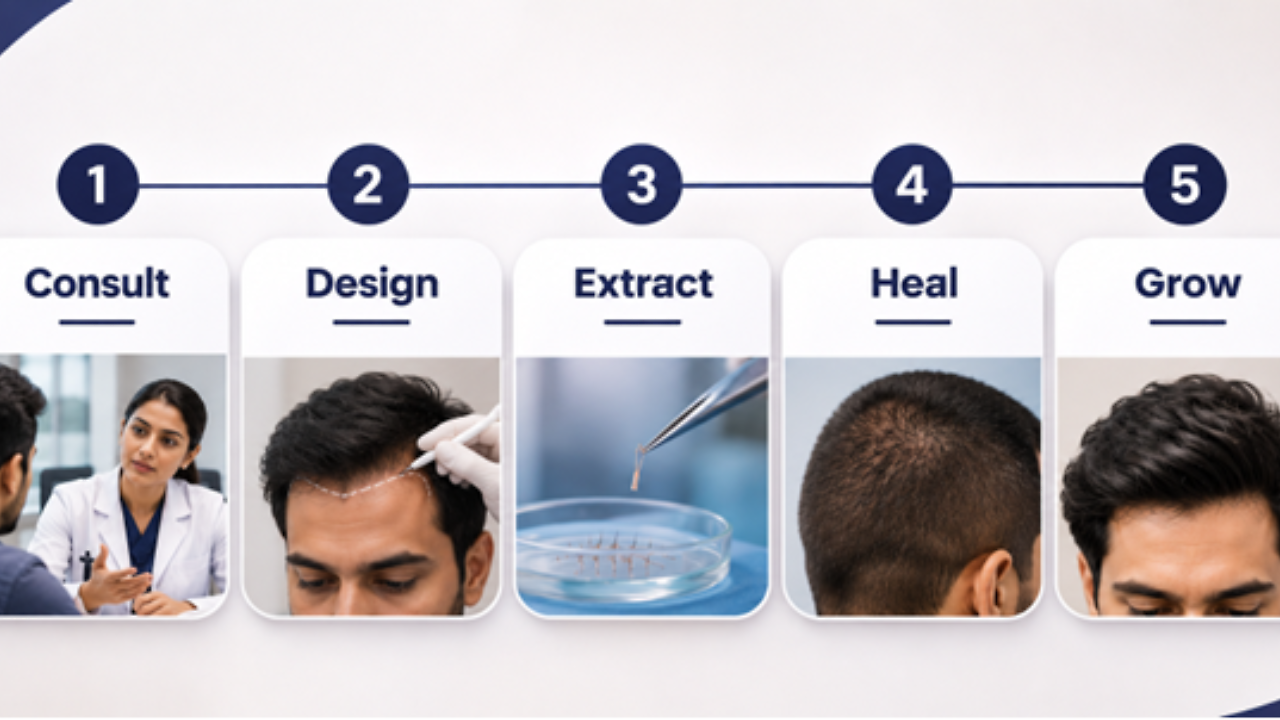
Hair transplants have moved firmly into the mainstream, yet many people still picture something far more complicated than the reality. At its core, a transplant is a straightforward idea carried out with a lot of precision. Here is what actually happens, step by step.Step 1: The consultation and assessmentEverything starts with an honest assessment. A specialist examines the scalp, checks the density of the donor area at the back and sides of the head, and maps the pattern of hair loss. This is also where realistic goals are set. A good consultation is as much about what is achievable as what is wanted, and it ends with an estimate of how many grafts the result will need.Step 2: Designing the hairlineBefore any procedure begins, the new hairline is designed. This is one of the most important stages, because a natural result depends on the hairline sitting at the right height and following the soft, slightly irregular shape of a real one. The angle and direction of future hair are planned here too.Step 3: Preparing the donor areaHair at the back and sides of the scalp is naturally resistant to the hormone that causes male pattern loss, which is why it keeps growing for life. This is the donor area. It is trimmed and numbed with local anaesthetic, so the person stays fully awake and comfortable throughout.Step 4: Extracting the graftsIn the most widely used method, follicular unit extraction, individual grafts are removed one at a time using a tiny punch. Each graft contains one to four hairs. Because the extraction points are so small, they heal without stitches and without a linear scar. Clinics such as Kibo Clinics in Mumbai carry this out under magnification to protect each follicle.Step 5: Creating the recipient sitesThe surgeon then makes tiny incisions in the thinning area, each angled to match the natural flow of surrounding hair. The density and pattern of these sites largely decide how full and how natural the final result looks.Step 6: Implanting the graftsEach graft is placed carefully into its site. This is slow, detailed work, and it is where artistry matters as much as technique. The grafts are arranged so the hairline looks soft at the front and gradually denser behind.Step 7: Healing and regrowthRecovery is quicker than most expect. Tiny scabs form and fall away within a week or two. The transplanted hairs usually shed in the first few weeks, which is completely normal and expected. New growth begins at around three to four months, and the full result appears by about twelve months. Methods like FUE hair transplant have made the whole experience minimally invasive and reliable.The takeaway is simple. A hair transplant is not a quick cosmetic trick but a planned, meticulous procedure that redistributes healthy hair you already have. Done well, the result is permanent and looks entirely your own.