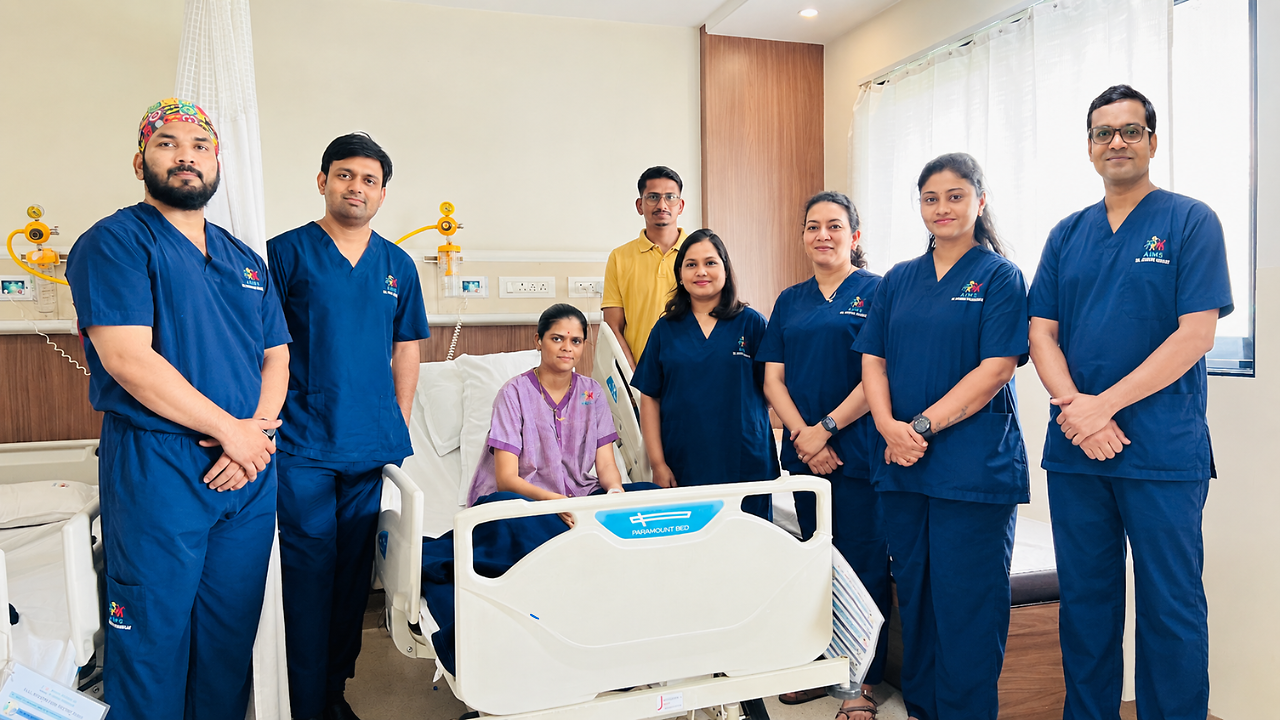
A 31-year-old woman was successfully managed at AIMS Hospital, Dombivli, for placenta percreta with bladder involvement, a rare and potentially life-threatening pregnancy complication. She was treated by a multidisciplinary team comprising Dr Shruti Kotangale (Consultant Obstetrician & Gynecologist); Dr Sushil Patil (Interventional Radiologist); Dr Vivek Jadhao (Urologist); Dr Supriya Bambarkar (Consultant Oncosurgeon); Dr Chetana Karambelkar (Consultant Gynecologist); Dr Deepak Chavan (Anesthesiologist); and Dr Vaibhav Mahankale (Anesthesiologist). The patient underwent a planned classical cesarean section, obstetric hysterectomy, and bladder repair, following which her 1.3-kg baby girl was safely delivered.Mamata Jadhav, a resident of Vasind, Shahapur, who was pregnant for the second time and had one previous delivery by cesarean section, was registered at AIMS Hospital at 28 weeks of pregnancy. Her ultrasound showed placenta previa, with the placenta covering the opening of the cervix. An MRI at 30 weeks suggested that the placenta had grown abnormally deep into the uterus and may have involved the bladder. At 31 weeks, Mamata was admitted after experiencing vaginal bleeding, which was controlled with conservative treatment.Dr Shruti Kotangale, Consultant Obstetrician & Gynecologist, AIMS Hospital, said, “A repeat ultrasound showed features suggestive of placenta percreta with bladder involvement, along with reduced blood flow to the baby, indicating placental insufficiency. The placenta was found to have invaded deeply into the uterine wall, raising concerns about the possibility of severe haemorrhage during delivery and the potential involvement of surrounding structures. Placenta percreta is one of the most serious forms of abnormal placental attachment and requires meticulous planning because the placenta can grow through the uterine wall and, in some cases, involve nearby organs. In this patient, our imaging findings helped us identify the condition before delivery and gave us the opportunity to prepare for the potential complications. The priority was to avoid an uncontrolled emergency and ensure that the mother underwent delivery in a setting where blood products, anesthesia, critical care and surgical expertise were immediately available. We therefore planned the procedure carefully and involved all the necessary specialists in advance. Early diagnosis and planned management are extremely important in such cases because an unexpected attempt to separate an abnormally adherent placenta can result in massive bleeding and can become life-threatening within a very short period.”Before proceeding with the planned Caesarean delivery, the team anticipated a high risk of heavy bleeding because of the extensive blood vessels around the lower uterus and near the bladder. To help control blood flow to the affected area and reduce the risk of uncontrolled bleeding, Dr Sushil Patil, Interventional Radiologist, performed an aortic balloon occlusion procedure. A balloon catheter was placed in the aorta, and brief inflation resulted in a reduction in blood flow to the area, helping the surgical team manage the anticipated blood loss during the planned surgery.With this preparation in place, the patient underwent a classical cesarean section under general anaesthesia, and a 1.3-kg baby girl was safely delivered and shifted to the NICU for further care. The team then proceeded with an obstetric hysterectomy. During the surgery, the placenta was found to have invaded the surface of the bladder, with extensive blood vessels around the lower uterus. Dr Vivek Jadhao, Urologist, performed the bladder repair, and the surgery was completed successfully. She tolerated the surgery well and was shifted to the ICU for close monitoring.Dr Vivek Jadhao, Urologist, AIMS Hospital, said, “The bladder involvement made the surgery particularly challenging and required careful handling of the affected area while controlling the bleeding. Close coordination between the obstetric, urology, anaesthesia and other teams was essential throughout the procedure. Once the placental invasion was managed, the bladder was repaired carefully, and the surgery was completed. The detailed preparation and teamwork helped us manage this complex situation safely.”Dr Shruti Kotangale added, “Placenta Accreta Spectrum, particularly placenta percreta, is a condition that should never be underestimated. Women with risk factors such as previous cesarean sections, placenta previa, or certain previous uterine procedures may require closer antenatal surveillance. However, every case is different, and the diagnosis depends on clinical assessment and imaging. When the condition is identified before delivery, it allows the medical team to plan appropriately rather than manage an unexpected emergency. Women should therefore attend regular antenatal check-ups and undergo recommended scans on time, especially if they have been advised that their pregnancy is high risk.Samir Jadhav, husband of the patient, said, “We were extremely worried, but the doctors explained the situation clearly and gave us confidence during a very difficult time. We are thankful to the entire team at AIMS Hospital for helping my wife and our baby come through this safely.”The successful management of this case highlights the importance of early detection, planned delivery, and multidisciplinary coordination in high-risk pregnancies. For women with suspected Placenta Accreta Spectrum, timely evaluation at an appropriately equipped centre can help doctors anticipate complications, prepare resources, and reduce the risks associated with emergency delivery.