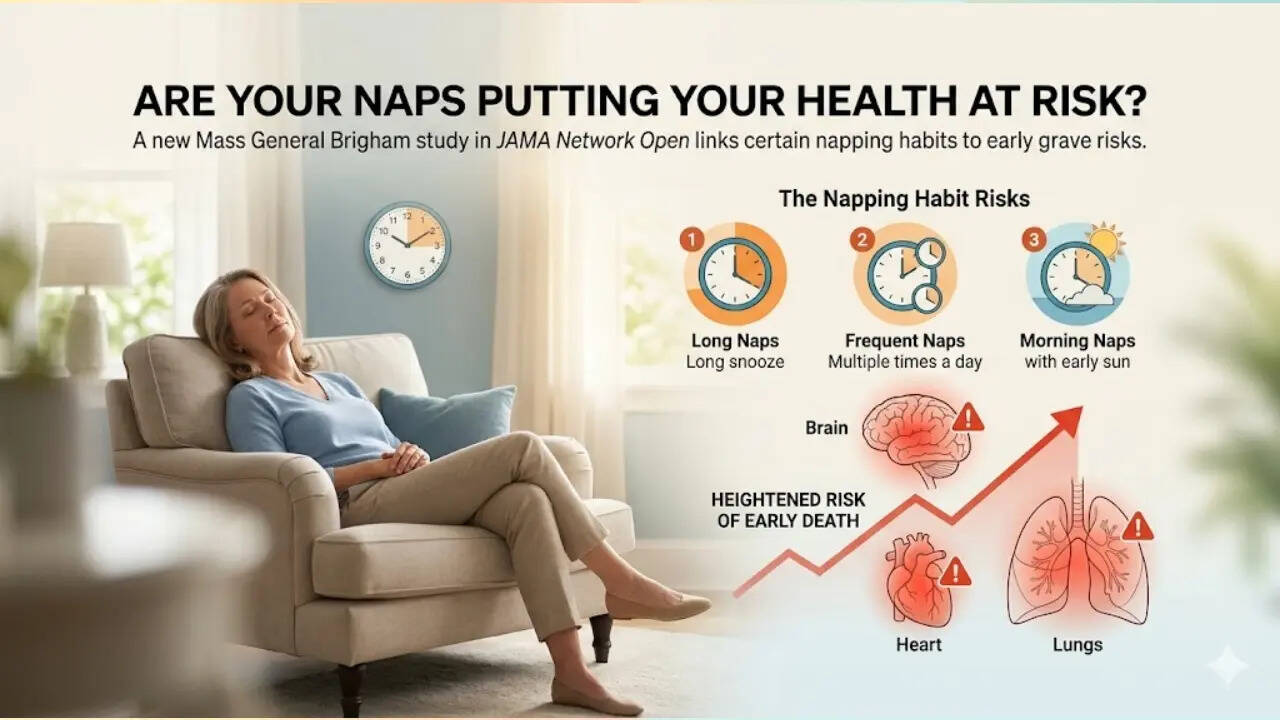
If you are someone who relies upon his or her power nap every day to feel active and fresh, this one is for you. On the one hand, a power nap can help you feel energetic, but a new study is now raising questions about whether this could put you in an early grave. Published in JAMA Network Open, a study by Mass General Brigham recently found a surprising link between napping habits and the consequent risk of dying early. According to experts, there are three types of naps that could be associated with a heightened risk of death. Read on to find out how a quick snooze could cost you your life later.Also Read: Heatwave in India: Delhi Govt Issues Advisory For Schools, Urges Hydration And Reduced Outdoor ActivityThe impact of napping on healthAccording to experts, a quick snooze can help if your energy is lagging. However, napping during the morning could be indicative of health problems. Some people are accustomed to taking afternoon power naps, and researchers say that 20 to 60 per cent of older adults take naps. An occasional daytime snooze can help restore energy levels. However, sleeping outside your usual bedtime hours can be linked to health problems later.Authors of the study also found that excessive napping is linked to cardiovascular diseases, neurodegeneration, and morbidity problems. Experts also point out that, in most studies, the subject relied on how much participants were napping. Most of the findings relied on self-reported napping habits, excluding metrics such as when, how long, and how regular those naps were. The study was the first of its kind to show the association between mortality, nap patterns, and the potential clinical value in identifying health problems early.The risks for morning nappersFor this, researchers tracked the napping habits of 1,338 older adults for 19 years to assess the impact on mortality rates. Participants also wore actigraphy devices on their wrists for 14 days to capture sleep habits. Napping refers to sleep episodes between 9 am and 7 pm. Participants who were classified as “morning nappers” managed to sleep between 9 am and 1 pm. Older adults with a longer nap duration and frequent naps in the morning were at a greater mortality risk over the 19-year period.Also Read: UK Parliament Bans Smoking For People Born After 2008: Know All About ItMorning nappers were 30 per cent more likely to die early compared to afternoon nappers who slept after 11 am. Furthermore, every additional hour of napping a day was linked to a 13 per cent higher risk of death. Additionally, every extra nap a day was linked with a 7 per cent higher risk of death. Irregular napping patterns, however, were not associated with mortality risks.How does daytime sleepiness affect health?Researchers say that there are several reasons why daytime sleepiness is linked to poor health. The study’s findings suggested that excessive napping could be a marker of underlying health problems that can lead to early death if not managed well. These could include issues such as chronic pain, heart disease, lung conditions, and dementia. Daytime sleepiness is also linked to inflammation, a well-established risk factor for early death.Sleep apnoea riskExcessive daytime sleepiness can cause disorders such as obstructive sleep apnoea. This is linked to a heightened risk of heart disease and early death. Sleep apnoea is a condition that causes breathing to stop and start at intervals during sleep. Without proper treatment, it could raise the risk of hypertension, stroke, heart disease, and type 2 diabetes.How long does a healthy nap last?Ideally, a nap must not last for longer than 20 to 30 minutes. Try to catch a snooze in a quiet, dark, and cool environment. Short naps taken in the early afternoon hours will help you boost productivity. However, long naps can lead to disrupted nighttime sleep and consequently cause grogginess the next day. Some of the best napping habits to adopt are the following:Do not nap for longer than 20 to 30 minutes. The ideal timing is between 1pm and 3pmGet some sleep in a cool, dark and quiet spaceSet an alarm Nap on a chair or a sofa to prevent oversleeping