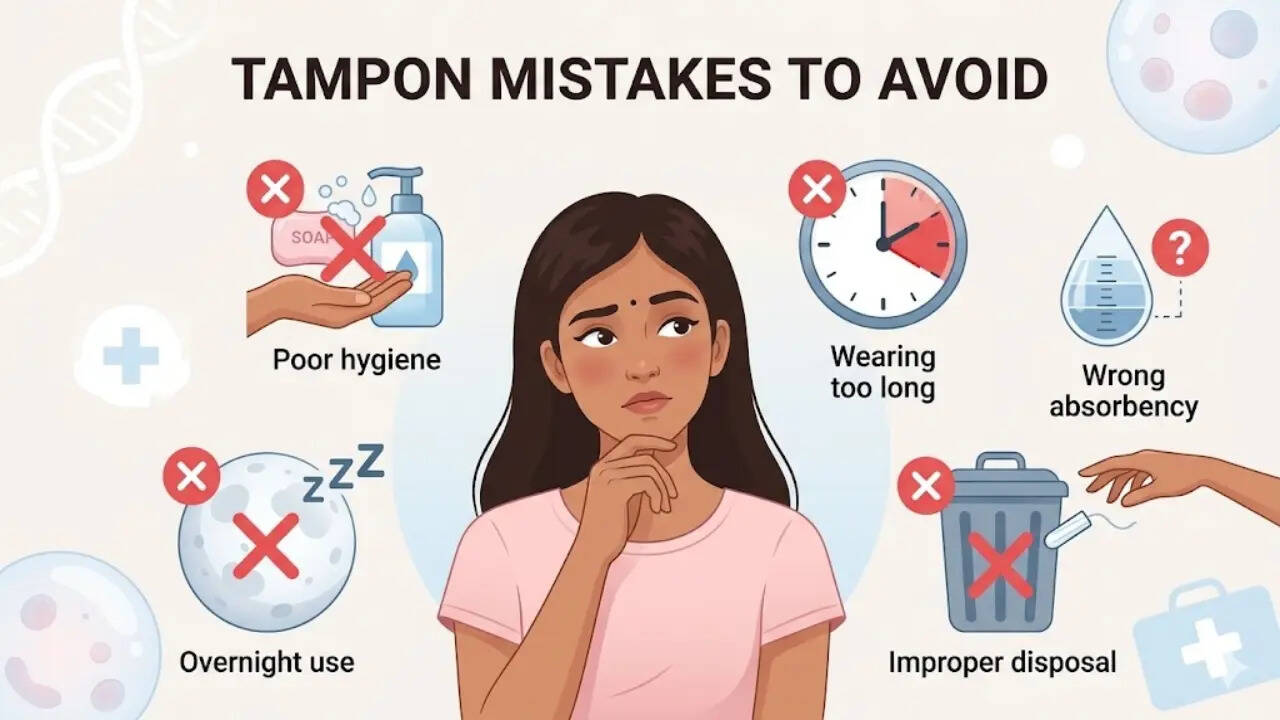
While conversations around menstrual hygiene have become more open in recent years, tampon usage in India is still evolving, and many women continue to make avoidable mistakes due to a lack of awareness or misinformation. Tampons, when used correctly, are a safe and convenient menstrual product, but incorrect practices can lead to discomfort, infections, and, in rare cases, serious health risks.What are the common tampon mistakes that women make? Dr. Sudeshna Ray, Senior Consultant Obstetrics & Gynaecology, Addl. Director (Obgyn), Jaslok Hospital, Mumbai, spoke about the most common tampon mistakes women make and their consequences. One of the most common mistakes is wearing a tampon for longer than the recommended duration. Ideally, tampons should be changed every 4 to 6 hours. Prolonged use can create a conducive environment for bacterial growth and may increase the risk of toxic shock syndrome (TSS), a rare but potentially life-threatening condition. Many women, especially those with a busy lifestyle or while travelling, tend to delay changing tampons, which can compromise hygiene and safety.Another frequent issue is choosing the wrong absorbency level. Using a tampon with higher absorbency than required can lead to vaginal dryness, irritation, and even micro-abrasions, making the area more susceptible to infections. It is important to select absorbency based on menstrual flow, which can vary across the days of the cycle. Starting with the lowest effective absorbency and adjusting as needed is always advisable.Hygiene practices during tampon use are equally critical but often overlooked. Not washing hands before and after insertion can introduce bacteria into the vaginal canal, increasing the risk of infections. Additionally, improper insertion techniques or using tampons without understanding one’s own anatomy can cause discomfort or pain, discouraging continued use and leading to negative perceptions about tampons.How to use tampons safely? Another concern is the use of tampons overnight without adequate awareness. While tampons can be used at night, it is essential to ensure they are not worn for extended hours beyond the recommended timeframe. Women who tend to sleep for longer durations may be better off using alternative menstrual products during the night to maintain safety.How to dispose of tampons properly?Improper disposal of tampons is also an issue that needs attention. Flushing tampons down the toilet can lead to plumbing problems and environmental harm, yet this practice is still prevalent. Tampons should always be wrapped and disposed of in designated waste bins to ensure hygiene and sustainability.The World Health Organization (WASH and menstrual hygiene guidance) advises the safe disposal of menstrual products in waste bins and highlights sanitation risks linked to improper disposal. UNICEF menstrual hygiene resources also recommend wrapping and disposing of products in bins, noting infrastructure challenges caused by flushing.WaterAid explicitly states that sanitary products, including tampons, should not be flushed, as they can block toilets and sewage systems and contribute to environmental waste.The National Health Service similarly advises against flushing tampons due to plumbing and environmental concerns.There is also a tendency among first-time users to feel hesitant or anxious about using tampons, often due to myths and cultural taboos. Concerns around discomfort, safety, or even misconceptions about virginity can prevent women from exploring tampons as an option. Addressing these myths through accurate information and education is crucial in empowering women to make informed choices about their menstrual health.ConclusionUltimately, the key to safe tampon usage lies in awareness and education. Women should be encouraged to read product instructions carefully, understand their own bodies, and follow recommended guidelines. Open conversations between healthcare professionals and patients can play a significant role in dispelling myths and promoting safe practices. Applicator-based tampons are often easier to use, as they allow for smoother and more controlled insertion compared to non-applicator variants. This can significantly reduce hesitation, discomfort, or incorrect placement among first-time users. Introducing applicator-based options can help women transition more comfortably to tampon use while ensuring proper hygiene and positioning. However, like any health product, they must be used responsibly. By avoiding common mistakes and prioritising hygiene, women can confidently incorporate tampons into their menstrual care routine without compromising their health.