
- Health Conditions A-Z
- Health & Wellness
- Nutrition
- Fitness
- Health News
- Ayurveda
- Videos
- Medicine A-Z
- Parenting
Can Yoga Help Your Thyroid Issues?

Yoga is a great exercise known for reducing stress and improving overall well-being. But can it also help with thyroid problems? The thyroid is a small gland in your throat that makes hormones vital for your metabolism, body temperature, growth, and even brain development in children. When your thyroid isn't working right, it can affect both your physical and mental health. This article explores how yoga can be a helpful addition to traditional thyroid treatments.
Poses You Can Do
While yoga generally promotes overall health, some poses specifically target the neck and throat area, where the thyroid is located. Stretching and strengthening this region might improve blood flow, though there's no definite proof that these specific poses benefit the thyroid more than others.
It's important to only hold poses as long as you feel comfortable. Many of the poses described below are for those with some yoga experience. You can make them easier with props or by practicing under the guidance of a certified yoga instructor. You can try each of these poses at home with a yoga mat.
Supported Shoulder Stand (Sarvangasana)
This advanced pose puts you upside down. Avoid it if you are new to yoga, have high blood pressure, heart issues, glaucoma, or are pregnant. Lie on your back, lift your legs straight up, and push onto your shoulders, supporting your hips with your hands. Keep your body straight and core strong.
Plow Pose (Halasana)
This advanced pose builds core and arm strength, plus spine flexibility. Start like the shoulder stand. Bring your legs over your head to rest your toes on the floor behind you, keeping your lower back supported. If breathing gets hard, slowly stop. A prop under shoulders can make it safer.
Fish Pose (Matsyasana)
This advanced pose stretches your body in the opposite direction after other poses. Don't do it if you have high blood pressure, neck injuries, or glaucoma. Sit, place hands under buttocks, lean back on elbows, and gently drop your head back, lifting your chest.
Bridge Pose (Setu Bandha Sarvangasana)
This pose is great for strengthening your back. Lie on your back, bring feet close to hips. Press palms into the floor and lift your hips toward the ceiling. You can use your hands on your lower back for support if needed.
Cobra Pose (Bhujangasana)
This pose helps make your back and neck more flexible. Lie on your stomach with palms under shoulders. Press into your palms and lift your head and chest off the mat, arching your back. Drop your head back if comfortable.
Boat Pose (Navasana)
Sit with legs out. Lean back slowly, keeping your core strong and back straight. Lift your bent knees, then straighten legs to form a V-shape. Raise arms in line with shoulders. Hold, breathing deeply. Slowly lower arms and legs.
Upward Bow Pose / Wheel Pose (Urdhva Dhanurasana)
This pose deeply stretches your chest, back, and neck. Lie on your back, bend knees, and place hands by your head. Press feet and hands, lifting hips and then your head until arms are straight. Hold and breathe.
Supported Headstand Pose (Sirshasana)
This is a very advanced pose for experienced yoga practitioners, always do it with a teacher at first. Kneel, interlace fingers, and place head on mat. Lift knees, walk feet closer, then slowly lift both feet up, balancing on forearms.
Exercising Could Make Your Brain Younger, Says Doctor

Credits: Canva
What if your gym routine is doing far more than helping you stay fit? Research is increasingly showing that exercise, especially strength training, plays a powerful role in keeping your brain sharp, focused and resilient over time. In fact, Dr Sudhir Kumar, a neurologist at Apollo Hospital in Hyderabad also pointed this out by quoting the study Randomised Controlled Trial of Resistance Exercise and Brain Ageing Clocks.
The study showed that resistance training could reduce brain age by up to two years. This means strength workouts could help the brain maintain characteristics that are seen in younger people.
It Is Not Just About Muscles
For a long time, workouts were seen as a way to build muscle or lose weight. Now, experts suggest that resistance training can also support brain health in meaningful ways. Regular strength training has been linked to slowing down brain ageing, with some studies suggesting it may even reduce the brain’s biological age by a couple of years.
This means that beyond physical strength, your brain could function more efficiently, particularly in areas like memory and reasoning.
Sharper Focus And Better Memory
One of the most noticeable benefits of working out is how it improves everyday thinking. People who engage in regular strength training often report better focus, improved memory and stronger decision-making abilities.
It becomes easier to stay on track with tasks, manage distractions and process information more clearly. Over time, these small improvements can make a big difference in both personal and professional life.
What Happens Inside Your Brain
The real transformation happens beneath the surface. Exercise triggers the release of chemicals that support brain cells and strengthen the connections between them.
This helps improve neuroplasticity, which is the brain’s ability to adapt, learn and form new memories. It also supports white matter, the network that allows different parts of the brain to communicate effectively.
In simple terms, your brain becomes faster, more flexible and better at handling challenges.
A Natural Way To Reduce Brain Fog
Exercise also helps tackle inflammation in the body, which is often linked to brain fog and cognitive decline. Strength training supports anti-inflammatory processes that protect brain health over time.
This is why many people feel mentally clearer and more energized after a consistent workout routine.
You Do Not Need Intense Training
The best part is that you do not need extreme workouts to see benefits. Experts suggest that even two to three strength training sessions a week can support brain health.
Simple movements like squats, push-ups or resistance band exercises are enough to activate both your body and mind.
How Leg Stiffness Impacts Spine Health: Tips For Gen Z Fitness Enthusiasts
Credit: iStock
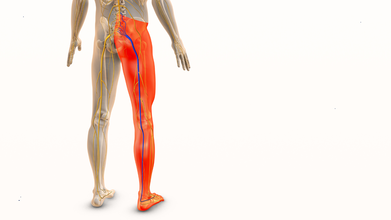
Today, the fitness scene has gained much traction among the Gen Z population. With more and more young people spending time in the gym and working out, it is important for fitness enthusiasts to remember the importance of leg stiffness and its impact on spine health. Leg stiffness has the potential to cause unnecessary strain on the spine and back during workouts.
From a neurosurgical point of view, we see that the spine is not just a mechanical support structure but a sensitive pathway through which the spinal cord and nerve roots run. Repeated micro-strain caused by poor flexibility can cause young patients to suffer early degenerative changes that may cause nerve irritation.
We also see that strengthening the abdominal muscles is essential in stabilizing the spine, thereby preventing disc injuries. Early intervention in minor complaints, such as back stiffness or nerve pain, is essential in preventing more serious problems that may need surgical intervention.
The Link Between Leg Stiffness And Spine Health
The muscles in your legs are important for your spine's health. The hamstring, hip flexor, and calf muscles are all significant players in the movement and positioning of your spine. Leg stiffness has the potential to cause unnecessary strain on the spine and back. Leg stiffness limits the movement and positioning of the hips and the spine.
When these muscle groups are tight, they alter pelvic alignment and increase load on the lumbar spine. Over time, this abnormal biomechanics can lead to disc stress and facet joint overload.
In neurosurgical practice, we often see young patients presenting with early symptoms of nerve compression where underlying muscle imbalance and stiffness play a contributory role.
Common Gym Mistakes That Increase The Risk
For young people, the main focus in the gym is on strength training, while flexibility and rest are ignored. This makes the condition of the legs stiffer. Another common error is improper posture while performing certain exercises in the gym. When the legs and hips are inflexible, proper posture is difficult, which causes pressure on the spine.
Sitting for a long time, studying, playing games on gadgets, etc., causes the hip flexors and the hamstring muscles in the legs to become stiffer, which causes pressure on the spine.
From a clinical standpoint, improper lifting techniques combined with stiffness can increase the risk of lumbar disc prolapse and nerve root irritation, conditions frequently encountered in spine clinics.
Tips to Prevent Spine Problems In The Gym
- Warm-ups: It is important to warm up the body before performing weightlifting exercises in the gym. It is recommended that the warm-up process take at least 5–10 minutes.
- Flexibility: It is important to include flexibility exercises in the gym routine, as they help in the proper movement of the legs, which in turn helps in preventing spine problems.
- Proper Posture: It is important to maintain proper posture while performing certain exercises in the gym, like squats, deadlifts, etc.
- Stretching After Workouts: This will help in the release of tension in the muscles and prevent the buildup of stiffness.
- Balance of Training and Recovery: This will help in maintaining the flexibility of the muscles and the spine.
Additionally, from a neurosurgical perspective, core strengthening plays a crucial role in stabilizing the spine and reducing the risk of disc-related injuries. Early attention to minor symptoms like back stiffness or radiating pain can prevent progression to more serious conditions requiring intervention.
Common Spine Problems To Avoid
Common spine problems to avoid during gym workouts include Herniated Disc, Sciatica, Spondylolisthesis, and Muscle Strain. These can occur from poor form, heavy lifting, or lack of warm-up.
In advanced cases, such conditions may lead to nerve compression requiring specialized evaluation and, rarely, surgical management. However, most of these issues are preventable with correct technique and conditioning.
Fitness enthusiasts in the Gen Z generation need to understand that it is very important to develop strength in the body while at the same time maintaining flexibility. The solution to the problem of a stiff leg is the foundation of protecting the spine and improving workout performance. This is achievable through the right warm-up, correct workout, and correct lifting.
Dr. Gaurav Batra is a Consultant - Neurosurgeon (Brain & Spine) at Max Hospital, Vaishali.
What Is Oscar's Best Actor Michael B Jordan's Fitness Regime?

Credits: Instagram
Michael B. Jordan’s fitness and physical transformation have returned to the spotlight after the actor won Best Actor at the 2026 Academy Awards for his performance in Sinners.
The win has renewed public interest in the intense training routines and disciplined lifestyle that have shaped his on-screen presence over the past decade.
Known for roles that demand significant physical conditioning, Jordan has repeatedly transformed his body for films such as 'Creed', 'Black Panther' and 'Without Remorse'.
Fitness experts often cite his training approach as an example of how targeted exercise, structured nutrition and recovery practices can dramatically alter body composition over time.
Early Fitness: Athletic But Not Muscular
Although Jordan is now known for his muscular build, he did not begin his career with a highly developed physique. As a teenager, he was active in sports, particularly basketball, which provided a baseline level of fitness. However, his build was naturally slim.
Jordan has previously explained that his perspective on fitness changed when he began working on television projects such as 'Friday Night Lights'. At that point, he realized that physical appearance could play an important role in casting, marketing and character development.
According to his long-time trainer Corey Calliet, Jordan initially struggled with strength training when they first began working together. Early sessions reportedly revealed limited upper body strength and difficulty gaining muscle mass.
This is not unusual from a physiological perspective. Individuals with naturally fast metabolisms often find it difficult to gain muscle because their bodies burn calories quickly. To overcome this, Jordan gradually increased both his training intensity and calorie intake.
Role-Specific Training Approaches
One of the most distinctive aspects of Jordan’s fitness strategy is that his workouts are tailored to each role rather than following a single fixed program.
For the 'Creed' film series, his training focused on developing the physique and performance capacity of a professional boxer. This meant a heavy emphasis on boxing drills, endurance training, and cardiovascular conditioning.
Cardiovascular conditioning refers to exercises that strengthen the heart and lungs while improving the body’s ability to deliver oxygen to muscles during physical activity. Boxing training typically includes activities such as skipping, sparring, pad work and high-intensity interval training.
In contrast, Jordan’s preparation for 'Black Panther' required a different approach. For this role, the goal was not simply athletic performance but a visually powerful physique suited to a comic-book antagonist. Trainer Corey Calliet therefore introduced a bodybuilding-focused routine aimed at increasing muscle size and definition.
Bodybuilding training involves targeted resistance exercises designed to stimulate muscle growth, also known as hypertrophy. These routines often focus on isolating specific muscle groups such as the chest, arms, and legs.
High-Intensity Training And Consistency
Jordan’s preparation for physically demanding roles has often involved extremely intensive training schedules. During the filming of 'Creed', he reportedly trained two to three times per day, six days a week.
This level of frequency is common among professional athletes preparing for competition. The routine typically combines strength training, skill-based practice and endurance workouts.
High-intensity interval training, often abbreviated as HIIT, also played an important role in his program. HIIT involves short bursts of intense exercise followed by brief recovery periods. Research shows that this form of training can improve cardiovascular fitness, burn fat, and increase metabolic efficiency.
Jordan has noted that maintaining such a schedule consistently for several months can lead to significant changes in body composition, including increased muscle mass and reduced body fat.
Special Focus On Nutrition And Diet
Exercise alone cannot produce dramatic physical changes without appropriate nutrition. During times, when Jordan needs to increase muscle mass, he reportedly consumes three to six meals per day.
These meals typically include lean proteins such as chicken or fish, complex carbohydrates such as brown rice or sweet potatoes, and vegetables that provide vitamins and fibre.
Protein is especially important because it supplies the amino acids required for muscle repair and growth after strength training. Between film projects, Jordan relaxes his diet slightly but still maintains general healthy eating habits. He has previously mentioned allowing himself an occasional cheat meal while practicing moderation overall.
Recovery And Long-Term Health
In recent years, Jordan has placed greater emphasis on recovery practices. These include stretching, meditation and breathing exercises performed each morning.
Stretching helps improve flexibility and reduce the risk of muscle injuries. Meditation and controlled breathing are often used to manage stress and support mental wellbeing.
Recovery is increasingly recognised as a critical component of athletic performance. Without adequate rest and muscle recovery, intense training can lead to fatigue, injury, and reduced physical performance.
Jordan has also said that he now incorporates lighter forms of physical activity between film projects, including swimming, sports and playing with family members.
A Holistic Approach To Fitness
Michael B. Jordan’s physical transformation over the years reflects a structured approach that combines training, nutrition, and recovery. Rather than relying on a single workout formula, his fitness strategy adapts to the demands of each role while maintaining long-term health.
With his 2026 Oscar win bringing renewed attention to his career, his disciplined fitness regimen has once again become a topic of interest. For many observers, Jordan’s journey illustrates how consistent habits and scientifically informed training methods can gradually reshape the body over time.
- Follow Us :


© 2024 Bennett, Coleman & Company Limited