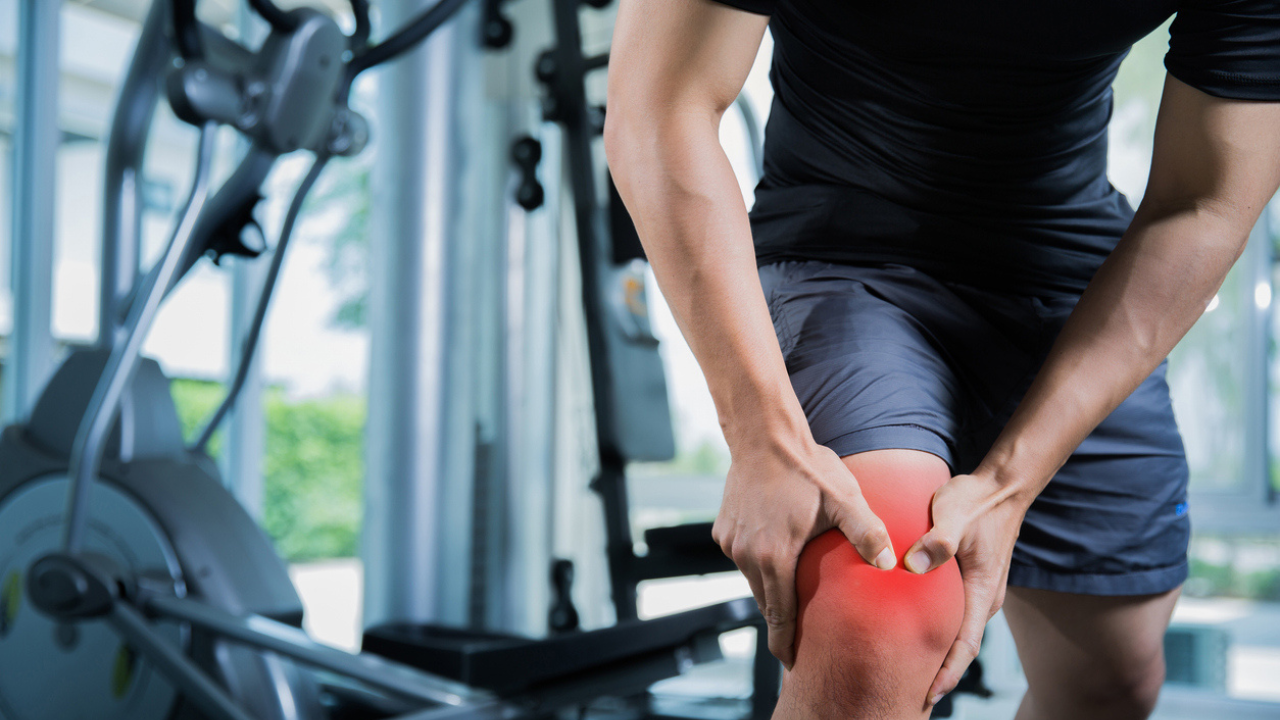
Certain moments that look ordinary, like a missed landing after a box jump, a sudden pivot on the basketball court, or a squat jump gone wrong at the gym, are behind some of the most common knee injuries orthopaedic doctors treat every week. The anterior cruciate ligament, commonly known as ACL, is located deep inside the knee and works to keep the shinbone from sliding too far forward. A study was conducted in 2025, covering sports-related knee and shoulder injuries among athletes in Haryana, one of India's leading Olympic-medal-contributing states. The study found ACL rupture to be the single most common injury, accounting for close to 61% of cases. The same study found that knee injuries make up about 41% of all sports-related trauma, with the ACL responsible for roughly a fifth of that share. Separately, a five-year study of sports injuries in Haryana found ACL rupture to be the leading injury among young athletes, with the majority of affected patients between 16 and 20 years old. These numbers point to a pattern orthopaedic doctors see often among the cases, which is young people get hurt more often during ordinary training, not just in high-level competition. The Landing Problem Most people focus on how high they can jump, but only a few think about how they land. A stiff landing, with knees locked or barely bent, sends the full force of impact straight into the knee joint instead of spreading it across the hips, knees, and ankles. Doctors also watch for a pattern called knee valgus, where the knees cave inward as a person lands or changes direction. This inward collapse puts significant strain on the ACL and is one of the clearest warning signs seen during a clinical assessment. Fatigue makes this worse. Toward the end of a workout or a match, muscles tire and control weakens. This is when landings tend to get sloppier, form breaks down, and injury risk climbs, particularly during the last few reps of a session or the final minutes of a game.Also read: Dream Of Becoming A Footballer Or Cricketer? Cardiologists Reveal Heart-Healthy Habits For Young Athletes Common Gym Mistakes Several habits come up repeatedly in orthopaedic clinics: Jumping onto boxes or platforms without practising a controlled landing firstSkipping a proper warm-up before explosive movements such as squat jumps or burpeesProgressing to heavier loads or higher jumps before building basic strength in the hips and glutesIgnoring persistent knee discomfort instead of resting and getting it checkedTraining on hard or uneven surfaces without appropriate footwear Weak hip and glute muscles are a recurring factor. When these muscles cannot control the leg properly, the knee ends up compensating, and that shifts strain onto the ACL and surrounding structures. The Haryana study also found that kabaddi and wrestling accounted for the highest share of these injuries, sports that involve repeated pivoting, gripping, and sudden changes in direction. What Helps? Orthopaedic doctors generally recommend building strength in the hips, glutes, and core before increasing the intensity of jump training. Practising soft, controlled landings, with knees bent and aligned over the toes rather than caving inward, makes a measurable difference. Gradual progression is equally as important. Increasing jump height, load, or intensity too quickly does not allow the muscles and ligaments time to adapt. Persistent knee pain, swelling, or a feeling of instability after jumping or pivoting should never be pushed through. These are signs worth getting evaluated early, since catching a problem before it becomes a full tear usually means a simpler and shorter road to recovery