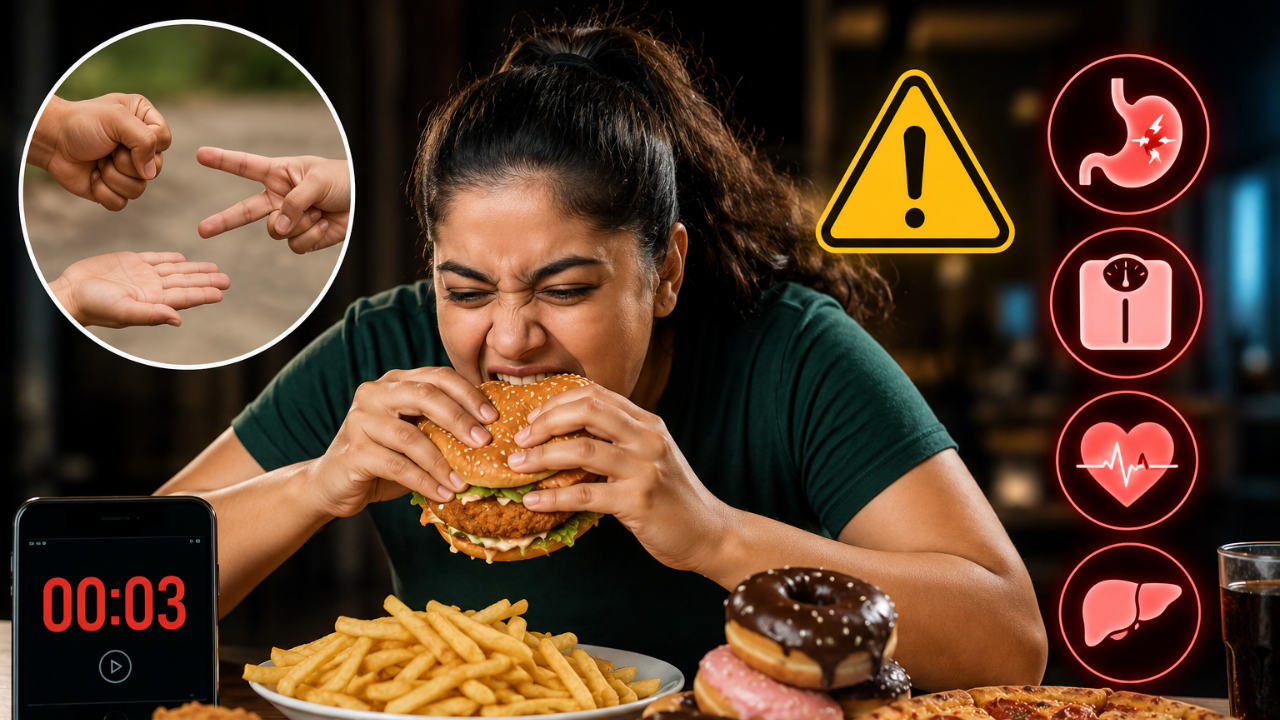
The mukbangs, it a giant burrito in 5 bites, rock–paper–scissors “run and eat” challenge may look like harmless fun on Instagram, but medically, it’s a messy combination of speed, adrenaline and food. Your body simply isn’t built to sprint one second and swallow food the next, and that’s exactly why doctors are raising alarms.When Running And Eating Collide When you suddenly take off running, your system shifts into “performance mode.” Blood flow is pushed toward your muscles, your breathing gets heavier, and your heart rate shoots up. In that state, the body is not prioritising digestion, it’s prioritising oxygen and movement. If you try to eat immediately afterwards, your swallowing reflex is out of sync, your breathing is irregular, and your diaphragm is still working overtime. That makes choking far more likely than people realise, even with small bites.What Happens To Your Digestion After Intense Exercise Then there’s the digestive side. Eating right after a sprint forces the stomach to start working while the body is still in high-alert mode. This can lead to sudden acidity, cramps, indigestion, or even vomiting. Some people experience a sharp head rush or dizziness because the nervous system gets confused between “cool down” and “start digesting.” It’s a physiologically chaotic moment and food doesn’t belong in it.Also read: Can Drinking Coffee Make You Leaner, Healthier? Study Decodes The Link Another concern is behavioural. These challenges make speed-eating and chaotic eating patterns look entertaining. Young people often imitate trends without understanding the risks, and this normalises the idea that food is something to be shoved in quickly or eaten competitively. Over time, this can dull the body’s natural hunger and fullness cues.The Social Media Trend May Be Fun, But Your Body Pays The Price Social media trends come and go, but your physiology doesn’t. Mixing intense exertion with immediate eating isn’t just quirky, it’s genuinely unsafe. A few likes or views aren’t worth choking, an ER visit, or developing unhealthy habits around food and exercise.By Dr Chetan Kalal, DM Hepatologist and Liver Transplant Specialist, Saifee Hospital, Mumbai