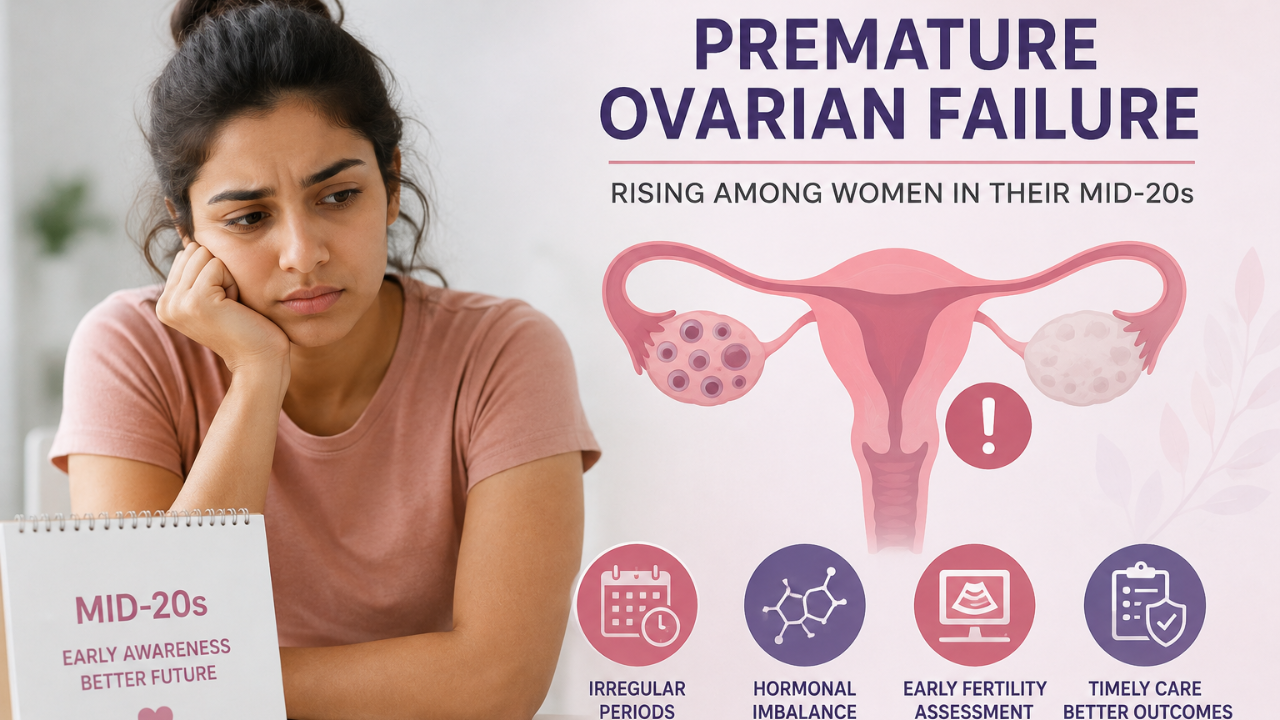
Doctors are witnessing a concerning rise in Premature Ovarian Failure (POF) among women in their mid-20s, a condition that can impact fertility, hormonal health, and overall well-being if not identified early. Why Doctors Are Seeing POF In Younger Women Experts are raising concerns over an increasing number of young women being diagnosed with Premature Ovarian Failure (POF), also known as Primary Ovarian Insufficiency, a condition in which the ovaries stop functioning normally before the age of 40. What was once considered uncommon in women under 30 is now being seen more frequently, with doctors reporting cases in women as young as 25 -26 years old. What Happens When The Ovaries Stop Functioning Normally? Premature Ovarian Failure occurs when the ovaries lose their normal ability to produce eggs and hormones such as estrogen. “As a result, women may experience irregular periods, missed menstrual cycles, difficulty conceiving, hot flashes, mood changes, sleep disturbances, vaginal dryness, and reduced bone health. While some women may still ovulate occasionally, fertility can be significantly affected. The rise in cases to a combination of genetic predisposition, autoimmune disorders, lifestyle changes, chronic stress, environmental factors, smoking, certain medical treatments, and underlying hormonal conditions. In many cases, however, the exact cause remains unknown.Also read: Decoding The Fertility Markers Irregular Periods May Be An Early Warning Sign The growing trend is particularly concerning because many young women assume fertility issues occur only later in life and may ignore early warning signs. Delayed diagnosis can reduce opportunities for fertility preservation and timely intervention,” said Dr. Rashmi Niphadkar, Fertility Specialist, Nova IVF Fertility, Baner, Pune. Dr Rashmi Niphadkar further added, “We are increasingly diagnosing Premature Ovarian Failure in women between 25 -30 years of age, and currently observe around three to four cases every month. Many of these women seek medical attention only after experiencing difficulty conceiving or prolonged menstrual irregularities. POF Can Affect More Than Fertility The condition can have a profound impact not only on fertility but also on emotional health, bone health, and long-term hormonal well-being. Early evaluation of menstrual changes should never be ignored, especially in young women who may not consider themselves at risk. Women today are balancing demanding careers, stress, lifestyle challenges, and delayed family planning. While these factors alone may not directly cause Premature Ovarian Failure, they can contribute to overall reproductive health concerns.Also read: Bryan Johnson's New 2.6M Women's Health Project Centers on Girlfriend's Menstrual Blood Why Early Fertility Assessment Matters Timely diagnosis allows us to discuss fertility preservation options, hormone management, and personalized treatment plans that can help women make informed reproductive choices.” With more young women being diagnosed with Premature Ovarian Failure, doctors emphasize the importance of breaking the misconception that fertility challenges only affect older women. Awareness and early intervention can help preserve reproductive options and improve long-term health outcomes.