
- Health Conditions A-Z
- Health & Wellness
- Nutrition
- Fitness
- Health News
- Ayurveda
- Videos
- Medicine A-Z
- Parenting
Summer Yoga Poses That Keep You Energized Throughout The Day

Yoga is a full body exercise that consists of poses that help your body function to the best of its abilities. While we know yoga can help us build immunity, muscle mass and even make our mental health stronger, it can also help us feel energized. Unlike other common forms of exercises, which drain your energy, yoga can help you feel energized. This is especially needed as summer is upon us and nothing drains your energy more than the heat.
The reason why yoga can energize you is because it focuses on your breathing and slow movement, so instead of short bursts of energy being expended, you are using your stored energy in a uniform manner. John Hopkins Medicine explains that yoga can boost your mental and physical energy, as well as make you feel brighter.
Paschimottanasana (Seated Forward Bend)
Start sitting tall with legs straight out. Gently lean forward from your hips, keeping your back as straight as you can. Reach your hands towards your feet. With each breath out, try to fold a little deeper. This stretch helps calm your mind and stretches your back and hamstrings, which can feel great after sitting for a while during summer travels. Hold and then slowly sit back up.
Parivrtta Janu Sirsana (Revolved Head-to-Knee Pose)
Begin sitting with legs wide. Bend one knee, bringing that heel close to your body. Turn your upper body towards your bent knee. Then, lean sideways towards your straight leg, reaching your hand towards your foot. Extend your other arm overhead. This pose gives a nice twist to your spine and stretches your sides and shoulders, feeling refreshing on a warm day. Repeat on the other side.
Utthan Pristhasana (Lizard Pose)
From a lunge, bring both hands inside your front foot. Lower your hips towards the floor, feeling a stretch in your hips and thighs. You can stay on your hands or lower onto your forearms for a deeper stretch. Keep your spine long and your gaze soft. This pose is great for opening up tight hips, which can be helpful if you're doing more walking or outdoor activities in the summer.
Vasisthasana (Side Plank Pose) variation
Start in a plank position. Roll onto the outer edge of one foot and place the other foot in front for support. Lift your top arm towards the ceiling, opening your chest. Keep your body in a straight line. This pose strengthens your core and arms, improving balance – useful for all those summer adventures. Remember to do both sides to keep your body even.
Dhanurasana (Bow Pose)
Lie on your stomach. Bend your knees and reach back to grab your ankles. As you breathe in, lift your chest and thighs off the floor, like a bow. Look straight ahead. This pose stretches the front of your body and strengthens your back, which can feel really good after activities like swimming or hiking. Hold briefly and then gently lower down.
Utkatasana (Chair Pose)
Stand tall with your feet together. Reach your arms overhead and bend your knees as if you're sitting in a chair. Keep your chest lifted and your weight in your heels. This pose builds strength in your legs and core, preparing you for more active summer days. Imagine reaching for the sun as you hold this pose. Slowly straighten your legs to come out.
Parsva Bakasana (Side Crow/Crane Pose)
Start in a low squat. Twist your upper body to one side and place both hands on the floor. Lean forward, bending your elbows. Rest your outer thigh on your upper arm and try to lift your feet off the ground. This is a more challenging pose that builds arm strength and balance, offering a fun way to challenge yourself during the summer. Take it slow and be patient.
Orthopedic Surgeon Reveals Why Your Joints Hurt More During Winters
Credit: Canva
Been wondering why your shoulders, knees or elbows hurt more than usual? Experts say it's due to falling temperatures.
Dr Christopher Murawski, an orthopedic surgeon with Duke Health, has revealed that changes in weather can add pressure to the joints and worsen existing pain.
"Whether it's warm weather, whether it's cold weather, whether it's changes in humidity, changes in pressure and things like that, they do experience joint pains, and muscle pains," he told ABC11.
Typically, joints hurt in the cold because low temperatures thicken the lubricating synovial fluid, a viscous, egg-white-like liquid in movable joints (like knees, hips, shoulders) that lubricates cartilage, reduces friction and provides nutrients, in the body. This makes joints stiffer, causing muscles to tighten.
Moreover, to conserve heat during extreme cold, the body also restricts blood flow which causes muscles and tendons around joints to tighten and pull, increasing discomfort. Less blood flow to extremities also means less warmth and oxygen around the joints, contributing to stiffness and aches.
According to Dr Murawski, the air surrounding us exerts about 15 pounds of pressure per square inch on the body. Any changes in barometric pressure can also increase pressure on the joints and amplify pain
"I'd say, while the science isn't perfect, physiologically, it makes some sense. We get some changes in pressure. The muscles can expand. Ligaments can expand -- things like that. And more importantly, it jives with the experiences that patients share with us even anecdotally and the symptoms they experience," he said.
Who Does It Affect The Most?
People with existing conditions like arthritis (osteoarthritis, rheumatoid arthritis) or past joint injuries feel these effects more acutely.
Those whom have suffered from past injuries, such as ligament strains or cartilage tears, do not exercise frequently and have weak quadriceps and hamstrings may also
become more noticeable to join pain in cold temperatures.
Working from home, sitting with legs crossed or lounging for long periods can also strain the joints as well as drinking less water as dehydration affects cartilage and synovial fluid and increases joint stiffness.
What Can You Do For Relief?
According to Dr Murawski, staying warm, active/mobile and hydrated, even if it is cold outside, is essential to keep the pain manageable. You should visit a doctor if the pain lasts for over three days and occurs several times within a month.
Experts also recommend maintaining weight, focusing on the glutes and hamstrings during exercise and avoiding sitting near cold windows or walking barefoot on cold floors to protect the bones.
Tilak Varma Undergoes Emergency Surgery For Testicular Torsion
Credits: iStock/ Instagram
India's left handed batter, Tilak Varma, 23, has undergone a testicular torsion surgery, after being diagnosed with it. This news has come as a set back to fans. Varma has created a name in cricket through his performance in the Indian Premier League or the IPL.
What Is Testicular Torsion?
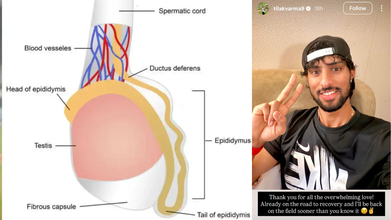
It is twisting of spermatic cord, which supports the testes in scrotum. When this occurs the blood supply is cut off to the testicles and nearby tissue in the scrotum. If not treated in time, this could lead to a permanent damage to the testicle.
What Can Cause Testicular Torsion?
Some men could be prone to this due to defects in the connective tissue within the scrotum. This could happen due to an injury to the scrotum, that could lead to lot of swelling or following heavy exercise. While in some cases, there is no clear cause.
The condition is usually common during the first year of life and in the beginning of adolescence or puberty, but it could happen to older men too.
Is Testicular Torsion Common?
Urology Care Foundation notes that this is not a common problem and happens in about 1 in 4,000 males under the age of 25. However, while this condition is not prone to anyone in particular athletes in sports with potential groin or scrotal trauma like cricket, where getting hit by a ball could be common, increases the risk of the condition.
Tilak Varma Update
After his surgery, Tilak Varma has shared an update on his Instagram story: ""Thank you for all the overwhelming love! Already on the road to recovery and I'll be back on the field sooner than you know it."
His diagnosis came after he experienced an acute abdominal pain after breakfast on Wednesday morning in Rajkot, a day before Hyderabad were to play their final Vijay Hazare Trophy league-stage game against Jammu and Kashmir. Varma was then taken to hospital where scans showed that he required an emergency operation. In consultation with the medical team at the BCCI Centre of Excellence in Bengaluru, Varma was finally operated.
"It was a very emergency situation for Tilak to be operated upon, considering the immense pain he was in. Thankfully, the surgery went well on Wednesday evening at a super-speciality hospital in Rajkot. If all goes well, he could well be discharged tomorrow. It will be known in next 1-2 days about his status of playing next month's T20 World Cup," sources told IANS.
A BCCI also released a statement on Thursday that stated that Tilak has been ruled out of the first three New Zealand T20Is. "His availability for the remaining two matches will be assessed based on his progress during the return-to-training and skill phases," the Board said further.
Varma has been a mainstay in India’s T20I line-up, scoring 1,183 runs from 37 innings at an impressive average of 49.29 and a strike rate of 144.09. The left-hander has registered two centuries and six fifties in the format. His absence may push captain Suryakumar Yadav to bat at number three.
This Health Parameter May Be More Important Than BMI or Body Fat, According To Doctor
Credits: iStock
We have been told for long that BMI or the body mass index is the ultimate measurement for your healthy life. However, while it could predict how healthy you will be in the coming years down the line, it is not the only parameter that you should be focused on. In fact, several studies have shown that BMI in fact is not the right parameter, as it does not take in account for one's body type. Tracking the right parameter could actually help flag potential problems long before symptoms even appear. This can give you enough opportunity to intervene through lifestyle changes.
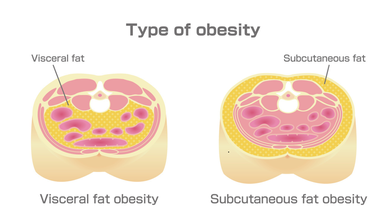
A Bengaluru-based dermatologist, Dr Priyanka Reddy, who is also a cosmetologist and trichologist, and the founder of DNA Skin Clinic and Wellness Centre, highlighted that one crucial health parameter is actually visceral or centripetal fat.
What Is Visceral Fat?
"This is the centripetal or visceral fat - the fat around the abdomen and internal organs. It starts in your late 20s to early 30s and it can predict your future health problems like these and it is closely linked to insulin resistance, poor sleep cycle, stress and other factors like these. This is also called apple-shaped obesity,” she explains.
How To Track Visceral Fat?
Tracking visceral fat does not always require expensive tests. Experts say there are both simple at-home ways and more precise clinical methods to understand whether your levels are in a risky range.
The easiest place to start is waist circumference. For women, a waist size above 80 cm signals higher health risk, while for men the risk increases beyond 90 cm. This measurement is quick, affordable, and surprisingly informative when done correctly and consistently.
Another helpful marker is the waist-to-height ratio. If your waist measurement is more than half your height, meaning a ratio of 0.5 or higher, it is considered unhealthy and linked to higher metabolic risk.
For clinical accuracy, DEXA scans are considered the gold standard. Dual-Energy X-ray Absorptiometry provides a detailed breakdown of fat distribution, including visceral fat stored around organs.
Many people also rely on smart scales, which offer a visceral fat score. A score above 9 may indicate increased risk. However, experts caution that this number should be seen as a trend over time rather than a medical diagnosis.
In general, a healthy waist range is slightly lower than risk cut-offs. For women, a waist below 75 to 80 cm is considered healthy, though risk rises after 40. For men, a waist under 88 to 90 cm is ideal, with risk also increasing after 40.
Why Visceral Fat Increases
Visceral fat builds up due to a combination of lifestyle and hormonal factors. Poor sleep, chronic stress, insulin resistance, low muscle mass, frequent alcohol intake, and diets high in ultra-processed carbohydrates all play a role. Hormonal shifts such as PCOS, menopause, or low testosterone can further worsen fat accumulation around the abdomen.
How to reduce visceral fat
Experts recommend strength training three to four times a week as a non-negotiable habit. This should be combined with Zone 2 cardio and one or two HIIT sessions weekly. Meals should prioritize protein and fibre, while sugary drinks and late-night eating should be minimized. Consistent sleep of seven to eight hours and active stress management through yoga, dance, or breathwork are equally important. Alcohol should be paused if levels are high.
If visceral fat does not reduce despite consistency, it may be time to check for thyroid issues, insulin resistance, high cortisol, or hormonal imbalances.
Long-term maintenance
To keep visceral fat in check, track your waist monthly, lift weights year-round, prioritize sleep, and manage stress before cutting calories. Experts emphasize that visceral fat is a metabolic issue, not just a weight-loss problem. Address the root causes, and fat loss often follows naturally.
- Follow Us :


© 2024 Bennett, Coleman & Company Limited