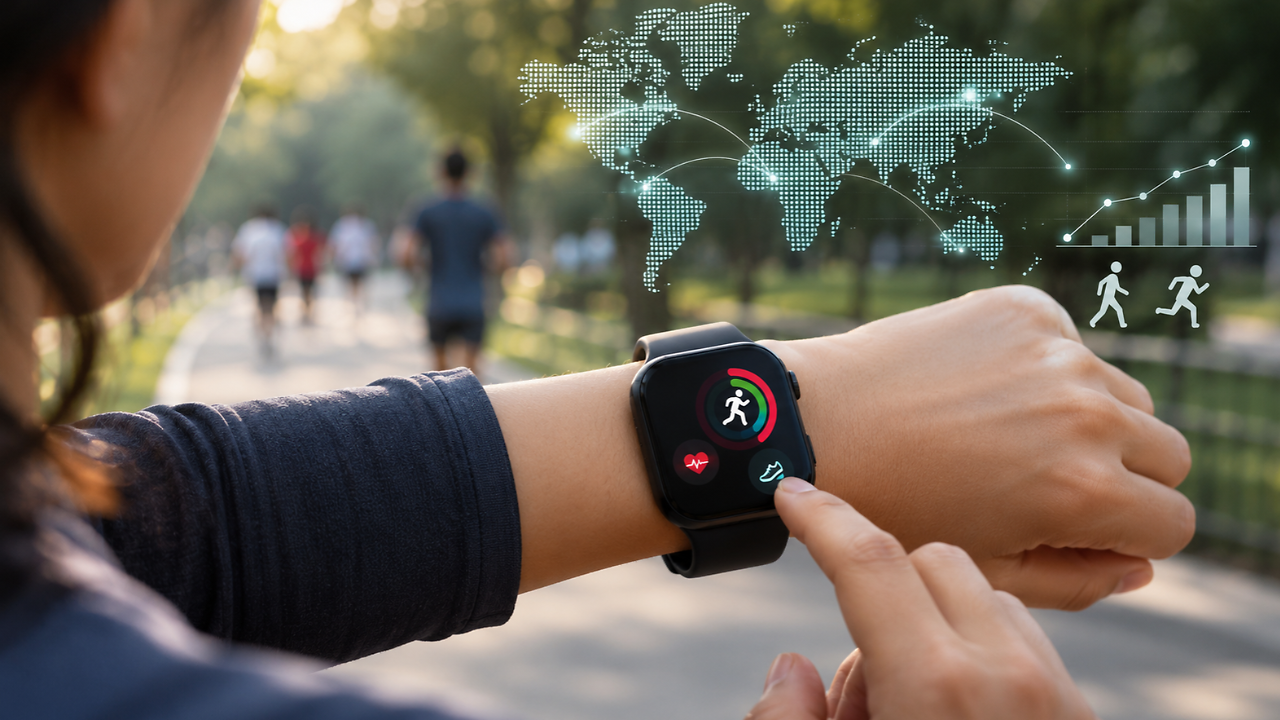
Smartwatches and fitness trackers are widely used for counting daily steps and tracking workouts by millions. But the World Health Organization (WHO) is now seeking to task these wearables with bigger responsibilities. The global health body has issued proposals for wearable devices that could help countries measure physical activity and sedentary behaviour across populations.In a notice published on November 8, WHO invited researchers, health authorities, technology developers and other stakeholders to review a draft Target Product Profile (TPP) for wearable devices worn on wrists. The aim is to ascertain what these devices should be capable of measuring before they are incorporated into national and subnational public health monitoring systems.The proposal will remain open until December 6, 2026. WHO will use the feedback to revise and finalise the document and inform future implementation guidance.WHO Want To Use Smartwatches For Public Health MonitoringAlso read: Lancet Study Says Obesity Drug Mazdutide Shows 18% Weight Loss In 32 Weeks: How Does It Compare To Wegovy?Physical inactivity is a major risk factor for non-communicable diseases, including cardiovascular disease, type 2 diabetes and certain cancers. Sedentary behaviour, which involves spending prolonged periods sitting is also the cause of various adverse health outcomes.Countries currently rely heavily on surveys to understand how physically active people are. However, these often depend on people reporting their own activity, which can lead to inaccurate data.Wearable devices could provide a more objective way to collect information over a certain period of time. Instead of relying entirely on questionnaires, health authorities could use data from these devices to understand how much people move, how long they remain sedentary and how activity patterns vary across different population groups.WHO says wearable technology could complement existing surveillance methods as countries work towards improving global physical activity targets.WHO's Proposed Standards Also read: Weight Loss Without Extreme Diets: What Sustainable Medical Weight Management Looks LikeThe draft TPP outlines minimum specifications for smartwatches intended for population-level monitoring. It considers what makes a device suitable for collecting data across different populations.The proposed framework covers:Measurement capabilities: What physical activity and sedentary behaviour indicators a device should be able to capture.Technical specifications: The minimum and additional features required for devices to be suitable for public health surveillance.Data access: How information can be retrieved, processed and used by health monitoring systems.Implementation: Practical considerations involved in deploying devices across communities and integrating them into existing surveillance programmes.Scalability and sustainability: Whether the technology can be used consistently across countries with different resources and technical capacities.WHO is interested in feedback on whether the specifications proposed are practical and relevant to countries with limited resources.Why Can't Countries Use Existing Smartwatches? Although such wearables are widely available, their measurements are not interchangeable. Different manufacturers use different sensors, algorithms and methods to calculate steps, activity levels and sedentary time. As a result, two devices worn by the same person may produce different estimates.A systematic review published in npj Digital Medicine in January 2026 examined 82 studies evaluating Apple Watch measurements across 14 health metrics. It found that measurement accuracy varied depending on the metric and testing conditions. While heart-rate measurements showed good overall agreement, step counts had moderate accuracy and energy expenditure data was inconsistent too.This illustrates the need for standardisation. If countries use different devices and measurement methods, comparing physical activity data across populations becomes needlessly challenging.WHO's proposed framework is intended to address these differences by identifying the device characteristics and protocols needed for consistent data collection.Cost, access, privacy and digital literacy remain important challenges when it comes to implementing WHO's proposal. People without smartphones, reliable internet access or the ability to buy wearable devices could be underrepresented.There are also questions about how personal movement data would be stored, shared and protected. Governments would need clear safeguards to ensure that participation is voluntary, data is handled responsibly and findings represent the wider population.