
- Health Conditions A-Z
- Health & Wellness
- Nutrition
- Fitness
- Health News
- Ayurveda
- Videos
- Medicine A-Z
- Parenting
24-Year-Old Ignored This Common Digestive Symptom, Now She’s Fighting Stage 3 Colon Cancer

Credits: Meagon Meadows Instagram/Canva
A 24-year-old teacher from Southern California, Meagan Meadows, was diagnosed with stage 3 colon cancer after nearly overlooking one of the major signs of the disease. She now hopes her story will encourage other young adults to take even mild digestive symptoms seriously.
Meagan first noticed a small trace of blood when she went to the bathroom and assumed it was due to stress, diet, or hemorrhoids, she told Business Insider. Embarrassed and convinced it was nothing serious, she almost did not mention it. But after confiding in friends, they persuaded her to see a doctor.
Her initial scans and tests appeared mostly normal, except for a slightly thickened intestinal wall, a finding often linked to dehydration or low fiber intake. She was advised to get a colonoscopy but nearly canceled the appointment. “I felt silly because I thought I was perfectly fine,” she said. “I almost didn’t go.”
When Meagan finally went through with the procedure, the results stunned her doctors.
24-Year-Old Woman Diagnosed With Stage 3 Colon Cancer After Experiencing This Symptom
In October 2024, Meagan Meadows began noticing blood in her stool. She initially brushed it off after discussing it with friends and family, assuming it was a minor issue like hemorrhoids. Months later, when the bleeding persisted, she decided to visit her primary care doctor. While her physician was not alarmed, they still ordered a CT scan and blood work, both of which came back clear.
She was then referred to a gastroenterologist, who performed a colonoscopy in June 2025. During the procedure, the doctor discovered a large mass and immediately requested additional blood tests and imaging. Three days later, Meagan was diagnosed with colon cancer.
In June, surgeons removed part of her colon, the tumor, and 20 lymph nodes for biopsy. Seven of the lymph nodes tested positive for cancer, confirming stage 3 colon cancer. Meagan is now undergoing six months of chemotherapy while continuing to share her story to raise awareness among young people.
What Are the Major Symptoms of Colon Cancer?
Colon cancer often begins as small, noncancerous growths called polyps. These polyps can remain harmless for years before turning cancerous, sometimes taking up to 10 to 15 years to develop. Because polyps usually cause no symptoms, they can go unnoticed until they become serious. Detecting and removing them early is one of the best ways to prevent colon cancer.
The colon is the first and longest part of the large intestine, which is the final section of the digestive system. It helps break down food and absorb nutrients before connecting to the rectum. For this reason, when cancer forms in the colon or rectum, it is often referred to as colorectal cancer.
Symptoms of Early-Stage Colon Cancer
Early-stage colon cancer often causes no noticeable symptoms, which makes regular screening especially important. Routine tests can identify changes before the cancer spreads, when treatment is most effective, according to Mayo Clinic.
Symptoms of Later-Stage Colon Cancer
As colon cancer progresses, it can extend beyond the colon into nearby tissues, lymph nodes, or even distant organs. The symptoms vary depending on where the tumor is located and how advanced it is.
Signs of colon cancer may include:
- Changes in bowel habits, such as diarrhea, constipation, or changes in stool shape.
- Rectal bleeding or visible blood in the stool.
- Dark, tar-like stools.
- Iron deficiency anemia, which can cause fatigue, weakness, or coldness in the hands and feet, and make the skin appear pale.
- Ongoing abdominal pain, bloating, or cramping.
- Feeling full after eating only a small amount.
- A sensation that the bowel doesn’t empty completely.
- Unexplained weight loss.
- A lump or swelling near the belly button area.
If you experience any of these symptoms, it’s important to discuss them with a healthcare professional. Working with a multidisciplinary team, such as the one at Mayo Clinic, can help identify the cause and guide proper treatment.
Symptoms of Early-Onset Colorectal Cancer
Researchers are still studying why colon cancer cases are rising among people under 50. Although the recommended screening age has been lowered from 50 to 45, many younger patients are still being diagnosed at more advanced stages.
Common warning signs in younger adults include:
- Blood in the stool.
- Abdominal pain.
- Changes in bowel habits, such as alternating constipation and diarrhea.
- Unexplained weight loss.
Super Flu Virus Update: 91 Flu Outbreaks In Canada, What Makes Subclade K Spread Rapidly, Explain Doctors

Credits: iStock
Super flu virus, or the new strain of H3N2 influenza is spreading and has affected a growing number of Canadians, reported the Global News. It is "increasing rapidly" around the country, warn experts. Health Canada confirmed that all regions of the country is affected by the growing influenza activity.
In the first week of December, Canada saw 6,799 cases of the flu with 91 outbreaks across the country. The number of positive tests also rose by 20.2 per cent as compared to the week before. Hospitalization numbers too have gone up with 3.6 hospitalization per 100,000 population, reported the Global News.
The strain causing a havoc in public health in Canada is the influenza A (H3N2) strain, which includes a subvariant A (H3N2) subclade K, noted the World Health Organization (WHO).
Who are hit the hardest? According to Health Canada's report, children are among those being hit hard, and most infections are detected in people under 19.
What Is The Super flu doing in Canada?
After the death of three children in Ottawa, between age five and nine, the health officials have urged anyone over the age of six months to get vaccinated. This means, the parents must step in now. In November, the Children's Hospital of Eastern Ontario, colloquially known as CHEO, also witnessed eight times more children tested positive for influenza as compared to the data of the same month from previous year. Hospitalized too doubled with children affected by flu.
Also Read: Is 2025 The Year Of Flu?
CHEO in a statement said, "The flu is more than a bad cold."
“Children under five are at a higher risk of severe illness from influenza because they have smaller airways, and their immune systems are still developing. Even healthy kids can become seriously ill, and flu spreads quickly in schools and child-care settings.”
Hospitals in Alberta too are seeing a flood of flu patients, this has jumped up to 70 per cent in a week. Dr Fahad Razak, internal medicine physician and professor at the University of Toronto told the Global News that 1 in 5 of all tests are being done are positive. "So that suggests we are right in the midst of that surge. The numbers could go higher."
Thanks to the holiday season and with increased travel, this will impact the surge in numbers, Dr Isaac Bogoch, Infectious disease specialist at Toronto General Hospital told the outlet, "It’s probably going to end up being a more severe and a more significant flu season compared to the average flu season."
Why Is This New Strain Hitting Hard?
Doctors explain that subclade K enhances the ability of the virus to slip through our immune protection. However, it does not mean that vaccination offers no protection against the flu. In fact, experts and doctors have been emphasizing the need to get yourself vaccinated to help you protect from the worst effects of the virus.
“If you look at deaths and severe illness with flu, the vast majority both in adults and in children are unvaccinated,” Razak said.
“Yes, you may get sick, even if you are vaccinated, it’s that the severity, the chance that you’re going to end up in hospital and worst-case scenario in the ICU or die does seem to be significantly protected against by being vaccinated.”
Health Canada too noted that vaccination can prevent anyone infected with influenza from developing any further complications.
Are Other Countries Impacted?
Apart from Canada, the UK and the US are also impacted by the superflu or the subclade K. In the UK the National Health Service (NHS) declared that the country is currently facing "worst case scenario" for December as flu hospitalization has surged by more than half in just one week. NHS in a statement last week said, on an average 2,660 patients were being hospitalized per day with flu last week. This is the higher ever for this time of the year with the surge being up by 55 per cent compared with the week before.
In the US, the Centers for Disease Control and Prevention (CDC) noted that infections are growing in 43 states.
Depo Provera: New FDA Label Highlights Possible Brain Tumor Risk

Credits: AP
Depo Provera: The Food and Drug Administration approved a label change on Friday for Pfizer’s birth control injection, Depo-Provera, alerting patients to the risk of meningioma, a tumor that develops in the lining of the brain.
Pfizer is currently facing a lawsuit from over 1,000 women who allege that the company knew about the risk but failed to warn users.
How Depo-Provera Works
Depo-Provera is administered as a progestin injection every three months. The lawsuit highlights studies dating back to 1983 linking progesterone with meningioma, claiming that Pfizer had an “unassignable duty to investigate” and should have examined the potential risks of Depo-Provera much earlier. (Progestin is a synthetic form of progesterone.)
According to the Centers for Disease Control and Prevention, roughly one in four sexually active women in the U.S. has used Depo-Provera, with Black women using it at nearly twice the national rate.
Depo Provera: Understanding Meningiomas
Meningiomas are generally non-cancerous, meaning they do not spread to other areas of the body. However, depending on their size and location, they can still be dangerous. In the U.S., about 39,000 meningiomas are diagnosed annually, though the overall risk remains small, as per CDC.
Depo Provera: Pfizer’s Response and FDA Review
Earlier this year, Pfizer requested a judge dismiss the lawsuit, stating that it became aware of the meningioma risks linked to Depo-Provera in 2023. In February 2024, the company applied to the FDA to add a warning to the injection’s label, also requesting warnings for two lower-dose pills containing medroxyprogesterone acetate (MPA), the active ingredient in the shot, as per NBC News.
The FDA denied the request for the pills, explaining that “the findings of the available observational studies alone do not support the addition of a warning on Meningioma risk to medroxyprogesterone acetate (MPA)-containing products.”
Pfizer then amended and resubmitted the application in June 2025. In response, the FDA approved a label change this month for two injection versions — Depo-Provera CI and Depo-Subq Provera 104.
“We acknowledge receipt of your amendment dated June 12, 2025,” the FDA letter to Pfizer said. The approval “provides for the addition of information related to Meningioma risk” on the product label.
Depo Provera: Pfizer’s Statement
A Pfizer spokesperson told NBC News that “the label update reflects a recent decision by the FDA to approve the warning, which the agency had earlier denied.”
“Pfizer stands behind the safety and efficacy of Depo-Provera, which has been used by millions of women worldwide and remains an important treatment option for women seeking to manage their reproductive health,” the statement added.
Lawyers representing the women suing Pfizer said: “For years, Pfizer misled doctors, patients, and the FDA about Depo-Provera’s link to meningiomas, resulting in needless suffering for thousands of women who developed these serious brain tumors. … We applaud the FDA in finally requiring this label change to better inform and protect women.” The FDA did not immediately respond to requests for comment. Elsewhere, warnings about meningioma have already been added to Depo-Provera’s label.
In 2024, the European Medicines Agency listed meningioma as a “possible side effect” for drugs with high doses of MPA. That same year, Canada updated the drug’s label to include meningioma under “warnings and precautions,” noting that meningiomas have been reported following long-term use of progestins, including MPA.
As per NBC News, in January, South Africa’s regulatory agency recommended updating the MPA drug label to include meningioma risk as well. The judge has not yet issued a ruling in the ongoing lawsuit against Pfizer in the United States.
CDC Formally Ends Universal Hepatitis B Vaccination Guidance—What Does It Mean For Newborns?
Credits: Canva
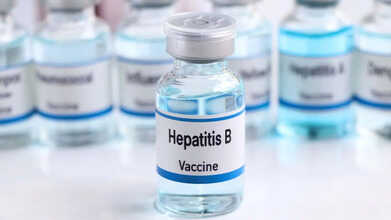
The U.S. Centers for Disease Control and Prevention on Tuesday withdrew its decades-old guidance that all newborns in the country should be vaccinated against hepatitis B at birth. Instead, the decision has now been shifted to parents, who are advised to consult a healthcare provider when deciding whether babies born to hepatitis B-negative mothers should receive the vaccine, including the birth dose.
The change follows a recommendation made by Health Secretary Robert F. Kennedy Jr.’s vaccine advisory panel, marking a significant shift in public health policy. Earlier this month, the panel suggested that the birth dose be limited to newborns whose mothers test positive for hepatitis B or whose infection status is unknown. The CDC approved this recommendation as official policy on Tuesday. Here is what this change means for newborns moving forward:
Also Read: Indoor Air In Delhi Is More Toxic Than Outdoor Smog, Pulmonologist Warns
CDC Ends Guidance That All Newborns Should Get Hepatitis B Vaccine
Under the updated guidance, if parents decide against vaccinating their baby at birth but later believe the shot is necessary, the CDC now advises waiting until the child is at least two months old before administering the first dose. Since 1991, U.S. health authorities have supported universal infant vaccination against hepatitis B, with the first of three doses typically given shortly after birth. CDC recommendations influence health insurance coverage decisions and serve as a key reference point for doctors when determining vaccine schedules.
Public health experts have raised concerns that the shift toward what the CDC calls “individual-based decision-making” may leave more children vulnerable to the virus and could encourage families to skip vaccination without a strong federal directive. Kennedy, who has long opposed vaccines, has already introduced sweeping changes to the country’s vaccination policies.
CDC New Guidance On Hepatitis B Vaccine: What Does This Mean For Newborns?
Rather than advising hepatitis B vaccination for every newborn, the CDC now formally recommends that women who test negative for the virus discuss with their healthcare providers whether their babies should receive the first dose within 24 hours of birth. According to NBC News, the agency is also evaluating another proposal from the advisory panel, which suggests parents consult doctors about testing children for hepatitis B antibodies before deciding on second doses of the vaccine. Typically, the hepatitis B vaccine is administered as a three-dose series during infancy.
Also Read: ‘Fix Your Handwriting’: Indian Doctors Told to Write Clear, Legible Prescriptions Under New Rules
This policy shift stands out as one of the clearest departures from established medical consensus reflected in current CDC guidance. During discussions, the advisory committee relied on selective data and misinformation, while overlooking decades of research showing that hepatitis B vaccines are both safe and highly effective when given soon after birth.
“Removing the recommendation for newborns increases the likelihood that case numbers will rise again. This makes America sicker,” Senator Bill Cassidy, R-La., a liver specialist who has treated hepatitis B patients, wrote on X earlier this month. Despite the change, pediatricians are still expected to encourage parents to vaccinate their newborns.
The Department of Health and Human Services has stated that the updated guidance will not change insurance coverage for the vaccine. The shots will also remain available to newborns through the Vaccines for Children Program, which provides vaccines at no cost to uninsured or underinsured families.
Last month, the CDC also revised a webpage that had previously stated clearly that vaccines do not cause autism. The updated language now says studies have not ruled out a link, despite decades of scientific evidence showing no connection between vaccines and autism.
- Follow Us :


© 2024 Bennett, Coleman & Company Limited