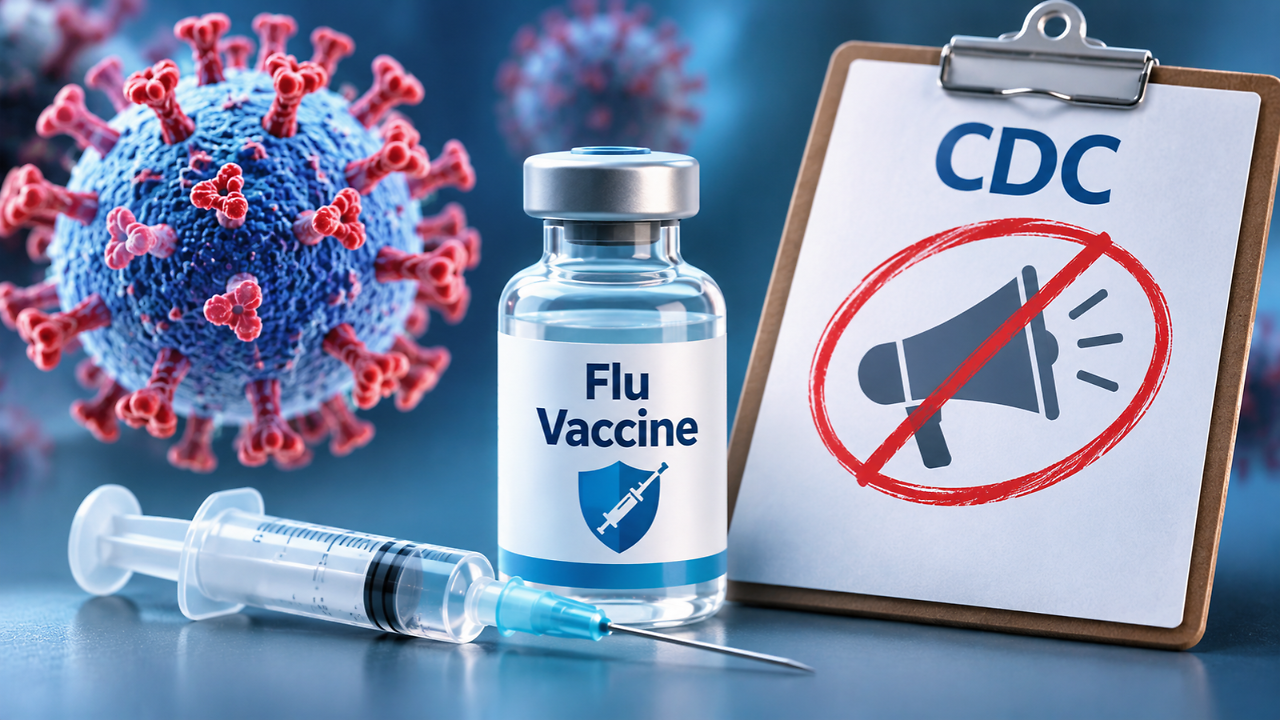
The US flu season is off to an unusually early start as an estimated 3.7 million illnesses, 50,000 hospitalisations and 2,800 deaths have been reported so far. But as influenza spreads across the country ahead of the Thanksgiving holiday, a seasonal public health response on widespread flu vaccine messaging from the Centers for Disease Control and Prevention (CDC) seems to be missing. The federal agency, which usually launches annual campaigns to encourage Americans to get vaccinated, has significantly scaled back its flu communications this season. The development has raised concerns among public health experts about whether Americans are receiving enough information to protect themselves during flu season.US Flu Season Starts Earlier Than ExpectedAlso read: US Respiratory Viruses In 2026: CDC Identifies 4 Illnesses To WatchAccording to the CDC, at least 3.7 million people have fallen ill with influenza this season, 50,000 have been hospitalised and 2,800 have died. Flu activity is moderate to high in roughly half of US states as cases have spread across the South and West.The early rise in infections comes ahead of Thanksgiving, when travel, family gatherings and more time spent indoors can fuel transmission of respiratory viruses.Although an early rise in flu activity does not mean the season will be more severe overall, it increases the need of preventive measures, especially for older adults, young children, pregnant women and people with underlying health conditions.CDC's Flu Vaccine Campaigns Are MissingAlso read: Older Adults Receiving High-Dose Flu Shots Show Lower Alzheimer's Risk: StudyIn previous years, the CDC religiously launched public campaigns encouraging seasonal flu vaccination, including advertisements highlighting how vaccines could help reduce the risk of severe illness.But the agency's 'Wild to Mild' flu vaccine campaign was halted in February 2025, after an order from Health and Human Services Secretary Robert F. Kennedy Jr. The campaign had only two days of paid advertising remaining when it was stopped and has not returned.The CDC has also reduced its flu-specific social media presence. Its dedicated flu account was discontinued and its followers were directed to the main account instead.While the CDC continues to publish its weekly FluView surveillance reports, experts say technical updates alone may not be enough to reach public and encourage them to take preventive action.Public Health Experts Concerned About Communication GapAlso read: Flu Activity Rises Across Americas As Northern Hemisphere Enters Winter 2026; WHO Issues AlertPublic health experts say federal messaging plays an important role in coordinating information across state health departments, medical organisations, pharmacies and healthcare providers.Dr William Schaffner, an infectious disease expert at Vanderbilt University, told CNN that organisations are trying to fill the gap left by the CDC's shunned campaigns, but the federal agency has a much larger reach.The CDC's communication efforts traditionally included vaccine reminders, public briefings and information for healthcare professionals to help them communicate with patients, especially those at higher risk of severe flu.Flu Vaccine Guide The CDC continues to recommend annual flu vaccination, even though its campaigns have been scaled back.Flu vaccines remain an important preventive measure, helping reduce the risk of severe illness, hospitalisation and flu-related complications. Vaccination is particularly important for people at higher risk of developing serious complications.Health experts continue to encourage people who have not yet received their seasonal flu shot to consider getting vaccinated.