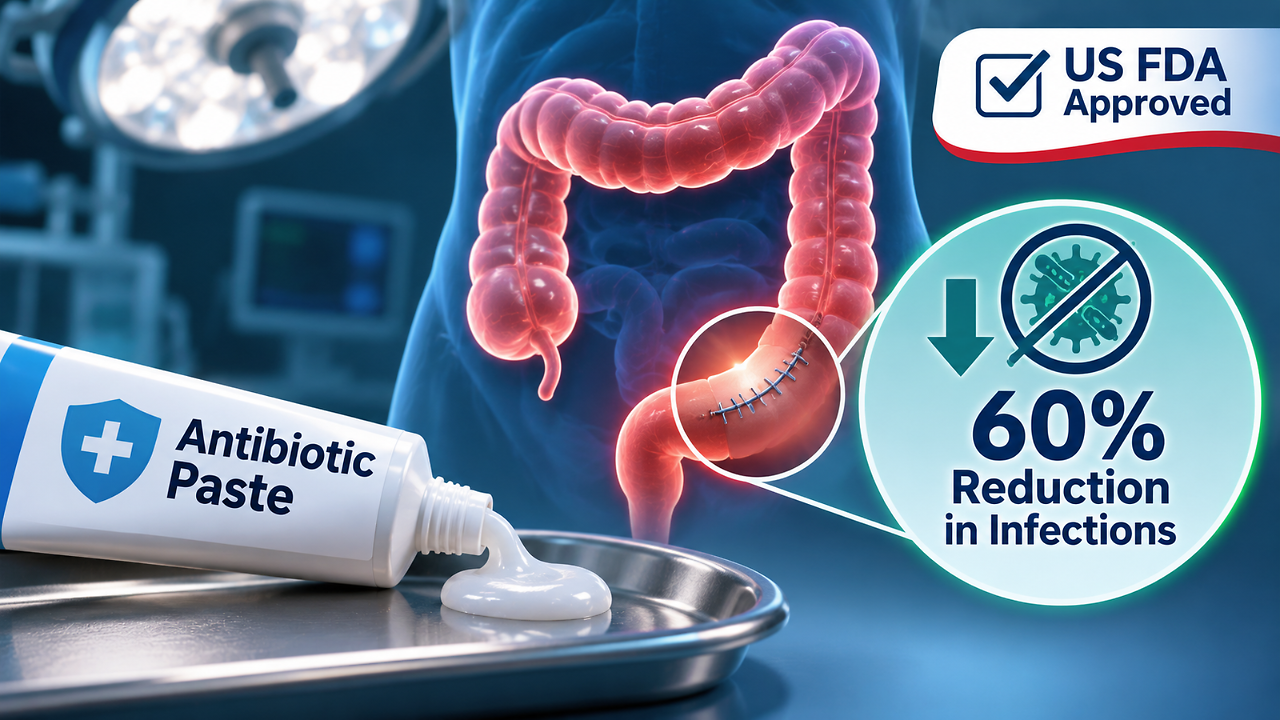
The US Food and Drug Administration (FDA) has approved the first locally applied antibiotic treatment to reduce infections at surgical site after colorectal surgery. The treatment, called Bacfenssi (doxycycline hyclate), is applied directly to the surgical wound before it is closed, where it gradually releases the antibiotic for about 30 days.In a Phase 3 clinical trial involving 798 patients, surgical-site infections were seen in 3.8% of patients who received the antibiotic paste alongside standard care, compared to 9.5% of those who received standard care alone. This translates to a 60% relative reduction in infections.The treatment is approved for adults and children weighing at least 45 kg undergoing colorectal surgery with incisions longer than 20 cm. What Is Bacfenssi?Also read: Antibiotics Are Not Painkillers: Why You Shouldn't Take Them For Fever Or Viral InfectionsBacfenssi contains doxycycline, an antibiotic commonly used to treat bacterial infections. Unlike conventional antibiotics administered orally or through an IV, this treatment is applied directly to the surgical site before wound closure.The paste is designed to release doxycycline gradually into the tissues around the incision for approximately 30 days. This allows the antibiotic to act locally when the wound is the most vulnerable to infection.It is used in addition to standard surgical infection-prevention measures, including antibiotics given around the time of surgery. It does not replace routine preventive care or other measures surgeons use to reduce infection risk.Trial Found 60% Reduction In Surgical-Site InfectionsAlso read: ICMR Flags Widespread Antibiotic Resistance Across India: From E. coli To Typhoid, Which Drugs Are Failing?FDA approval was based on the Phase 3 SHIELD II trial, which included 798 patients undergoing colorectal surgery with incisions longer than 20 cm.Patients received either Bacfenssi alongside standard care or standard care alone. Surgical-site infections were recorded in 3.8% of the Bacfenssi group, compared to 9.5% in the standard care group.The trial also assessed multiple outcomes, combining surgical-site infections, death from any cause and the need for another surgical intervention. This occurred in 10.9% of patients receiving Bacfenssi plus standard care, compared to 18.1% receiving standard care alone, representing a 40% relative reduction.Why Are Surgical-Site Infections A Concern After Colorectal Surgery?Also read: Antimicrobial Resistance Could Contribute To 39 Million Deaths By 2050: WHOColorectal procedures involve the colon or rectum, parts of the digestive tract that contain large numbers of bacteria. Despite preventive antibiotics and sterile surgical techniques, patients can develop infections in or around their incision.Surgical-site infections can cause pain, delayed wound healing, wound reopening, prolonged hospital stays and, in some cases, additional surgery or serious infections. Reducing infection risk is important in colorectal surgery because complications can delay recovery. Eligibility & TimelineBacfenssi is FDA-approved for adults and pediatric patients weighing at least 45 kg, or approximately 100 pounds, undergoing colorectal surgery with an incision longer than 20 cm.The FDA says effectiveness has not been established for colorectal surgical incisions measuring 20 cm or less. The treatment is contraindicated in people with hypersensitivity to tetracycline antibiotics.The most common adverse reactions reported in clinical trials included incision-site reactions, procedural pain, anemia and wound dehiscence, which refers to reopening of a surgical wound. Bacfenssi's commercial launch in the United States is expected to be in the early months of 2027.