
- Health Conditions A-Z
- Health & Wellness
- Nutrition
- Fitness
- Health News
- Ayurveda
- Videos
- Medicine A-Z
- Parenting
4.9 Million Children Died Before Age Five Worldwide In 2024: UN Report
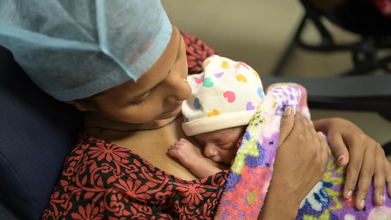
Credit: UNICEF
In 2024, an estimated 4.9 million children died before their fifth birthday, including 2.3 million newborns, according to an alarming new report by the United Nations today.
A majority of the deaths could have been prevented with proven, low-cost interventions and access to better health care, revealed the Levels & Trends in Child Mortality report.
While child mortality under-five globally has fallen by more than half since 2000, the pace of reduction slowed down by more than 60 percent after 2015.
“The world has made remarkable progress in saving children’s lives, but many still die from preventable causes,” said Dr. Tedros Adhanom Ghebreyesus, WHO Director-General.
“Children living amid conflict and crisis are nearly three times more likely to die before their fifth birthday. We must protect essential health and nutrition services and reach the most vulnerable families so every child has the chance not only to survive, but to thrive,” he added.
Key Findings
- Children under five years:
Severe acute malnutrition (SAM) claimed more than 100,000 children aged 1-59 months in 2024, mainly in Pakistan, Somalia, and Sudan.
Notably, malnutrition weakens children’s immunity and increases their risk of dying from common childhood diseases.
- Newborn deaths -- nearly half of all under-five deaths occurred in newborns. Leading causes include:
Complications during labor and delivery (21 percent)
Infections, including neonatal sepsis and congenital anomalies
- In infants and toddlers, major killers were infectious diseases such as
diarrhea,
- Children and youth aged 5–24 -- an estimated 2.1 milliondied in 2024.
In adolescents, self-harm was the leading cause of death among girls aged 15–19, and road traffic injuries among boys.
- Countries With Most Deaths
- conflict,
- climate shocks,
- invasive mosquitoes,
- drug resistance,
- Low access to prevention and treatment.
Europe and Northern America -- 9 per cent
Australia and New Zealand -- 6 per cent.
Southern Asia -- 25 per cent of all under-five deaths
Children and youth between 5 and 24 years old
How To Prevent
The report called for increasing investments in child health with low-cost interventions, such as
- vaccines
- treatment for severe acute malnutrition
- boost primary health care systems and community health workers
- transparent data collection, tracking, and reporting
- focus on mothers and children at highest risk
- make quality healthcare more affordable
“History has shown what is possible when the world commits to protecting its children. With sustained investment and political will, we can continue to build on those achievements for future generations,” Russell added.
Meningitis Outbreak From Kent University Is Now A National Incident, Parents Fighting For Jabs Amid Low Stock
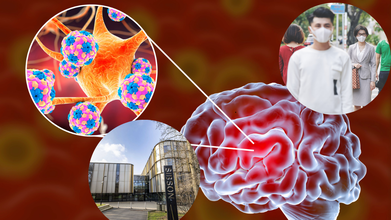
Credits: Canva/Kent University
A meningitis outbreak in Kent University is now treated as a national incident, after two people have died, one of them being the student of the university. Students have been urged to get vaccines and take antibiotics as health officials are dealing with the "unprecedented" and "explosive" outbreak.
As per the UK Health Security Agency (UKHSA), 15 cases have been reported and all of them have lead to hospital admission. Cases are also expected to rise due to the incubation period of infection to when the symptoms start to appear. The incubation period is from two to 14 days.
A report by Sky News notes that around 5,000 students in the university halls in Kent will be offered the meningitis B or (menB) vaccine in the coming days. Four schools across the county have also confirmed cases with hundreds of people being offered antibiotics.
Read: Meningitis Outbreak: University of Kent Student Among Two Who Died of the ‘Invasive’ Disease
Quickest-growing Meningitis Outbreak
As per experts, many of whom are affected had attended Club Chemistry in Cantebury between 5 to 7 March. UKHSA chief executive Susan Hopkins said the outbreak "looks like a super-spreader" event with "ongoing spread" through universities' halls of residence. She added: "There will have been some parties particularly around this, so there will have been lots of social mixing. I can't yet say where the initial infection came from, how it's got into this cohort, and why it's created such an explosive amount of infections."
She further said that in her 35 years working in medicine, healthcare, and hospitals, "This is the most cases I've ever seen in a single weekend with this type of infection". She added: "It is the explosive nature that is unprecedented here - the number of cases in such a short space of time." She also remarked that this was the "quickest-growing outbreak" she has ever seen in her career.
Fighting For Jabs
According to The Guardian report, parents are contacting pharmacies in an "increasingly desperate" effort to get their children vaccinated against meningitis after the outbreak in the university was reported. The surge in vaccination demand has led to the stocks running so low that many pharmacies are unable to get hold of supplies from wholesalers.
A snap poll recorded that almost nine out of 10 pharmacies, which makes it 87 per cent, reported a dramatic rise in requests from concerned parents to get a child or children vaccinated, as per the National Pharmacy Association (NPA).
Read: Kent Uni Meningitis Outbreak Caused By Less-Targeted Strain B
Parents were paying £200 or more per child for a vaccine that protects against meningitis B, the strain of meningococcal bacteria involved in the outbreak. For example, Boots is charging £220 for the two jabs needed.
A pharmacy owner in Berkshire told The Guardian, “I have received about 30 or 40 calls in two hours from people wanting to book their entire families for vaccinations. They are worried. They are getting agitated.”
NPA chair, Olivier Picard told The Guardian that the demand was "far exceeding supply", which has forced pharmacies to "manage constrained levels of supply" and tell anxious parents that they cannot immunize their children.
Kent Uni Meningitis Outbreak Caused By Less-Targeted Strain B
Credits: Canva
A deadly meningitis outbreak in Kent has claimed two young lives and left several others seriously ill, prompting health authorities to urgently warn students and young people in the area.
According to reports, the outbreak involves invasive meningitis, a severe infection that spreads quickly and can become life threatening within hours. One of the victims was a student at the University of Kent, while the other was a Year 13 pupil from Faversham. Most of the affected individuals are between 18 and 21 years old, and several are university students.
Health officials say at least 11 people from the Canterbury area have been hospitalized and are currently receiving treatment.
The UK Health Security Agency (UKHSA) has begun contacting more than 30,000 students, staff members, and their families to inform them about the outbreak and the precautions being taken.
Read: Meningitis Outbreak: University of Kent Student Among Two Who Died of the ‘Invasive’ Disease
Strain B Identified As The Cause
Government scientists have now confirmed that the outbreak is caused by meningococcal strain B, a type of bacteria that many young people have not been vaccinated against.
Gayatri Amirthalingam, deputy director of immunization and vaccine preventable diseases at the UKHSA, said laboratory testing identified the strain responsible for the cluster of infections.
She explained that teenagers in the UK usually receive a meningococcal vaccine around the age of 13 or 14, but that vaccine protects against strains A, C, W, and Y, not strain B.
This means many teenagers and young adults remain vulnerable unless they received the meningitis B vaccine privately.
Why Many Young People Are Not Vaccinated
The meningitis B vaccine was introduced into the UK’s National Health Service routine immunization schedule for babies in 2015.
As a result, people born before 2015 would not have received the vaccine through the public programme. Some may have chosen to get it privately, but many did not.
Private vaccination can cost between £100 and £120 per dose in the UK, and a full course generally requires two doses.
Experts say this gap in vaccination coverage may partly explain why university-age students are susceptible during outbreaks.
Antibiotics Being Offered As Preventive Measure
Health authorities are urging anyone who may have been exposed to the infection to take preventive antibiotics immediately. UKHSA has specifically advised people who visited Club Chemistry in Canterbury between 5 and 7 March to come forward for antibiotic treatment as a precaution.
Officials say taking antibiotics quickly can help stop the bacteria from developing into disease and also prevent it from spreading to others. Amirthalingam reassured students that those who have received antibiotics can safely travel home and be around family members.
Can Sharing Vapes Spread The Infection?
The disease spreads mainly through close contact, including activities where saliva is shared. Amirthalingam noted that sharing vapes can be one possible route of transmission, although it is not the only one.
Experts say anything that goes into the mouth, including drinks, cigarettes, or vapes, can potentially pass bacteria from one person to another.
Because meningococcal bacteria can live in the throat and nose, close social contact among students often increases the risk during outbreaks.
What Is Meningitis?
Meningitis is an infection that causes inflammation of the meninges, the protective membranes surrounding the brain and spinal cord.
The illness is most often caused by bacterial or viral infections, although fungal and other causes are also possible.
Symptoms can include fever, headache, stiff neck, confusion, and sensitivity to light. In severe cases, bacterial meningitis can lead to hearing loss, neurological complications, or death if treatment is delayed.
Doctors stress that early recognition and immediate medical care are critical because the condition can worsen rapidly within a few hours.
AIIMS Delhi Sets Up Team To Process India's First Ever Passive Euthanasia For Harish Rana
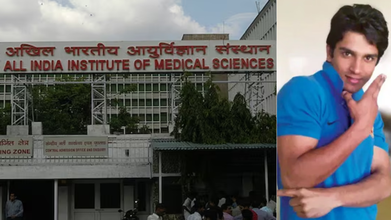
"God asks no man whether he will accept life. That is not the choice. You must take it. The only choice is how."
This is what Justice JB Pardiwala said, quoting Henry Ward Beecher to allow India's first ever passive euthanasia for Harish Rana. AIIMS Delhi has now started protocols to implement the Supreme Court verdict for Harish Rana's passive euthanasia. Sources and several reports have mentioned that the process could take two to three weeks.
How Is AIIMS Delhi Preparing For Passive Euthanasia?
A specialized team headed by professor and head of the department of anesthesia and palliative medicine, Dr Seema Mishra, has been constituted to implement the process. The team comprises doctors from departments of neurosurgery, onco-anesthesia, and palliative medicine, and psychiatry.
“The process generally involves withholding or withdrawing the nutritional support gradually while ensuring adequate pain relief. The patient is given palliative sedation so that he or she is not in distress. Life support measures such as artificial nutrition, oxygen and medications are slowly withdrawn. The aim is not to prolong nor hasten death,” Dr Sushma Bhatnagar, former head of the department of onco-anaesthesia, pain and palliative care, AIIMS-Delhi.
Harish Rana Update
A video from Rana's home in Ghaziabad showed that relatives were offering prayers and a member of the Brahma Kumaris put a 'tilak' on his forehead. She said, "Sabko maaf karte hue, sabse maafi mange hue, so jaao...theek hai." Which loosely translates to: Forgiving everyone and asking forgiveness from everyone. Now sleep. It's okay.
The Brahma Kumari seen in the video was Sister Lovely from Mohan Nagar Seva Kendra in Ghaziabad. Komal, who is also a member of Brahma Kumaris based in Mount Abu, told this to news agency Press Trust of India (PTI). "She is following a ritual with the words that mean he (Harish) leave the world in a happy state, seeking and giving forgiveness...it is part of a meditative chant that comforts the soul and eases the entire process of soul merging with the sublime," she told PTI.
According to Komal, alongside medical consultations, the family also sought spiritual guidance as they prepared for the inevitable after the Supreme Court’s directions.
Read: Harish Rana Case Brings Spotlight On How Passive Euthanasia Has Evolved Over The Years
Harish Rana's Passive Euthanasia
The Supreme Court of India, in a landmark judgment allowed 32-year-old Harish Rana, who had been living in a vegetative state for last 13 years, the right to die. This means, that the apex court allowed passive euthanasia for Rana. The bench comprising Justice JB Pardiwala an Justice KV Vishwanathan allowed the withdrawal of life support of Rana, who has been in a coma and kept alive on tubes for breathing and nutrition after he sustained severe head injuries following a fall from a building in 2013 in Chandigarh.
The judgment is a win, however, Ashok, Rana's father said that his feelings are mixed. "As a father, this is extremely painful. But on humanitarian grounds, this is the best we can do for my son." He continued, "It is just not a matter of my son, but there are many others in such a state in the country. I think it is the grace of God who guided the Supreme Court judges... I am happy that with this judgments, many others may find a way."
- Follow Us :


© 2024 Bennett, Coleman & Company Limited