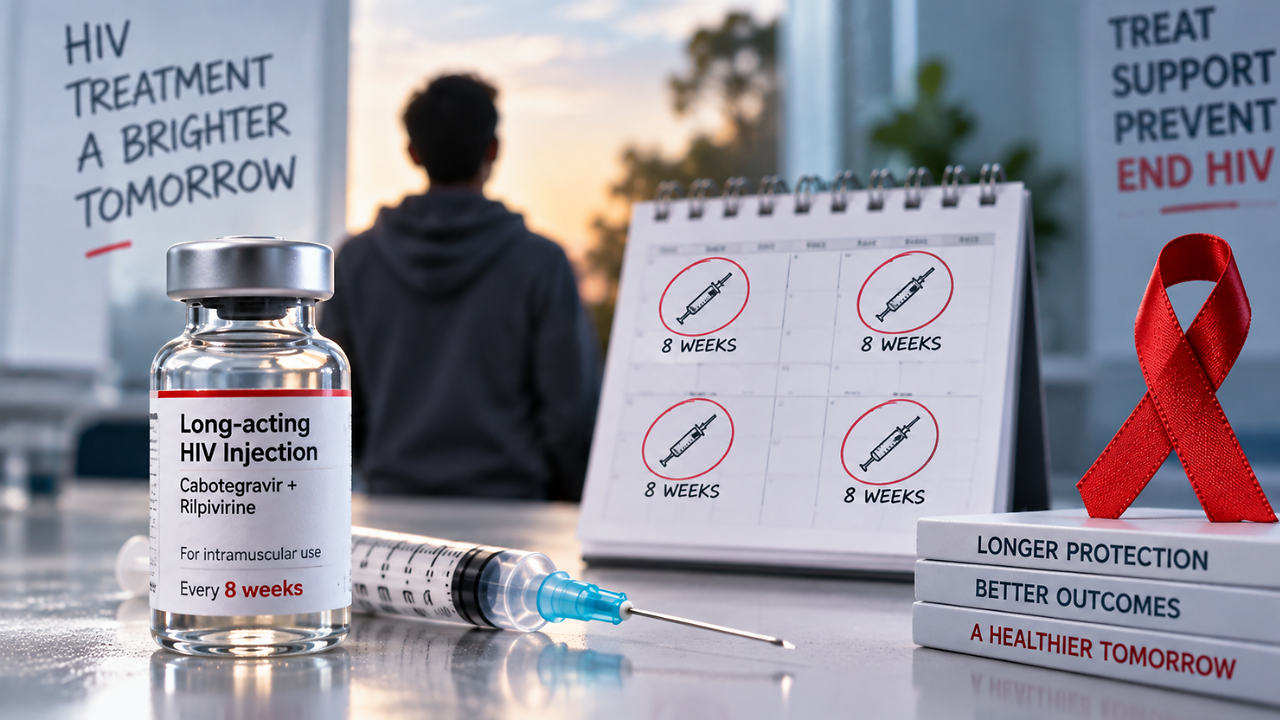
A new clinical trial published by The Lancet says that HIV treatment through two injections every eight weeks kept the virus suppressed more effectively than daily tablets among adolescents, calling for efforts to make this treatment available and accessible worldwide. The LATA trial, led by a team of researchers at University College London (UCL), examined 476 adolescents aged between 12 to 19 across five clinics in Kenya, South Africa, Uganda and Zimbabwe. Participants were randomly assigned to continue daily antiretroviral tablets or switch to injections containing cabotegravir and rilpivirine. All participants had already been taking HIV treatment for more than a year, had an undetectable amount of viral load and had no history of treatment failure. Most of the participants had acquired HIV at birth. HIV Injections Prevented Viral Rebound After 96 weeks, just two adolescents showed confirmed viral rebound, or 1%, in the injectable-treatment group. Comparatively, 15 adolescents, or 6%, among those taking daily tablets showed viral rebound. Viral rebound refers to the levels of HIV in the blood that increases again after being suppressed previously. Maintaining an undetectable viral load is central to HIV treatment. It also reduces the risk of sexual transmission significantly. The researchers found that the injectable treatment was not only effective at maintaining viral suppression but was preferred by adolescents. Around 94% of participants receiving the injections said treatment every eight weeks was much easier and more convenient than taking medicine every day. Professor Sarah Pett, chief investigator of the LATA trial at UCL, said, “HIV-positive adolescents as a group have historically done worse on antiretrovirals compared to adults. There is bullying and stigma associated with taking pills every day. Long-acting injectables taken every two months can help young people lead a more normal life.” She added that the benefits seen in adolescents were stronger than previously observed in adults, where trials have generally shown that injections are no less effective than daily tablets.Also read: Exclusive With Leading HIV Expert: What's Driving Rising HIV Cases Among India's Youth And How To Prevent It Could Injections Help Treat HIV Better In Young People? Taking HIV pills every day can be difficult for adolescents, particularly when its treatment is associated with stigma. They may have concerns about others discovering their HIV status, which could challenge the maintenance of a daily routine. The weekly-injection approach removes the need to remember to take a pill every day. Instead, cabotegravir and rilpivirine are administered in a healthcare setting once every eight weeks. This could be particularly relevant in Africa, where most adolescents living with HIV reside. “Nine out of 10 adolescents with HIV live in Africa, yet currently this treatment is not accessible to them,” Pett said.Also read: Once-Weekly Oral Combination HIV Pill Shows Promise As Alternative to Daily Treatment Accessibility To The Treatment Is Still A Challenge Despite the promising results, researchers say that access to the groundbreaking treatment still remains a major challenge. The HIV injections are more expensive than standard tablets as they remain under patent. Rilpivirine also requires refrigeration during storage and transport. Trained healthcare workers are needed to administer the injections every eight weeks. The World Health Organization currently recommends that the injectable treatment must be used as an alternative for adults and adolescents who have successfully suppressed HIV on oral treatment as well as do not have active hepatitis B. Dr Deborah Ford of UCL said, “The lack of availability of injectable treatments in Africa risks increasing inequalities in HIV care, leaving most people living with HIV without access to treatments that are available in high-income settings.”