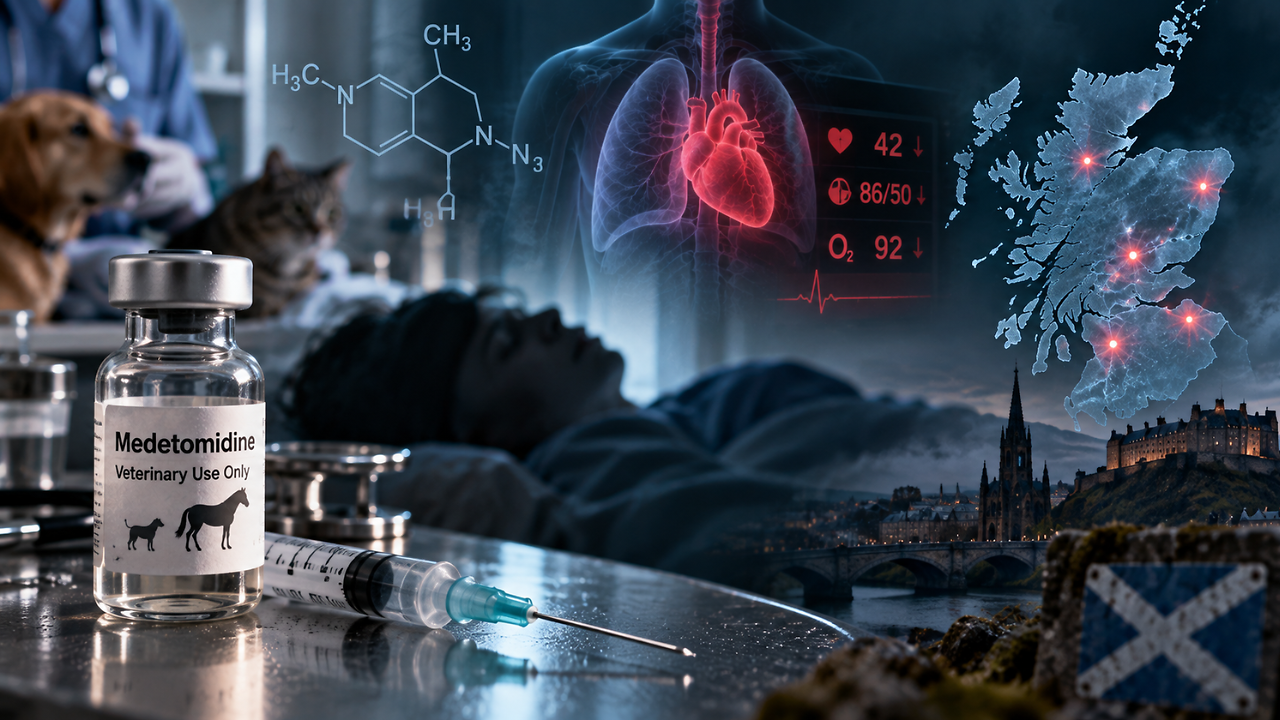
A powerful veterinary drug has been lately spotted in Scotland's illegal drug supply, raising concern among health officials and addiction specialists about severe sedation, overdose-related deaths and dangerous withdrawal symptoms. Medically known as medetomidine, the drug is used by veterinarians to sedate animals. It is strictly not approved for use in humans. According to Public Health Scotland, the drug has been located in Scotland's unlawful drug supply and is most likely being mixed into drugs and peddled as heroin and benzodiazepines. According to recent reports, medetomidine was detected in one in five heroin samples tested between March and June 2026, highlighting it has seeped deeply into various parts of the drug supply. It has been detected in several areas, including Lanarkshire, Falkirk, Dundee, Fife and the Highlands.Also read: Alzheimer's Day: Why Can A Patient Remember An Event From Decades Ago But Forget What Happened This Morning? What Is Medetomidine? Medetomidine is a sedative that affects the alpha-2 receptors in the nervous system, producing profound sedation and slowing down several bodily functions, rendering the user in a ‘zombie-like’ state. The UK's Advisory Council on the Misuse of Drugs has previously warned that medetomidine can cause severe sedation, reduced heart rate and other negative cardiovascular effects. In severe toxicity, people may require intensive care and mechanical ventilation. Unlike an opioid overdose, naloxone does not reverse medetomidine's sedative effects. This is particularly concerning as the drug was found mixed with opioids like heroin.Also read: US Teen's Death Sparks Warning Over Synthetic Drug Deadlier Than Fentanyl Why Is It Being Called A ‘Zombie’ Drug? The drug is being called a ‘zombie drug’ due to the effects it leaves due to excessive sedation and changed behaviour. After ingesting it, people may become extremely drowsy or unresponsive, while others may experience confusion, hallucinations or agitation. It may also slow their movements and reflexes down. The bigger concern is the aftereffects of exposure. A recent study of 16 people with confirmed medetomidine exposure found that patients reported severe and unpredictable withdrawal symptoms, sometimes requiring hospital treatment. Symptoms reported in the study included nausea, vomiting, shaking, rapid heartbeat, and dangerous high blood pressure. Researchers also found that standard medications used to treat opioid withdrawal did not always adequately control the symptoms linked with medetomidine.Also read: Donald Trump Wants Childhood Vaccines Split Into 5 Shots To Prevent Autism: But Is There Evidence? More About The Drug Public Health Scotland says that the drug has been detected in brown powders sold as heroin and white tablets sold as diazepam. As people may believe they are taking another drug, they may have no idea that a potent veterinary sedative is also entering their body. This could make tracking the drug supply difficult to predict. Medetomidine belongs to the same broad class as xylazine, another veterinary sedative that has been increasingly detected in illegal drugs. Xylazine has become notorious in the US for severe skin wounds linked with repeated exposure. Scientists do not yet know whether medetomidine results in the same effect in humans.