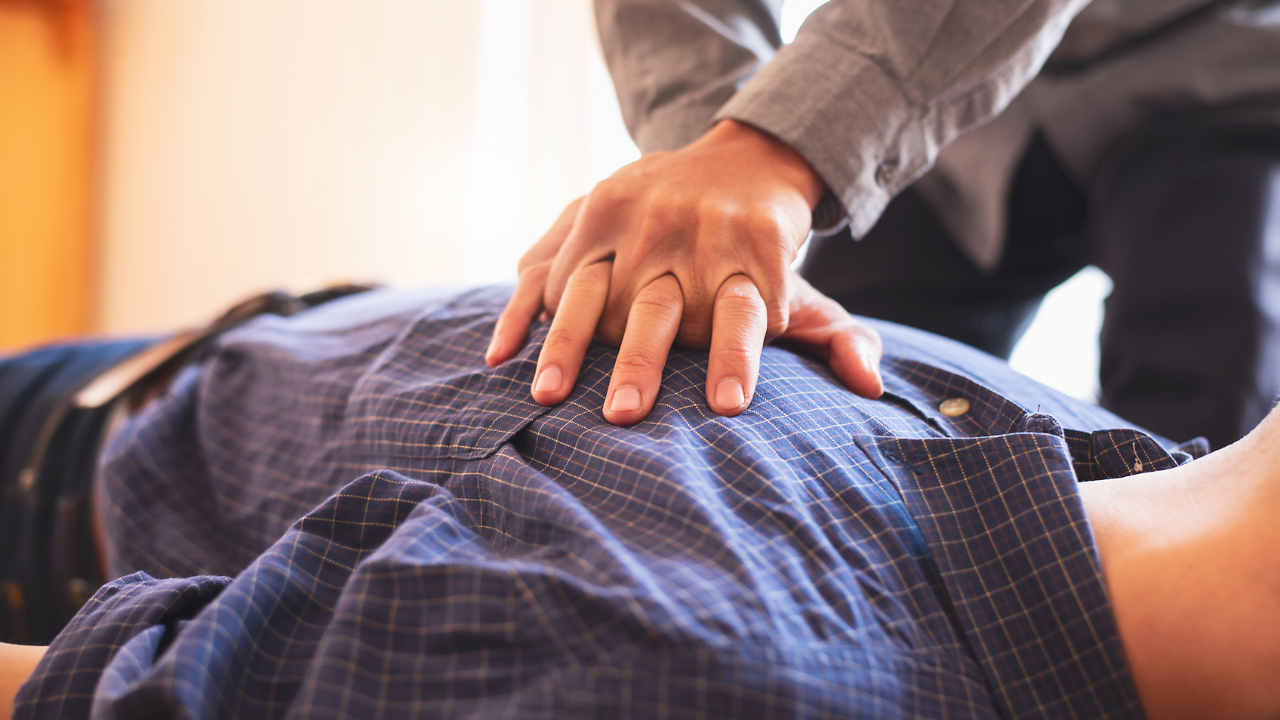
Cardiac arrest is considered one of the most urgent medical situations. It can occur unpredictably, at home, at work, while traveling, or anywhere. It is characterized by a blockage in the heart's arteries, and it differs from a heart attack, which is a situation when the heart stops pumping blood into the body. After a few minutes, oxygen deficiency happens and affects the brain and other organs. Therefore, it is important to know how to perform cardiopulmonary resuscitation (CPR).CPR is an emergency lifesaving technique that uses chest compressions and, in some situations, blowing mouth-to-mouth air into the person who has suffered a cardiac arrest, to help maintain blood circulation and oxygen delivery to vital organs when a person's heart has stopped beating effectively. It does not restart the heart by itself, but it can keep blood flowing until an automated external defibrillator (AED) is available or emergency medical professionals arrive. Importantly, CPR is not a skill limited to doctors or healthcare professionals. It can be administered by ordinary people for whom learning the basic CPR techniques is easy.The Importance of Rapid and Efficient Actions in Case of Cardiac ArrestIf someone faces cardiac arrest, rapid actions may save this person's life. If CPR is performed directly and immediately after a cardiac arrest, it will be possible to keep the flow of blood to the brain and other organs before the arrival of medical experts. The use of CPR can improve the chances of survival for patients who have experienced cardiac arrest. Besides, in combination with early defibrillation through an AED, it can be even more effective. AED is a portable medical device that checks the heart rhythm of the person experiencing cardiac arrest and delivers an electric shock to restart a normal heartbeat.However, sometimes people prefer to do nothing for fear of mistakes. But it is much more dangerous not to act at all.Recognizing Cardiac ArrestIt begins with identifying the presence of a possible cardiac arrest in the patient. The patient will generally fall, become unconscious, and will not breathe properly. They can occasionally breathe abnormally with strange sounds, which should not be considered breathing properly.If you see anyone fall and become unresponsive, check whether they respond to your questions and breathe normally. Tell any passerby to call the emergency services and bring an AED device, if one is present. If the patient is not breathing normally, initiate CPR on them.What To Do?If the patient is an adult, hands-only CPR can be done easily by everyone. For this, you need to keep the heel of one of your hands in the center of the person’s chest, keep your other hand over it, and press down with a rapid rhythm. The compression must be continued at a pace of around 100-120 beats per minute.Also, you can use the AED device if one is available. Turn on the AED and follow the steps according to the voice prompts from it. The AED device will analyze the rhythm of the heart and give a shock.CPR is a Practical Skill, not Just Medical KnowledgeAnother reason for reluctance to administer CPR is the notion that it should be administered only by doctors, nurses, and other professionals. However, even basic CPR can be taught to regular citizens using special courses. It takes only a couple of hours of practice for someone to gain enough confidence to use CPR in emergencies.CPR training should be more accessible in schools, offices, and residential communities, as it would help people know what to do in those critical first few minutes.Cardiac arrest will not wait for doctors to show up. When cardiac arrest occurs, the first person on the scene might be either a relative, co-worker, friend, or a total stranger. Knowing CPR will prepare you for these moments of life or death. A simple skill learned today may help save someone’s life tomorrow.(Dr. Lalit Kapoor, Senior Consultant - Cardiac Surgery and Robotic Surgery – Narayana RN Tagore Hospital, Mukundapur, Kolkata)