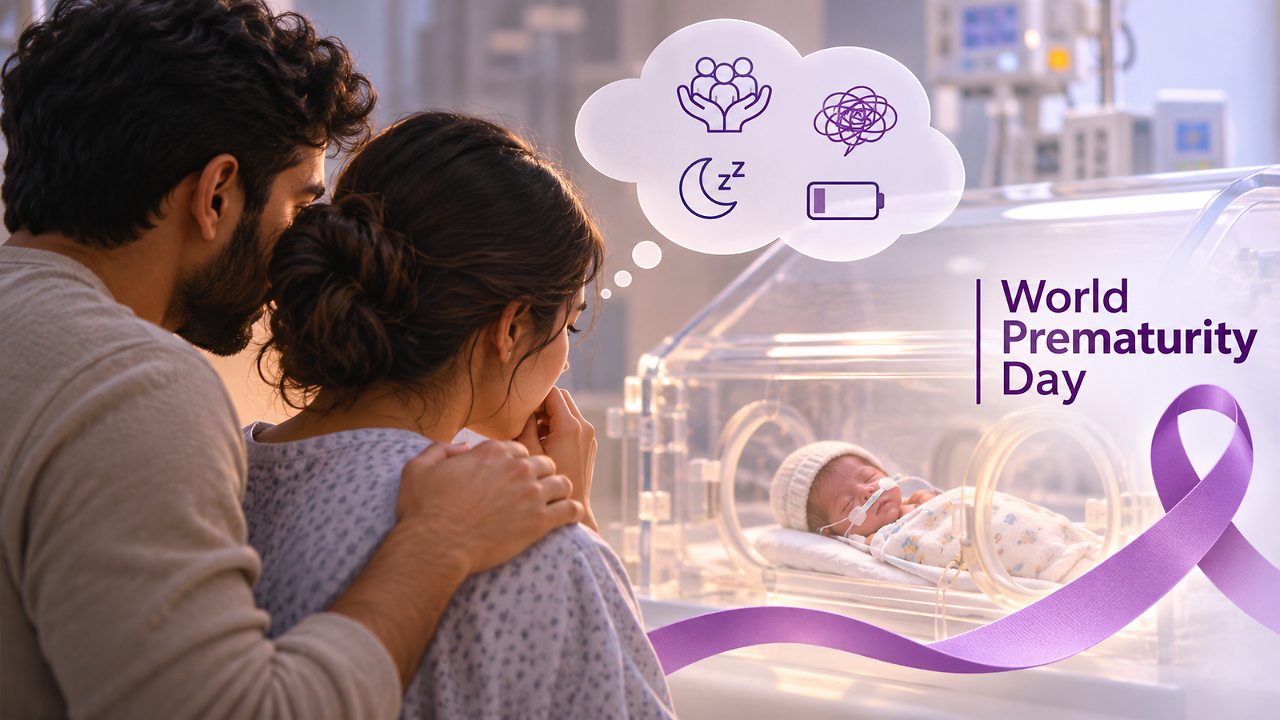
The birth of a baby is often marked with celebration and joy. But when a baby arrives weeks before the expected date, it could take a psychological toll on the parents who, all of a sudden, are rushing in and out of the neonatal intensive care unit (NICU) instead of settling into routine with their newborn. While premature babies need urgent medical attention, their parents also deal with a silent emotional burden that can continue long after the baby is discharged. Anxiety about the baby's survival, concerns about development and the fear of managing them outside the hospital can turn the transition from NICU to nursery into another challenging phase.On World Prematurity Day, the focus is not only on the medical needs of premature babies, but also on the psychological impact on the families.Impact Of Premature Birth On Parents Also read: AIIMS Delhi Performs India's First Open Fetal Surgery To Repair Spina BifidaPremature birth can abruptly change the experience of becoming a parent. Birth plans may be disrupted, mothers may be separated from their newborns as even holding or feeding the baby can depend on the doctors.For parents, watching a newborn receive respiratory support, feeding assistance and continuous monitoring can be nerve-wrecking. They may feel helpless or disconnected, especially when hospital protocols due to treatment limit their involvement.Dr Chaitra N, Paediatrician at Milann Fertility and Birthing Hospital, Bengaluru, told HealthandMe, “Parents often enter pregnancy with a personal picture of how childbirth and the first few weeks with their baby will unfold. When a premature birth changes that experience, they may also experience a sense of loss for the moments they had imagined.” She added, “It is important to make space for these feelings without treating them as a sign of weakness or inadequate parenting. Rather than comparing their journey with that of other families, parents should allow themselves to develop their own understanding of parenthood. Recognising small moments of connection, celebrating progress and letting go of unrealistic expectations can help them build a healthier emotional relationship with this new experience.”Anxiety Due To Previous Pregnancy Losses Also read: PM2.5 Levels 66x WHO Limit In Delhi: How Air Pollution Could Affect Children's Lung DevelopmentThe emotional impact of premature birth is harder on some parents as they may have undergone pregnancy losses in the past. One case shared by Dr Shilpi Saraswat, Clinical Psychologist at Sakra World Hospital, Bengaluru, involved a 32-year-old woman who had experienced two miscarriages before her subsequent pregnancy.Although she eventually delivered her baby prematurely at 33 weeks, the arrival of her child did not immediately ease her fears. She remained anxious about the baby's health, safety and developmental milestones. Even minor changes in the baby's behaviour could trigger worry, Dr Saraswat said, “Her previous pregnancy losses also affected her confidence in handling everyday maternal responsibilities. She found it difficult to trust that her baby was developing normally and remained highly alert to even minor changes in the child's behaviour and health.”The case highlights how previous trauma, fear of another loss and uncertainty about a premature baby's development can contribute to heightened vigilance and overprotective caregiving.Returning Home From The NICU Can Be ChallengingAlso read: Excessive Screen Time & Mental Health: Expert Urges Parents To Limit Children's Screen Time At Times Health Summit 2026Discharge from the NICU is often celebrated as a major milestone. However, it can also bring a bunch of new worries. Parents who might have felt more secure due to proximity to medical professionals who were monitoring their baby may feel unprepared to take full responsibility for feeding, sleep and routine care.Dr Shilpi Saraswat highlights the importance of practical and emotional support during this transition. She said, “Returning home after a prolonged hospital stay can feel like stepping into a completely different phase of parenting. Families should be encouraged to divide caregiving responsibilities realistically rather than expecting one parent to manage everything. Partners can support each other by sharing night-time duties, attending follow-up consultations together and creating space for rest.” She added, “Extended family members can also contribute by helping with household responsibilities instead of overwhelming parents with advice. Healthcare teams should provide clear discharge guidance and ensure that parents know whom to approach when concerns arise. These practical measures can make the transition less intimidating and help families gradually regain a sense of normalcy.”According to Dr Saraswat, here are the key psychological concerns parents may face: Anticipatory anxiety and fear of uncertainty.Fear of losing the baby due to previous pregnancy losses.Emotional distress associated with past miscarriages.Heightened vigilance about the baby's health and development.Fear of developmental delays.Overprotective caregiving and difficulty adjusting to motherhoodParents Need Support Along With Medical Care A premature birth may change the beginning of parenthood, but it does not have to define the family's experience forever. From a baby's first feed to the first day at home, every milestone is important. Supporting families through this journey means caring for parents as well as the babies who begin their lives in the NICU.The emotional needs of parents should be considered alongside the medical treatment of premature babies. Hospitals can help by encouraging parents to participate in appropriate caregiving activities, providing access to counselling and connecting families with others who have experienced similar situations.Partners and relatives also have an important role. Sharing responsibilities, offering help and avoiding comparisons with other babies can reduce some of the pressure parents experience.