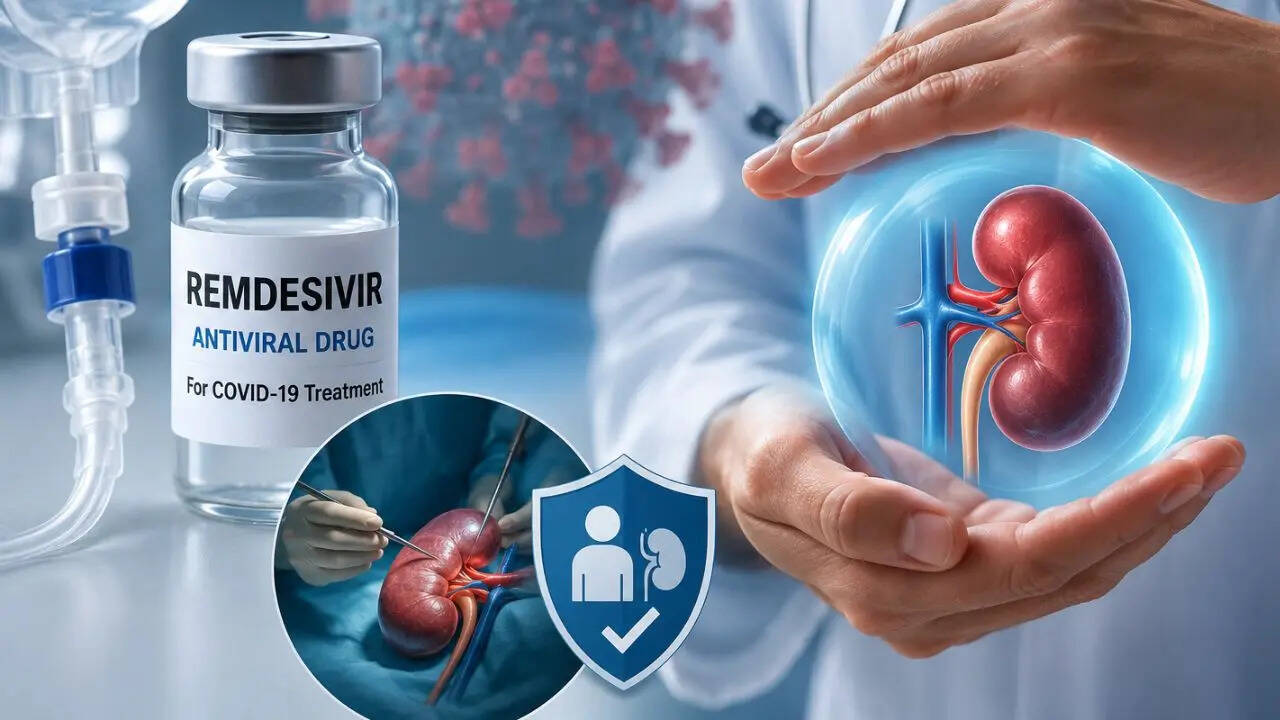
COVID-19 antiviral drug remdesivir can help kidney transplant patients in more than one ways. Apart from keeping them free from COVID-19 infection, the drug could also help lower the risk of losing the transplanted kidney and reduce future heart-related complications.The findings, published in JAMA Network Open, come from one of the largest studies to examine the long-term effects of remdesivir in adult kidney transplant recipients. The subsection of patients that remains especially vulnerable to severe COVID-19 because of lifelong immune-suppressing medications.What Did The Study Find? Researchers from Johns Hopkins Medicine studied data from 432 adult kidney transplant recipients diagnosed with COVID-19 between March 2020 and January 2024. Of these, 177 patients received remdesivir within a week of diagnosis for at least three consecutive days, while 255 did not receive the antiviral. Patients treated with other COVID-19 therapies, such as monoclonal antibodies or alternative antivirals, were excluded. After adjusting for factors including age, underlying illnesses, transplant timing, vaccination status and disease severity, researchers found that patients who received early remdesivir had a 47% lower risk of all-cause graft loss, over the following year. Graft loss refers to transplant failure or death. They also had a 42% lower risk of cardiovascular events, including heart attack, stroke or cardiac-related death.“These findings suggest that timely antiviral treatment may have benefits beyond the acute phase of COVID-19 in this population,” said Dr. Nitipong Permpalung, senior author of the study and associate director of the Johns Hopkins Transplant Research Center. “We hope these findings will help reduce hesitations that physicians may have with considering providing remdesivir, when clinically appropriate, to adult kidney transplant recipients,” he added. Also read: Dr Anthony Fauci's Personal Journals Reignites Debate On COVID-19 Origin; Says He Overshadowed President TrumpKidney Transplant Recipients Are At Higher RiskPatients who have undergone kidney transplants take immunosuppressive medicines to prevent organ rejection. While these drugs protect the transplanted kidney, they also weaken the body’s ability to fight infections, making COVID-19 more severe and increasing the risk of serious complications. In the study, nearly 95% of participants had high blood pressure, 46% had diabetes, and one in five required supplemental oxygen when diagnosed with COVID-19. More than half also temporarily stopped one of their immunosuppressive medications during infection.Also read: Can Long COVID Be Prevented Before It Starts? Study Suggests Early Paxlovid May HelpWhat Does This Mean?Although the initial results are encouraging, researchers stressed that the study was observational rather than a randomised clinical trial. That means it shows a strong association but cannot definitively prove that remdesivir alone caused the improved outcomes. “I do think that the findings suggest the potential benefits of treating COVID-19 early may extend beyond the short-term benefits that the early clinical trials have shown,” Dr. Permpalung said in an interview with The American Journal of Managed Care. He also said that that larger and more diverse studies are needed to understand why early treatment appears to protect transplanted kidneys and whether similar benefits extend to recipients of other transplanted organs such as the heart, lungs and liver. The findings could help guide treatment for transplant specialists, particularly because kidney transplant recipients are often excluded from large clinical trials. If confirmed in future studies, early antiviral treatment with remdesivir may become an important strategy not only for reducing severe COVID-19 but also for protecting transplanted organs and lowering long-term cardiovascular risks in such patients.