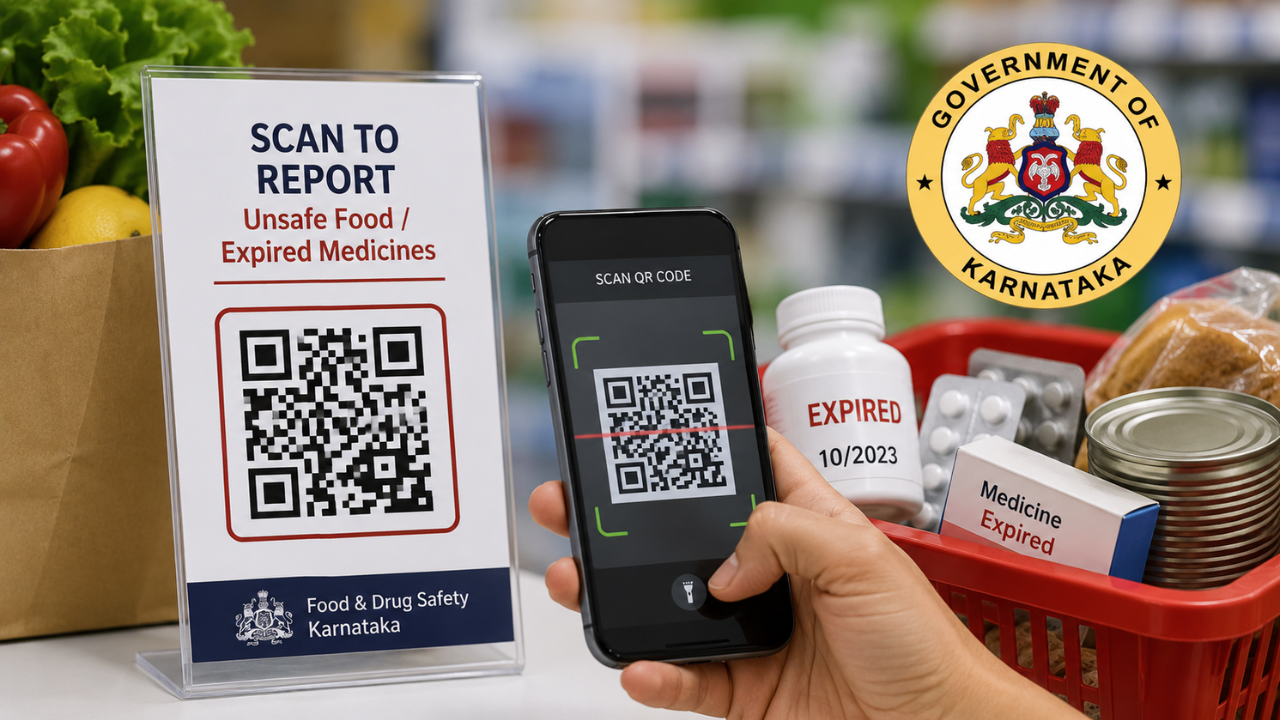
The Karnataka government has launched a QR code-based grievance system that allows consumers to lodge food and drug safety complaints directly with authorities. The move is aimed at making food and drug safety-related violations easier to report. The Integrated Public Grievance Redressal System (IPGRS) was launched by Karnataka Health Minister U T Khader on August 17. The system has been developed by the state’s Food Safety and Drugs Administration (FSDA) in coordination with the Centre for e-Governance. QR codes will be displayed at hotels, restaurants, eateries and drug stores, allowing customers to scan them and register complaints. They will also be able to track the status of complaints, according to officials. What Can You Complain About? The system is designed to cover both food and medicine-related violations. For food establishments, consumers can report: Unhygienic food or poor sanitation Food safety violations Use of artificial colours Problems at restaurants, hotels and street-food outlets Other food-related regulatory or service complaints For pharmacies and medicines, complaints can include: Expired medicines Overcharging or excessive pricing Adverse drug reactions Pharmacy-related grievances Other violations under the Drugs and Cosmetics Act “The QR code must be displayed at all the eateries and drug stores. Citizens can scan and register their complaints, if any,” Khader said.Also read: Immunity-Boosting Peptide Shows Promise In Long COVID Treatment, So Why FDA Has Not Approved It?Why Has Karnataka Introduced This Now? The QR system comes as Karnataka's food safety authorities ramp up inspections across the state. In one recent operation, inspections at government facilities reportedly uncovered food safety problems, while canteens at Vidhana Soudha and the health department headquarters in Bengaluru were sealed after officials found expired food and unhygienic conditions, including cockroaches. The move came after complaints about unhygienic food handling and the use of artificial colours in shawarma and kebabs. During the checks, 61 samples were collected, with nine shawarma samples and one kebab sample subsequently declared unsafe. Officials said legal action is now being initiated against those responsible.The department also turned its attention to food warehouses used by e-commerce platforms, inspecting 236 facilities and initiating proceedings against 44 for violations. Eight of these warehouses were fined a total of Rs 1.97 lakh after officials found unhygienic conditions.Also read: Taiwan FDA Recalls 87,000 Blood Pressure Tablets: Here’s Why The Medicine May Not Work As IntendedConcerns were also raised over milk and dairy products entering the state. Of the 25 samples collected from batches coming into Karnataka from Tamil Nadu, one was found to be substandard.In Bengaluru Urban, inspection teams visited more than 60 three- and five-star hotels, eight warehouses and four international restaurants. The inspections also uncovered large quantities of expired, spoiled and improperly labelled food. Officials seized 429 kg of mutton and chicken, 203 kg of fish, and 200 kg of vegetarian food that had been stored alongside non-vegetarian items.The seized material also included 76 kg of rotten or mouldy vegetables, 45 litres of expired milk and curd, and 12 kg of expired bakery products. Another 67 kg of cereals and other food products were confiscated for being expired or mislabelled, while 49 litres of used or non-compliant cooking oil were also seized. How Will The QR System Help? Traditionally, consumers had to go through a complex complaint-lodging process to report an unsafe restaurant, suspicious food product or expired or harmful medicines. The new system essentially puts a digital window to lodge complaints right at the place where the problem is discovered. A customer who notices poor hygiene at a restaurant, for example, can scan the QR code displayed at the establishment and submit the complaint without having to separately search for the relevant authority. The system is also intended to make complaints easier for officials to monitor and follow up on. The state government has described the initiative as the first of its kind in India, with the system integrated with the government's Centre for e-Governance.That could become particularly useful in a state where food is sold through a huge network of restaurants, street vendors, hotels, pharmacies and institutional kitchens.