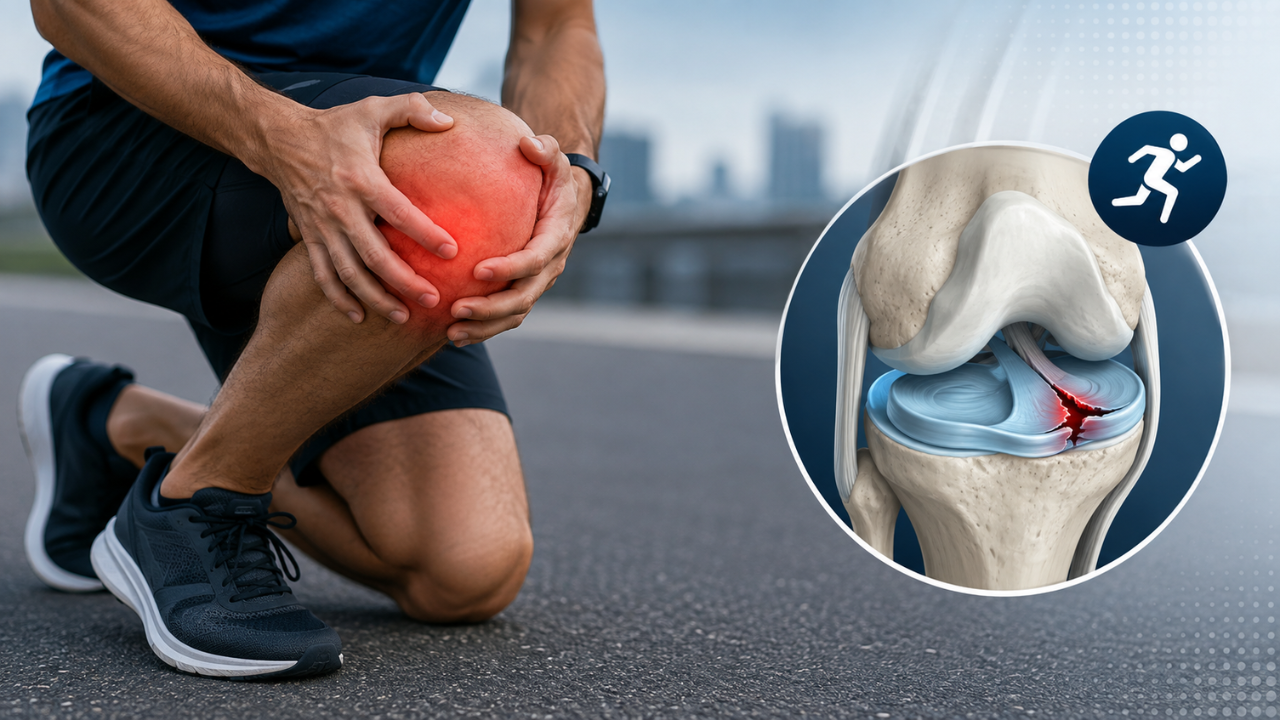
If there is something common to active individuals, then it is the habit of downplaying knee pain as "just a strain." Runners complete races despite feeling some discomfort, weekend football enthusiasts freeze their knees and return to the game, while fitness lovers believe that the pain will go away after a few days of rest. Sometimes the pain fades away. Yet sometimes it remains, showing signs of a meniscus tear, one of the most common knee injuries among active individuals. What Is A Meniscus Tear? The meniscus is a semi lunar ‘C’ shaped fibrocartilage structure that acts as a shock absorber between the thigh bone and the shin bone. The meniscus cushions the knee and stabilizes the joint every time the person runs, jumps, squats, or turns. In case of awkward knee twisting (especially when the foot is firmly pressed to the ground), the meniscus can be torn. Such injury can be often found in sports such as football, basketball, tennis, and badminton, as well as among leisure runners.Also read: Walking Becomes Harder With Age Not Just Due To Weaker Muscles; Study Says Your Ankles May Be To Blame TooWhat Happens If You Keep Running On A Torn Meniscus? Many people mistakenly believe that a meniscus tear is always accompanied by severe pain. In reality, many people will continue running or playing after the injury as the symptoms are manageable at first. Patients may experience swelling within the same day, pain when going up the stairs, or experiencing the knee catching or being unable to completely straighten. These are the red flags that should be addressed, and not ignored. Disregarding any of these symptoms can be detrimental. Continuing to stress the damaged knee may lead to aggravating the tear and putting more strain on the adjacent cartilage, thus increasing chances of developing early osteoarthritis. The sooner the injury is diagnosed, the higher chances a person receives help with preserving the meniscus, which is extremely important for the knee function for many years.Also read: What Is Zone 2 Cardio? The Workout Everyone Is Talking AboutDoes Every Meniscus Tear Need Surgery? Treatment performed in each case is not identical. Minor tears may be treated with physiotherapy, modification of a person’s lifestyle, and specific exercises aimed at making the muscles supporting the knee stronger. Severe tears or ones that cause recurrent locking or instability of the joint require certain surgical intervention like arthroscopic repair or balancing. Probably, the most disregarded part of the process of healing is rehabilitation. Pain can go away before the knee gets its strength back, and that is the reason for many athletes getting injured again. A systematic return to activity helps to promote optimal healing for the knee. When Should Athletes Seek Medical Advice? If you are someone who likes to run or play sport, knee pain should never be an issue that becomes accepted. Often your body can let you know when there is something wrong. Paying attention to those early signs and being quick to seek medical advice can mean the situation can be managed properly. By Dr. Attique Vasdev, Vice Chairman, Orthopaedics, Medanta Gurugram