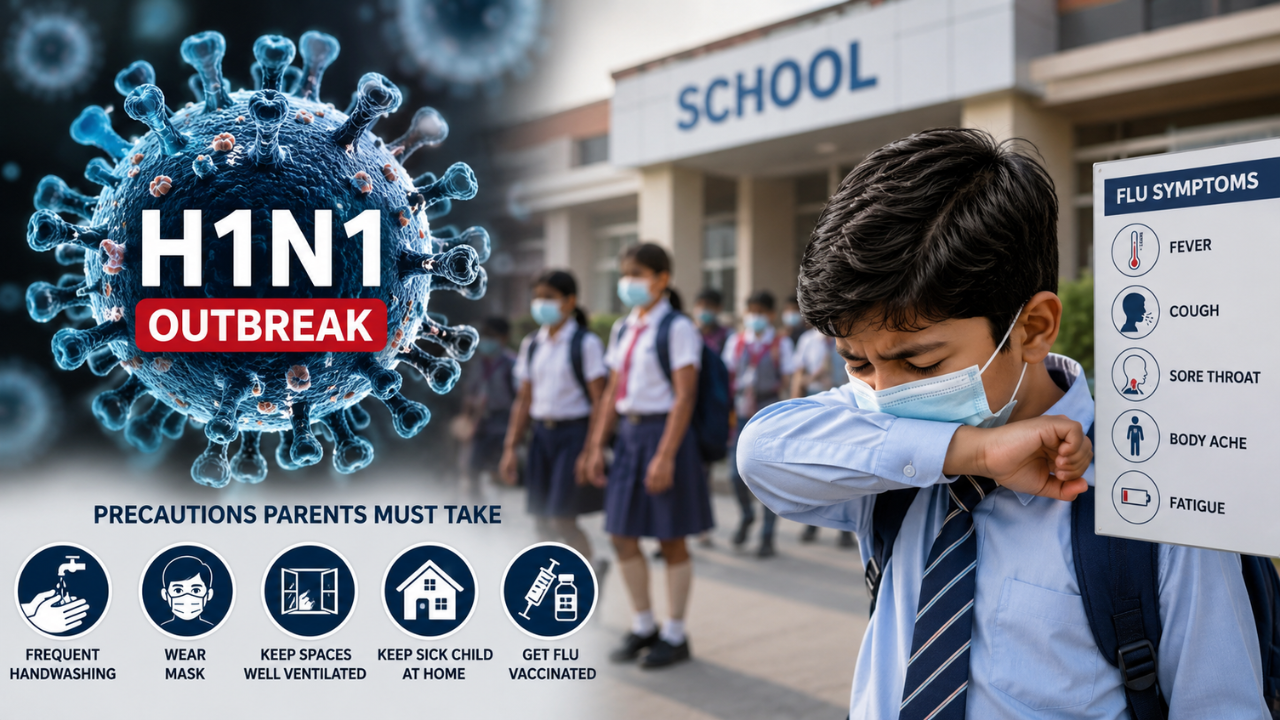
The Clarence High School in Bengaluru's Richards Town has suspended offline classes temporarily after more than 500 students and 21 staff members reported flu-like symptoms. According to reports, at least two students have tested positive for H1N1 and one staff member is undergoing treatment at Bangalore Baptist Hospital. The school has been shut down as a precautionary measure as health officials continue to investigate the outbreak. But before panicking, it is important to understand that 500-plus people falling sick suddenly does not mean there are 500 H1N1 cases. Many of those affected have reported common flu-like symptoms like fever, cough, cold, and body aches, and testing is needed to determine the exact cause. What Is H1N1? H1N1 is a subtype of influenza A virus. Patients with H1N1 may present common flu-like symptoms like fever, cough, sore throat, runny or blocked nose, headache, fatigue, and body aches. Some children may also experience gastrointestinal symptoms like vomiting or diarrhoea. The contagious infection spreads mainly through respiratory droplets that get released when an infected person coughs, sneezes or talks. Crowded spaces like classrooms, school buses, and playgrounds can provide plenty of opportunities for virus transmission. Children may spread the virus to others before realising they are sick, making it difficult to contain an outbreak. Also read: H1N1 Flu Rising in India: Why Heart Patients Need to WatchWhat Symptoms Must Parents Look For?School settings are particularly prone to respiratory infections as children spend hours together indoors and frequently share objects and touch common surfaces. In the Bengaluru case, school authorities have also raised concerns about sanitation and waste accumulation around nearby street-food vendors, although this has not been established as the cause of the H1N1 infections.It is important to understand that not every seasonal flu is caused by H1N1 virus. But isolate your child if he or she child presents the following symptoms: High fever or chillsPersistent coughSore throatRunny or blocked noseHeadacheSignificant body achesUnusual tiredness or weaknessVomiting or diarrhoea in some childrenPlease note that not every child with flu will develop a fever. So the absence of fever does not necessarily rule out influenza. While most children recover without serious complications, some are at greater risk of severe influenza, including very young children and those with conditions like asthma, diabetes, heart disease, or neurological disorders. Also read: Why Humidity Can Worsen Sinus Symptoms Even Without An Infection?When Should Parents Seek Urgent Medical Help? Certain symptoms should not be dismissed as 'just the flu'. Seek urgent medical attention if a child develops the following symptoms as they can indicate complications like pneumonia, severe dehydration, or other serious effects of influenza. Difficulty breathing or very rapid breathingChest painBlue or grey lips or faceSevere dehydration or very little urinePersistent vomitingSeizuresSevere weakness or unusual drowsinessA child who is difficult to wake or does not respond normallyIndia's National Centre for Disease Control lists breathlessness, chest pain, drowsiness, falling blood pressure and bluish discolouration among warning signs that warrant urgent medical attention. Also read: Delhi Sees Nearly 6x Rise In H1N1 Cases: How Is It Different From Other Respiratory Infections?Precautionary Measures Parents Must Take Not every child with a cough or fever needs an H1N1 test. Testing decisions should be made by a doctor based on the child's symptoms, exposure, and risk factors. Parents should also avoid administering antibiotics on their own. Remember that H1N1 is a viral infection, so antibiotics is not the right course of treatment. If a child develops flu-like symptoms, the most important step is not to send them to school. Parents should also: Instruct them to wash hands frequentlyTeach children to cover while coughing and sneezingAvoid sharing bottles, utensils and towelsLimit close contact with others while the child is sickKeep commonly touched surfaces cleanSpeak to a doctor about seasonal influenza vaccination, particularly for children at higher risk