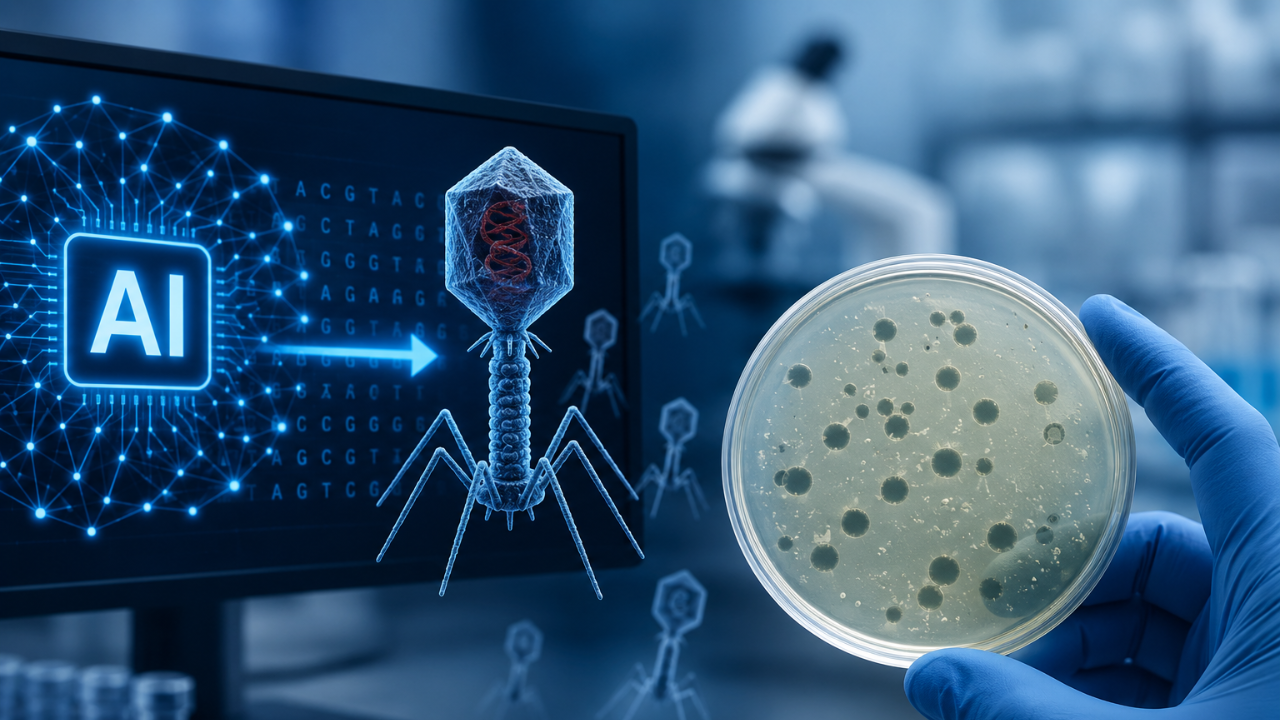
Artificial intelligence has taken another step forward in biology. Scientists have created viruses designed by AI and shown that they can work in the laboratory, showing promise for new treatments. But this has also triggered concerns about biosecurity. The viruses are bacteriophages, or viruses that infect bacteria rather than humans. Researchers led by Dr Brian Hie, a chemical engineer at Stanford University, used AI models called Evo1 and Evo2 to design functioning genomes for these viruses. The models were trained using genetic data from around 2 million bacteriophages. The researchers generated thousands of potential viral genomes and selected nearly 300 to manufacture and test in the laboratory. Only 16 ultimately proved viable. However, a combination of the AI-designed viruses was able to kill two strains of E coli that had developed resistance to naturally occurring bacteriophages. How Can AI Design A Virus? The technology works like the large language models behind AI chatbots, but instead of learning patterns in human language, genome language models learn patterns in genetic sequences. The AI was able to generate genetic instructions for new bacteriophages, which were then produced in the laboratory and tested against bacteria. This matters because bacteriophages are already being explored as a treatment for persistent bacterial infections. If scientists can rapidly design viruses that target specific bacteria and overcome resistance, the approach could strengthen phage therapy, particularly as antibiotic resistance continues to complicate treatment. The researchers said the ability to rapidly design genomes and adapt them to particular bacteria could “transform phage therapy” and expand biotechnology. Also read: ChatGPT Health Becomes Available For Eligible Users In US: Pros & Cons Of Letting AI Access Your Medical RecordsSo Why Are Scientists Worried? The viruses created in this experiment were designed to infect bacteria. The researchers also deliberately excluded genetic information from viruses that infect humans, animals and plants from the AI's training data, reducing the chance of the system generating dangerous pathogens. But the experiment demonstrates something bigger: AI can now produce functioning viral genomes. That raises questions about what could happen if similar technology were trained on genetic information from harmful pathogens. Prof Tom Inglesby and Dr Moritz Hanke of the Center for Health Security at Johns Hopkins University warned that the ability to create viral genomes using generative AI now exists, but the systems and regulations needed to govern the AI have not caught up. They warned that genomes designed for human, animal or plant pathogens could potentially generate new threats that existing measures may not be equipped to contain. Also read: The Rise of Robotic Joint Replacement: How Technology Is Transforming Orthopaedic SurgeryIs AI-Created Biological Warfare Already A Reality? Tom Ellis, a professor of synthetic genome engineering at Imperial College London, said the experiment was impressive but pointed out that bacteriophages have extremely small and relatively simple genomes. He also argued that fears surrounding fully AI-designed pathogens may currently be overstated. He said that modifying existing pathogens to make them more dangerous remains a much easier and more immediate concern. Dr Filippa Lentzos of King's College London said the solution should not focus only on AI. Instead, safeguards should extend across the entire process, including AI development and access, research, DNA synthesis screening and lab biosafety. AI-designed bacteriophages could open new possibilities for fighting difficult bacterial infections. But the same ability to write biological instructions raises a question scientists can no longer afford to ignore: how do we make sure increasingly powerful biological AI remains a tool for medicine rather than a source of new threats?