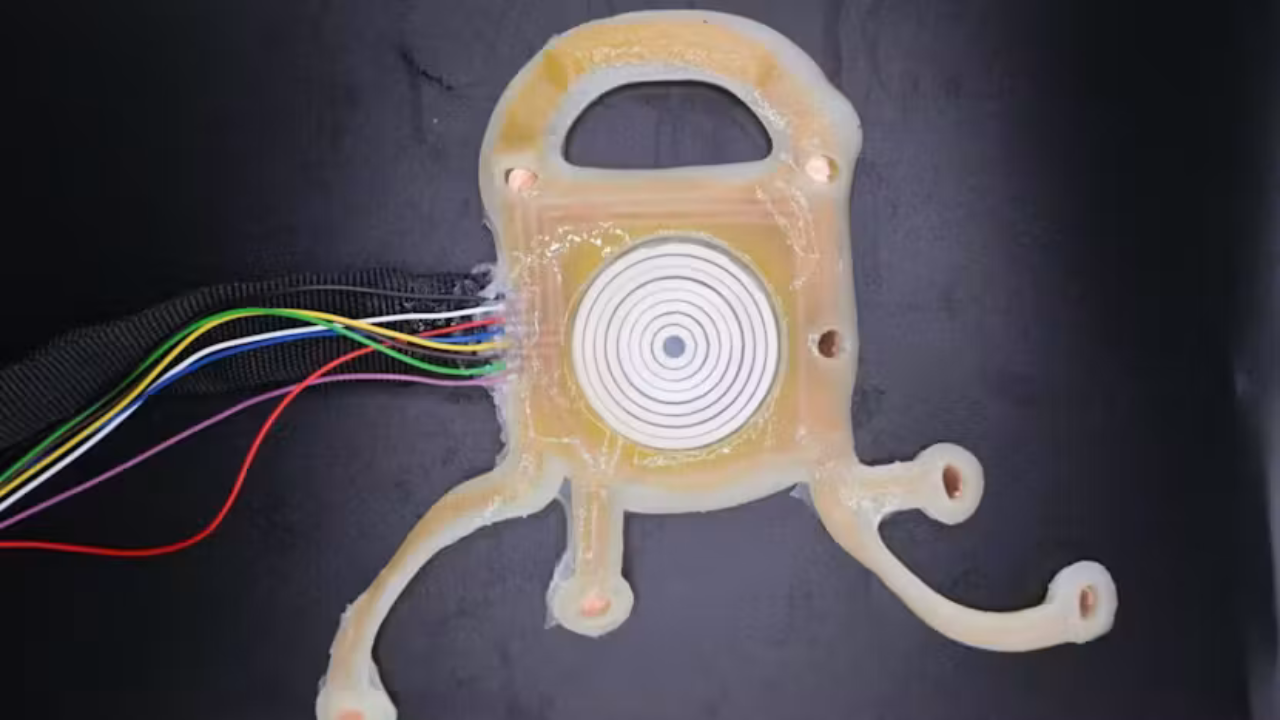
Researchers at the University of Texas at Austin have developed a soft, wearable device that targets a deep brain region involved in sleep regulation through focused ultrasound. In a study published in Nature Communications, the patch, called NEUSLeeP, was found to boost REM sleep and help people reach that stage of restorative rest faster. What Is NEUSLeeP? NEUSLeeP is a bioelectronic patch that can be attacked on the skin. It combines focused ultrasound stimulation with electrodes that continuously monitor brain activity during sleep. The device targets the subthalamic nucleus (STN), a deep structure within the brain that forms part of the basal ganglia network. Researchers used a specialised ultrasound array to focus stimulation on the region while simultaneously recording electrical signals linked to sleep. “This is the first time we’ve been able to noninvasively target deep brain regions involved in REM sleep, while simultaneously monitoring brain activity,” said Kai Wing “Kevin” Tang, who led the research. The patch weighs about 103 grams and is designed to remain attached during overnight sleep. Its electrodes allow researchers to track EEG, eye movements and muscle activity, helping determine which stage of sleep a person is experiencing. Also read: Practicing Yoga Everyday Does THIS To Your Sleep CycleWhat Did The Study Find? The study involved 28 participants, including 16 healthy sleepers and 12 people with some degree of insomnia symptoms. Participants underwent two consecutive nights of sleep testing, with the first night serving as the sham condition and ultrasound stimulation delivered on the second night. Researchers found that NEUSLeeP increased the proportion of REM sleep by about 4.6 percentage points, equivalent to roughly 16 additional minutes of REM sleep. It also reduced the time taken to enter REM sleep by approximately 43 minutes, or 24%. Additionally, researchers did not observe significant changes in other sleep stages or overall sleep efficiency. The team also reported changes in heart-rate variability and brain activity associated with processing emotions, suggesting that manipulating REM sleep could eventually have implications beyond sleep itself. Also read: Narcolepsy: US FDA Approves First-Ever Pill That Targets Root Cause of Rare Sleep DisorderWhy Is REM Sleep Important? REM, or rapid eye movement sleep, is the stage associated with vivid dreaming, rapid eye movements and increased brain activity. It usually becomes longer during the later part of the night and accounts for roughly 20% to 25% of sleep in adults. REM sleep has been linked to memory processing and emotional regulation. Research has suggested that the brain uses this stage to process emotional experiences and integrate memories. “REM sleep is not just about dreaming. It’s about emotional reset and stress adaptation,” said Gregory Fonzo, a co-principal investigator on the project.Poor sleep is associated with several mental and neurological consequences. Researchers believe that selectively influencing REM sleep could eventually become part of treatments for sleep disorders and conditions like chronic insomnia, depression and PTSD. However, the patch is not yet a treatment available for patients. Limitations Of The Study Although the findings seem promising, they come from a small, early-stage human study involving 26 participants. The researchers also deliberately used a fixed order, with sham stimulation on the first night and ultrasound on the second, because they were concerned about possible carryover effects. That means larger, longer and independent trials will be needed to determine whether increasing REM sleep actually produces meaningful improvements in health, mood or daytime functioning.