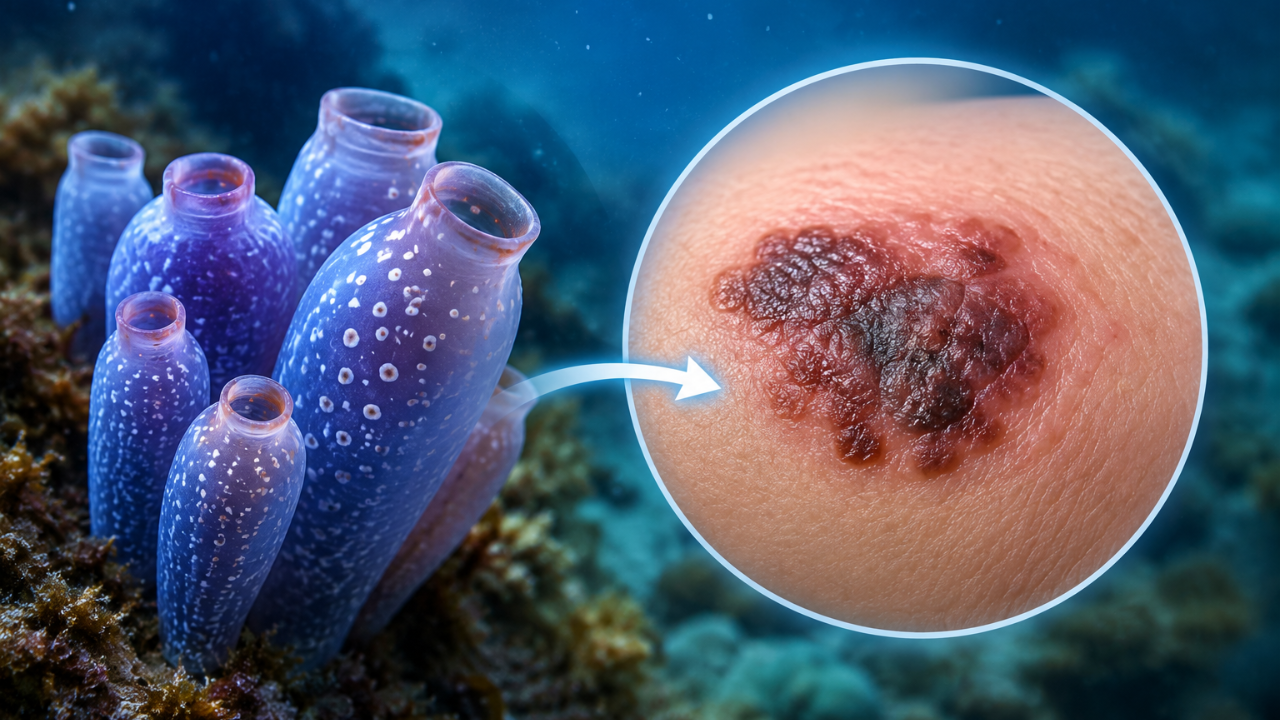
Researchers at a Florida-based university claim that a tiny marine animal found in Antarctica can help scientists develop a new treatment for melanoma, one of the deadliest forms of skin cancer. These marine animals are ascidians, invertebrates known as sea squirts. Belonging to the group of tunicates, they mostly thrive in icy water. Sea Squirts May Help Treat Melanoma Certain species of marine animals have proven to be useful in the treatment of various types of cancer. The latest ones are ascidians or sea squirts. Researchers from the University of South Florida (USF) claim that sea squirts, small tube-shaped marine animals that produce protective chemicals, can help fight an aggressive form of skin cancer called melanoma. Scientists say that these sea squirts have a bacterium that makes a toxic compound. In the early stages of the study, it was found that this compound is capable of killing melanoma cells without harming healthy cells. Also read: Frequent Headaches: When To See A Doctor And Warning Signs To Watch For The Study Addresses A Significant Challenge In Cancer Treatment One of the biggest challenges in cancer treatment is finding drugs that destroy cancer cells while leaving healthy cells unharmed. With this study, scientists say this compound produced by the bacteria inside Antarctic sea squirts can do exactly that, marking a significant milestone in cancer research. In experiments conducted on mice, it was seen that the compound killed melanoma cells without causing serious harm to the rodents, making it a promising candidate for future drug development. Even though it shows immense promise, the research is still in its early stages. Before the compound can be tested in people, scientists need to confirm that it is safe and effective in larger animal studies. Clinical trials on humans may still take a while. Also read: How Reconstructive Plastic Surgery Transforms Lives After Trauma And Cancer There is also a challenge of harvesting large numbers of sea squirts from Antarctica, as it would damage the fragile ecosystem. To avoid that, researchers are now working on creating the compound in the laboratory instead. Despite encouraging results, it remains an experimental approach, and several years of research and clinical testing will be needed before it can become a trusted and proven therapy for melanoma. Marine Animals’ Contribution In Cancer Treatment Ecteinascidia turbinata, a colonial marine invertebrate, commonly called the golden sea squirt, has contributed to the development of Trabectedin, a chemotherapy drug, used to treat soft tissue sarcoma and ovarian cancer. One of the significant cancer breakthroughs was due to sea sponges. They led to the development of Cytarabine, a chemotherapy medication that has been significant in the treatment of acute myeloid leukemia, acute lymphoblastic leukemia, and certain lymphomas for decades. Sea cucumbers contain natural substances that can slow the growth and spread of cancer cells. Although research is still in its early stages, the results have been promising. Researchers also found a powerful anti-cancer compound called dolastatin in sea hares. It inspired targeted cancer drugs that deliver treatment directly to cancer cells while reducing harm to healthy cells.