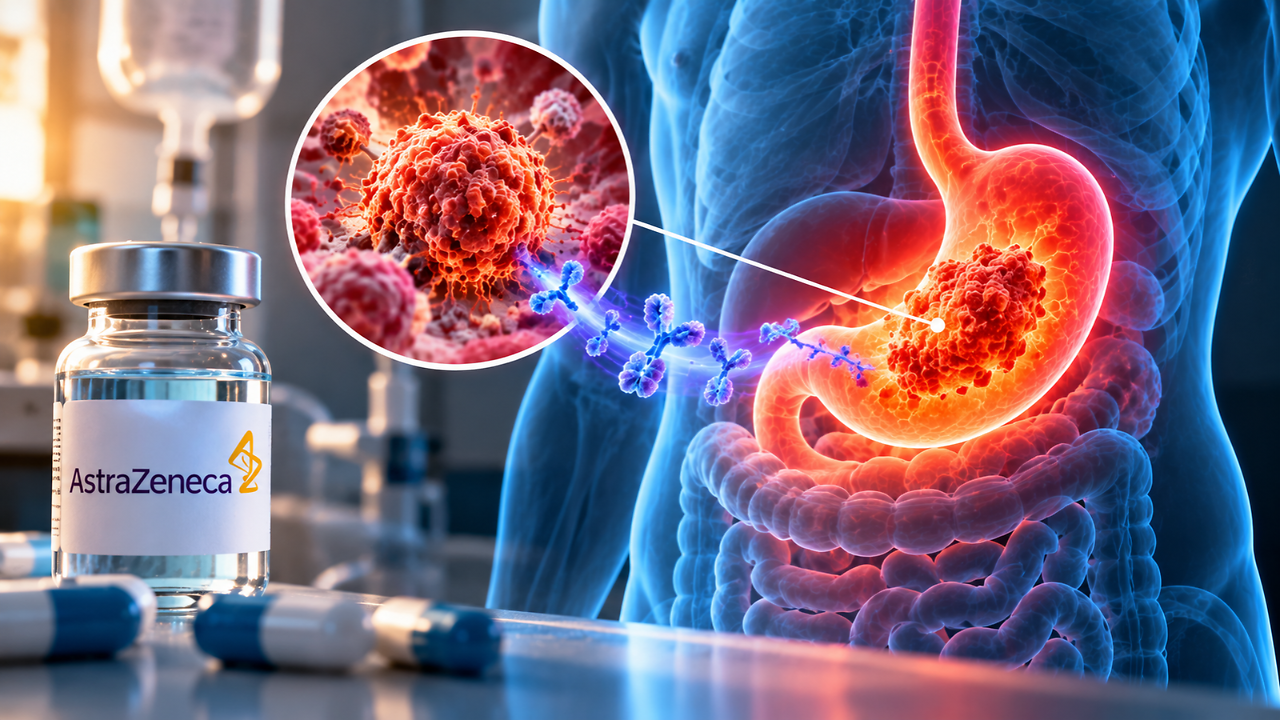
AstraZeneca is developing an experimental cancer drug sonesitatug vedotin that has reported a reduction in the risk of death by 42% in patients with advanced stomach and related cancers. The findings from their Phase 3 clinical trial was presented at the European Society for Medical Oncology (ESMO) Congress in Madrid on October 25.The global CLARITY-Gastric01 trial compared the drug, also known as sone-ve, to chemotherapy selected by the physician in patients whose cancer had progressed after previous treatment. The findings showed that patients who received sone-ve lived a median of 10.6 months, compared to 6.4 months among those undergoing chemotherapy. The trial included 532 patients with advanced gastric cancer, gastroesophageal junction cancer or oesophageal adenocarcinoma whose tumours expressed the protein claudin 18.2 (CLDN18.2). The findings spark hope that the drug could offer another treatment option for patients whose disease has progressed despite early intervention.Susan Galbraith, AstraZeneca's executive vice-president of oncology haematology research and development, said, “A 5-month improvement in overall survival is very clinically significant in a difficult to treat patient population,” according to Reuters.How Does Sonesitatug Vedotin Work?Also read: Woman’s Bleeding & Abdominal Swelling Linked To Rare Cancer After Being Mistaken For Perimenopause: What Is FATWOSonesitatug vedotin belongs to a class of treatments called antibody-drug conjugates (ADCs). These medicines combine an antibody that identifies a target on cancer cells with a drug that kills those cells, becoming a target-focused treatment.Sone-ve targets CLDN18.2, a protein found on the surface of certain stomach and related cancer cells. The drug is designed to deliver its cancer killing properties to these cells.The trial enrolled patients whose tumours showed CLDN18.2 expression in at least 25% of tumour cells. This limit could make the treatment relevant to a bigger group of patients than therapies that require higher levels of the protein.Rui-Hua Xu, professor of medical oncology at Sun Yat-Sen University Cancer Center and the trial's principal investigator, said, “These are remarkable survival results for Sone-Ve in 2nd- and later-line metastatic gastric cancer, a disease where patients face a poor prognosis once initial therapy fails.”He added that the treatment could be a shift in cancer care for patients whose tumours express CLDN18.2.Also read: First Human Spinal Cord Transplant Reported In Russia But Can It Reverse Paralysis?More About The Trial's Findings The results are promising but the drug did not meet the trial's other primary endpoint, which is survival without disease progression.Progression-free survival measures how long patients live without their cancer worsening or dying. Median progression-free survival was 4.2 months with sone-ve and 3.8 months with chemotherapy.Serious side effects related to the treatment occurred in 36.4% of patients receiving sone-ve, compared to 44.8% who did chemotherapy. However, side effects related to stomach were more frequent with sone-ve, affecting 11.1% of patients compared to 6.3% in the control group.It is important to note that the findings are from a clinical trial and do not mean the drug is approved for routine use. Further regulatory review is needed before it can become a treatment option.Furthermore, AstraZeneca is also studying sone-ve in early treatment, where it could be used before patients have exhausted multiple therapies.The company said the findings support investigating the drug in a bigger population of patients with CLDN18.2-positive cancers. The next phase of research will help establish its role in treatment and whether the survival benefit can be maintained when used earlier.