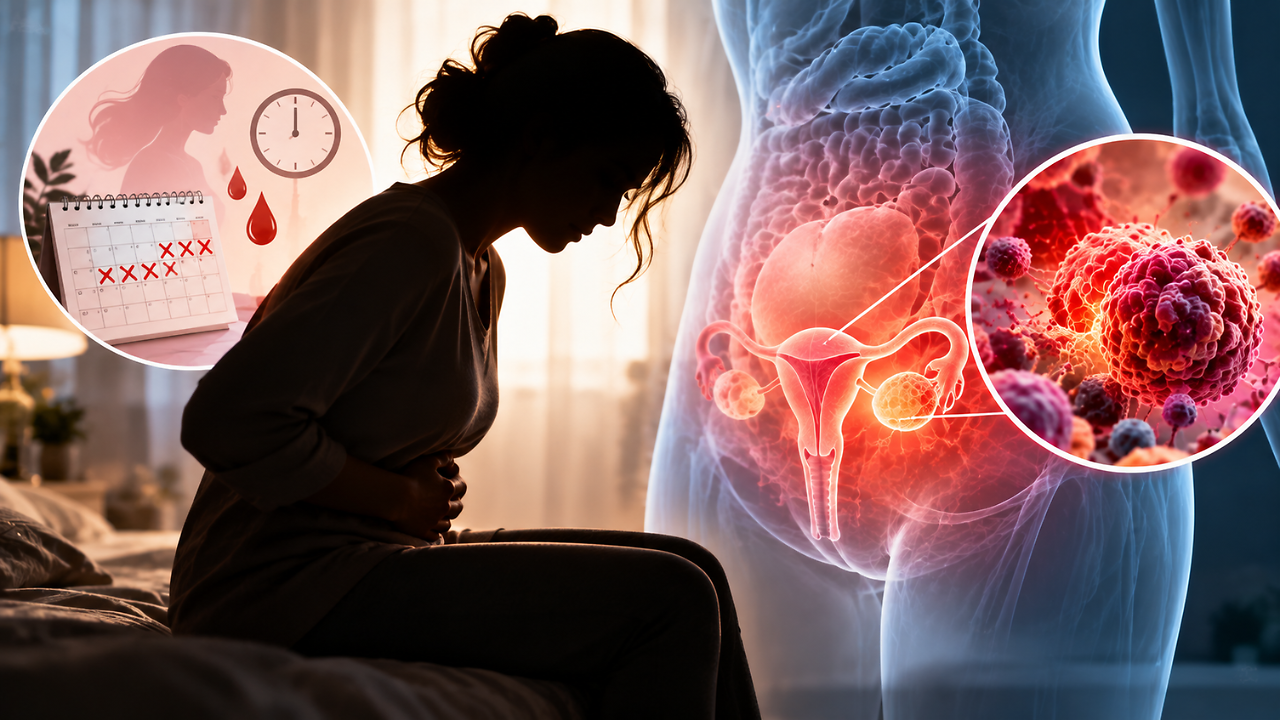
A 43-year-old mother from Northern Ireland got diagnosed with an exceptionally rare cancer after months of pain, continual bleeding and abdominal swelling. She said that these symptoms were initially and inaccurately attributed to perimenopause, anxiety and constipation.Nicola Crymble’s symptoms started in 2024 after she had a copper intrauterine device (IUD) inserted. The bleeding and pain became so severe that she had the device removed while she was in Kenya doing mission work. “I was constantly bleeding, there was so much pain,” Crymble said.However, her symptoms persisted even after she returned home. She said doctors initially suggested that perimenopause and anxiety could explain what she was experiencing.By December 2024, Crymble had noticed a lump in her abdomen. It continued to grow, making everyday activities challenging. She said people even thought she was pregnant because of the swelling. She eventually went to hospital and underwent scans, which revealed a mass near her cervix. Doctors initially thought it might be a cyst.Crymble Got Diagnosed With FATWO, A Rare Cancer Also read: Dr Rachna Shroff: Indian-American Cancer Researcher Who Turned Her Diagnosis Into AdvocacyCrymble underwent major surgery in February 2025 to remove the tumour. She also chose to have her ovaries and fallopian tubes removed during the procedure. A month later, she received the diagnosis that she had female adnexal tumour of probable Wolffian origin, commonly known as FATWO.The tumour is believed to develop from remnants of the Wolffian duct, an embryonic structure involved in the development of the reproductive and urinary systems. Although these structures usually regress during female development, residual tissue can sometimes pave the way for tumour growth.FATWO is an exceptionally rare form of cancer. There are only around 150 documented cases recorded worldwide. While many FATWO tumours do not metastatize, some can behave aggressively. In Crymble’s case, the cancer later spread to her liver and vaginal vault, the upper part of the vaginal canal.She experienced intense pain beneath her ribs before a scan revealed that the cancer had spread. Further surgery was ruled out because the tumour growths were too close to other organs.Chemotherapy As Surgery Was Not An Option With surgery no longer an option, Crymble and her doctors decided to proceed with chemotherapy. She began treatment on October 13, 2026, and is expected to undergo six rounds, one every three weeks.The family is also looking for specialist advice because there is limited information available about the rare disease and the best way to treat it. Her husband, Andrew Crymble, said doctors had little experience with the condition.“They've never seen it before, they don't know how to treat it,” he said, explaining why the family decided to share her story publicly. They hope it will reach researchers or doctors who may have more information about FATWO.Crymble has stopped working and has found it difficult to maintain her usual family routines while undergoing treatment. The family is also seeking financial support after discovering that their life insurance coverage will not cover the treatment.Also read: Amgen & AstraZeneca's New Treatment Combination Cuts Advanced Lung Cancer Death Risk By 58% In TrialSymptoms That Warrant Immediate AttentionPerimenopause can cause changes in menstrual patterns, like irregular periods. But unexplained bleeding, stubborn abdominal pain, lump or unusual swelling should not automatically be attributed to hormonal changes without seeking medical intervention.These symptoms can occur due to many causes, and they do not necessarily indicate cancer. But worsening or unusual symptoms demand medical assessment, especially when they do not improve or when new symptoms develop.