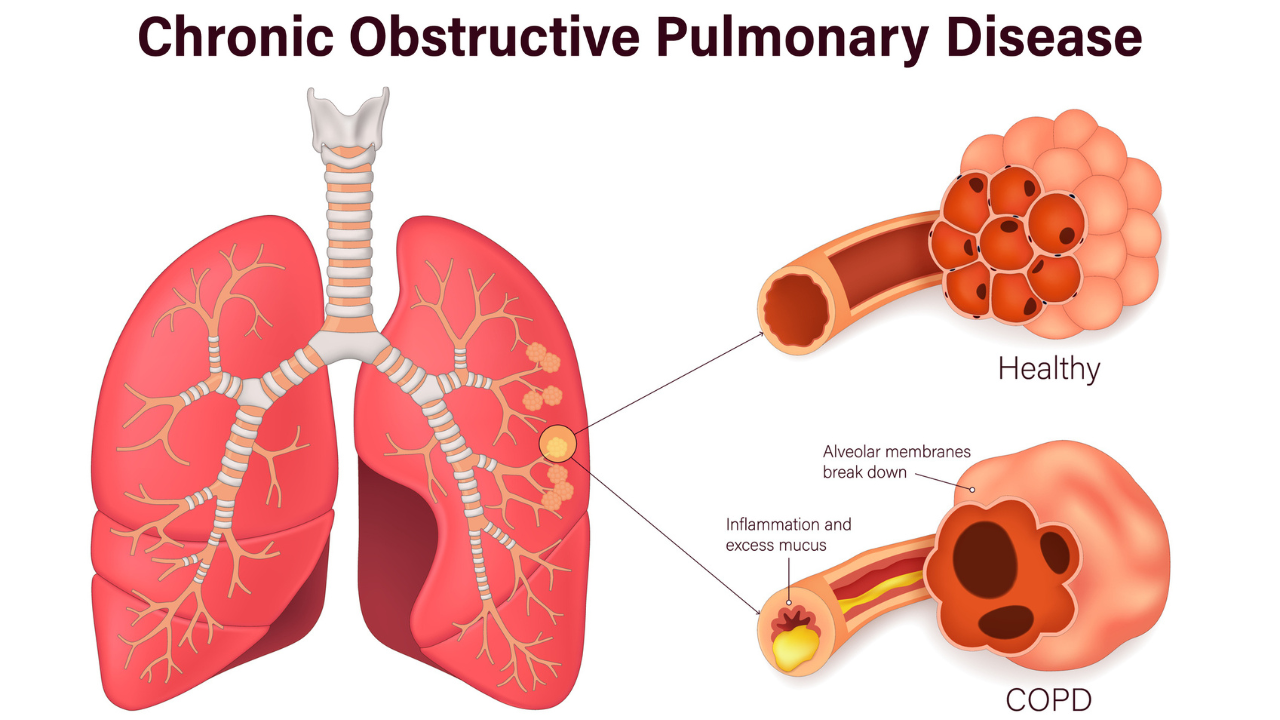
Tozorakimab, an investigational drug developed by AstraZeneca, reduced moderate-to-severe flare-ups of chronic obstructive pulmonary disease (COPD) in two late-stage trials, the company has announced. Presented at the ongoing European Respiratory Society Congress in Barcelona, the results showed that patients receiving tozorakimab experienced about 29% to 34% fewer COPD exacerbations over one year compared with placebo, when added to standard inhaled therapy. The results, also published in the New England Journal of Medicine, showed that the drug was generally well tolerated, with injection-site reactions reported as the only adverse drug reaction. Researchers from the University of Pittsburgh who led the trials said the findings highlight tozorakimab’s potential as a treatment for people with COPD who remain at risk of exacerbations despite standard inhaled therapy. What Is Tozorakimab? Tozorakimab is a potential first-in-class monoclonal antibody targeting interleukin-33 (IL-33). The drug is designed to inhibit signalling from both the reduced and oxidised forms of IL-33, with the potential to reduce inflammation and disrupt the cycle of mucus dysfunction that contributes to COPD worsening. AstraZeneca is developing tozorakimab as an add-on maintenance treatment for adults with COPD. What Did the COPD Trials Find? The findings come from two replicate Phase 3 trials, OBERON and TITANIA, which included a total of 2,306 adults with symptomatic COPD who were current or former smokers and had a history of exacerbations despite stable standard-of-care inhaled maintenance therapy. Tozorakimab 300 mg, given once every four weeks, reduced moderate-to-severe COPD exacerbations among former smokers by: 29% in OBERON 34% in TITANIA In the overall population of current and former smokers, exacerbations were reduced by: 30% in OBERON 29% in TITANIA The reductions were compared with placebo while patients continued inhaled standard-of-care treatment. A pooled analysis of the two trials also showed clinically meaningful reductions across all prespecified patient subgroups, including those defined by blood eosinophil count (BEC). Patients with a baseline BEC below 150 achieved a 23% reduction in moderate-to-severe exacerbations, while those with a BEC of 150 or higher achieved a 34% reduction. Among patients with a BEC of 300 or higher, the reduction was 43%. “Today’s groundbreaking tozorakimab results, from two replicate trials, set a new standard for COPD treatment outcomes in a broad population of patients. AstraZeneca has clinically validated the novel approach of targeting the signalling of the two forms of IL-33 to both decrease inflammation and disrupt the cycle of mucus dysfunction. With our FDA Priority Review, we look forward to bringing this treatment to patients as quickly as possible,” said Sharon Barr, Executive Vice President, BioPharmaceuticals R&D, AstraZeneca. What Happens Next? The Biologics License Application for tozorakimab 300 mg, administered once every four weeks, has been accepted by the US Food and Drug Administration for Priority Review as an add-on maintenance treatment for adults with COPD.Tozorakimab is also under regulatory review for COPD in major markets, including the EU and China. The drug is being studied in a Phase II trial for severe asthma and a Phase III trial for severe viral lower respiratory tract disease. It received FDA Fast Track Designation for severe viral lower respiratory tract disease in November 2023 and for COPD in December 2024. Why COPD Flare-Ups Matter COPD is the third leading cause of death worldwide, excluding COVID-19. It is a progressive respiratory condition characterized by persistent airflow limitation and chronic inflammation of the airways. Common symptoms include breathlessness, chronic cough, and excess mucus production. COPD exacerbations can worsen these symptoms and contribute to ongoing inflammation and bronchoconstriction, making it difficult to breathe. They can also accelerate disease progression, increase hospitalizations and raise the risk of future cardiopulmonary events, including heart attacks. In the US, COPD exacerbations cause more than 2,500 emergency department visits each day. Only 50% of COPD patients live more than 3.5 years after their first severe exacerbation.